Water-soluble & available
All nutrients are water-soluble. In the fully diluted mixture, they are available for feeding through roots and leaves.


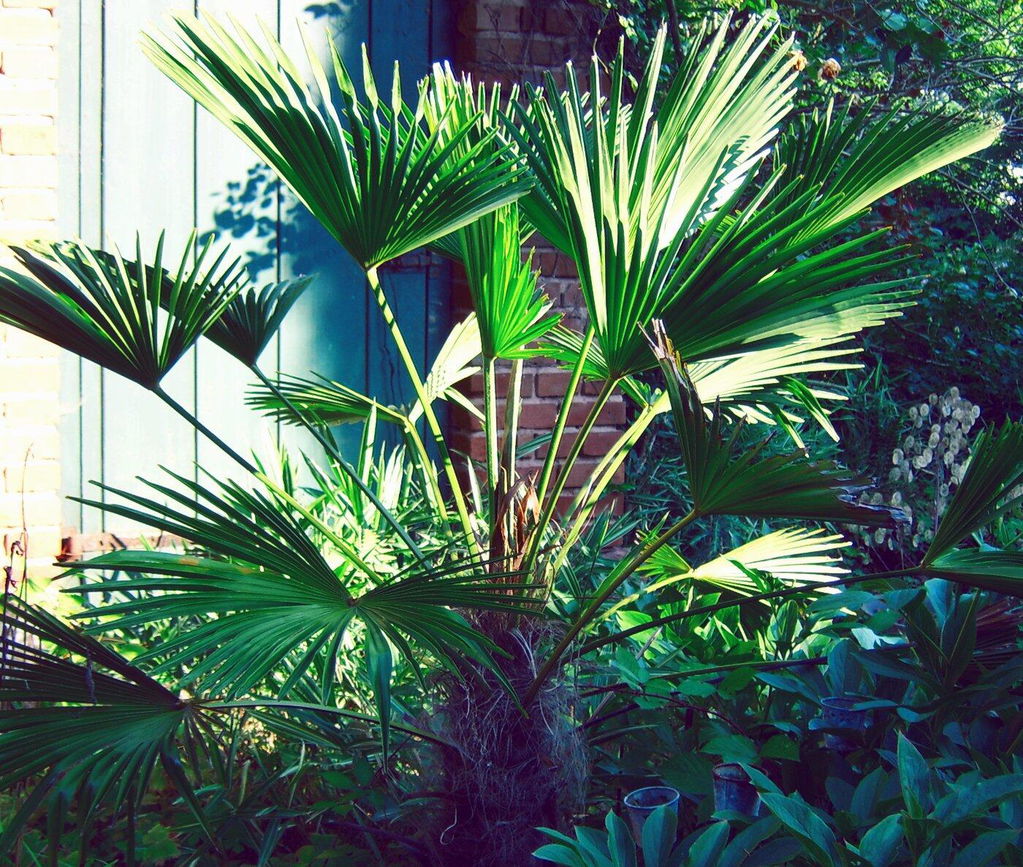
Parlour palm, kentia or windmill palm: species determines light, warmth and growth. Combine suitable nutrition with practical knowledge for indoors, conservatories and containers.
Application in one place
Choose the water volume or use your palm’s height and width as a rough watering guide. The calculator uses the confirmed standard dilution; young plants and seedlings have their own settings.
Base dilution: 5 ml per 1.5–2.5 l of water. The calculator uses the confirmed standard dilution of 5 ml per 1.5 l. For young plants or seedlings, the selected setting reduces the concentrate amount.
1 capful = 5 ml. Use a suitable measuring aid for smaller partial amounts.
Enter a water amount from 0.1 to 1,000 litres.
A rough guide for watering the roots of one palm, not for spraying or hydroponics. Measure height from the growing-medium surface and the width of the crown, not just stem length. Root-ball moisture, pot volume, rooting, light and temperature also matter. Use only when watering is needed; do not cause standing water or force the whole guide volume into the pot.
General GREEN24 guide: height (m) × width (m) × 3–4 litres. Centimetres are converted to metres. Concentrate quantity follows this fertiliser’s confirmed standard rate and the selected setting. The guide does not measure the individual water needs of your palm species.
Use a clean watering can or sprayer; preferably low-lime water or rainwater at 15–25 °C.
Choose the water volume and dilution setting. The standard dilution and original range are shown beside the calculator; plant size does not select the setting automatically.
Start by filling the container with part of the chosen water volume.
Shake the bottle. 1 capful = 5 ml; use a measuring aid for smaller partial amounts.
Add the calculated amount of concentrate to the water.
Top up to the chosen water volume and mix well. Watering or spraying: see below.
When to feed? Feed during growth; repeat according to your palm’s development, without a fixed weekly interval. The regular period is April–September; tropical species follow their growth periods. Account for pre-fertilisation and earlier feeds.
Moisten the root ball first and distribute the fully diluted mixture evenly over the growing medium. Allow excess water to drain. Check below the surface; water collects around roots in an undrained outer pot.
If the species, leaf surface and growing conditions suit foliar feeding, lightly wet the fronds in the morning, evening or overcast conditions. Avoid open flowers. Root and foliar feeds belong to the same nutrient supply.
Liquid NPK concentrate for tropical and subtropical palms, with declared trace nutrients. For root and foliar feeding after dilution with water. The dosage range supports use according to the label; feeding follows the growing period of the particular palm species.
Net mass: 304 g for 250 ml; 1205 g for 1 litre.
The dilution is the same for both pack sizes.
| Pack size | Price |
|---|---|
| 250 ml | 9.95 € Unit price ( 39.80 €/ l) |
| 500 ml – twin pack (2 × 250 ml) | 18.95 € Unit price ( 37.90 €/ l) |
| 1 litre | 29.95 € Unit price ( 29.95 €/ l) |
For tropical and subtropical palms. Choose indoors, conservatory or container growing according to species; palm-like plants are not automatically true palms.
April–September is the regular period; tropical species follow their actual growing phase. Pause feeding during a growth pause.
After repotting, account for existing fertiliser and handle the root ball gently. Check moisture and drainage before feeding.
Beyond NPK · understand the formulation
Water-soluble nutrients and the formulation support straightforward feeding for your palm. Discover the properties of the finished watering or spraying solution.
All nutrients are water-soluble. In the fully diluted mixture, they are available for feeding through roots and leaves.
Copper, iron, manganese and zinc are declared as EDTA chelates. This binding helps keep these trace nutrients available in solution.
The buffer system helps regulate the pH of the finished watering or spraying solution. The source water also influences the resulting value.
Good wetting and adherence help distribute the spray solution across the leaves. Dissolved nutrients are then available at the leaf surface for uptake.
The formulation helps reduce adverse hard-water effects and deposits on the leaves. Low-lime water or rainwater provides a good starting point.
At a suitable dilution, high plant tolerance supports the development of new fronds. Appropriate nutrition supports your palm’s natural foliage.
Suitable nutrition supports leaf development and green foliage. Leaf finish means an even, well-kept appearance, not a sprayed-on gloss film. The rate of new frond development also depends on species, light, warmth and roots. Feed during actual growth.
Chelation binds metal ions and can reduce adverse hard-water effects; it does not remove calcium or magnesium from the water. The product pH of 6.8 describes the concentrate. The finished mixture’s pH also depends on the source water; no fixed target value is promised.
Use clean, suitable watering or spraying equipment. Measure the water and calculated concentrate quantity carefully.
Pre-fertilised soil and fertiliser already in the root ball contribute to the nutrient supply. The products listed under “Mixable with this fertiliser” can each be mixed with this fertiliser. When applying them together, follow both products’ specific instructions; conflicting or stricter directions take precedence. Do not mix undiluted concentrates.
Our liquid Palm Fertiliser can be mixed individually with Schädlings-Frei Organic, Trauermückenfrei Organic, KIRON Milben-Ex or Rosen Pilz-Frei BOCCACIO. This confirmation applies to the fertiliser paired with one of these products at a time. Follow specific application instructions and the stricter conditions of both products.
Declared nutrient percentages. Product pH: 6.8.
GREEN24 · Plant knowledge
This palm fertiliser supplements nutrient supply for tropical and subtropical palms. Light, watering and growth patterns vary between species. Choose your water volume in the calculator to find the corresponding amount of concentrate.

In a bright living space or conservatory, palm fronds create a distinctive focal point. This palm fertiliser supplements the nutrient supply of tropical and subtropical palms.

Palms form many roots from the stem base. Disturb their fine lateral roots as little as possible.

Feather and fan palms differ in growth. Guide fronds gently when moving the plant and avoid injuring the central crown.
GREEN24
8.95 €
( 0.90 €/ l)
Matching medium for repotting; allow for starter nutrients before later feeds.
10 litres
Delivery time: In stock · 1–3 days (DE)
Incl. VAT, plus shipping costs
GREEN24
From 6.95 €
( 27.80 €/ l)
Only for suitably hard irrigation water; follow its own directions and water readings. No automatic mixing approval.
250 ml · 1 litre · 5 litres
Delivery time: In stock · 1–3 days (DE)
Incl. VAT, plus shipping costs
Dr. Stähler
4.95 €
( 0.41 €/ item)
Sticky traps for monitoring flying insects on potted plants; do not reach larvae in the medium.
Delivery time: 3–5 days (DE)
Incl. VAT, plus shipping costs
BERGER
9.95 €
Narrow planting trowel for filling medium; protect roots while working.
Delivery time: In stock · 1–3 days (DE)
Incl. VAT, plus shipping costs


Leaves use light; roots take up water and mineral nutrients. The diagrams show how plant organs work together and how nutrients are absorbed.
Roots need water as well as air in the growing medium. A well-rooted, freely draining root ball provides both. Handle roots gently when repotting, retain the previous planting depth and account for fertiliser in the new compost.
Green fronds provide the basis for further growth through photosynthesis. Nitrogen contributes to chlorophyll and protein formation. More fertiliser alone will not correct slow growth in a dark position. Retain living fronds.
The central spear is the new leaf. Do not shorten the stem or cut off its growing point: that stem will not replace it with ordinary side shoots. Clumping species have several stems; several seedlings in one pot are not branches of one plant.
Nitrogen supports chlorophyll and proteins in green fronds. Phosphorus contributes to energy transfer; potassium supports water regulation and transport. Declared trace nutrients complement the supply. No magnesium content is declared for this fertiliser; investigate unusual fronds rather than assuming a deficiency this product will cure.
Select a point in the picture or choose a stage.
Stage 01 / 04
The mixture reaches the growing medium around the palm’s roots. Dissolved nutrients are available at the interface between moist medium and absorbing root surfaces.
Good to knowAlways dilute the concentrate and keep to the stated dosage.
Watering carries dissolved nutrients into the growing medium around the roots. Contact with the absorbing root surfaces is the first step.
Stage 02 / 04
Fine root hairs increase contact with the growing medium. Tiny transport proteins in the membranes surrounding root cells help dissolved nutrients enter the cells.
Good to knowRoots take up nutrients; they do not simply absorb all the fertiliser along with the water.
Root hairs increase the contact area. Transport proteins in cell membranes enable mineral ions to enter; water movement and nutrient uptake are distinct processes.
Stage 03 / 04
In your palm's roots, cell membranes and their transport proteins regulate the uptake of dissolved nutrients. Substances do not simply flow unfiltered into the plant with the irrigation water.
Good to knowMore fertiliser does not automatically mean better nutrition.
Between contact with the root surface and onward transport, controlled processes take place within the root tissues. Transport across cell membranes helps the palm take up nutrients; water movement and nutrient uptake are distinct processes.
Stage 04 / 04
Inside the roots are transport tissues called xylem. Water and absorbed nutrients can travel through the stem to the fronds and other growing areas.
Good to knowHealthy roots and suitable growing conditions are important for nutrient supply.
After entering the vascular tissue, nutrients can travel with the water stream in the xylem towards the shoot. Uptake and nutrient supply also depend on root health and growing conditions.
Stage 01 / 04
The fully diluted mixture wets the frond surface. Account for palm species and growing conditions, avoid open flowers and spray only within the application limits.
Good to knowOur Palm Fertiliser also allows suitable foliar application. The choice depends on species, leaf surface and growing conditions; the feed belongs to the same nutrient plan.
Foliar feeding places diluted nutrient solution on the leaf surface. Wetting depends on factors including the leaf surface and the solution.
Stage 02 / 04
The leaf surface protects the plant. Dissolved nutrients can pass through this layer; tiny openings in the leaf may also play a part. Uptake varies with the type of leaf and the conditions.
Good to knowDifferent leaves do not absorb a nutrient solution equally well.
Dissolved nutrients can pass through the protective cuticle; pathways involving stomata may also contribute. Their relative importance varies with plant species and conditions.
Stage 03 / 04
Behind the surface lies living leaf tissue. Its cells can take up nutrients that have crossed the surface and use them for their activities.
Good to knowA droplet on a leaf does not yet mean its nutrients have been absorbed.
After crossing the surface, nutrients can be taken up by living leaf cells. The amount depends on factors including the nutrient, formulation and environmental conditions.
Stage 04 / 04
The plant can use absorbed nutrients within the leaf. Some can also reach other plant parts. This depends on the nutrient and the plant's condition.
Good to knowFoliar feeding does not mean every nutrient immediately reaches the whole plant.
Absorbed nutrients can be used within the leaf. Whether and how far they move to other plant parts depends on the nutrient and the plant's condition.
Development influences requirements
Young palms need a suitable, consistently supplied root zone. The calculator gives young plants half the standard dilution and seedlings one fifth. Account for nutrients in seed or potting compost. Repotting does not automatically make an older palm a young plant.
When new fronds develop, plan light, moisture and nutrients together. Repeat feeds according to growth, not a rigid weekly schedule. Size and warmth alone determine neither the dose nor the next feed.
Pause feeding during a growth pause. Tropical indoor palms can grow for longer under suitable conditions; container palms need winter quarters matched to their species. Assess light, warmth and actual growth together.
Developmental stage remains a separate decision. Height or pot size determines neither the growth stage nor a higher concentration.
Application & calculator →Adapt care to the growing conditions and stage of growth. If you notice changes, check light, water and roots first — then take targeted action.
Parlour, kentia and golden cane palms are common indoor choices. Provide suitable bright light and avoid dry heated air. Check root-ball moisture and water in the outer pot; a bright room is not equally bright everywhere.
Light and temperature can vary considerably under glass. Allow space for the mature crown and acclimatise gradually to stronger sun after moving the plant. Warmth alone is not a reason for an extra feed.
Sunny outdoor positions can suit Phoenix or Chamaerops where other conditions are appropriate. Monitor moisture and drainage in the limited root space. Prepare species-appropriate winter quarters or protection before cold weather.
Windmill palms may suit sheltered garden positions. Assess climate, age, root conditions and protection of roots and growing point together. This does not establish one cold limit for all palms or frost protection from fertiliser.
Inspect leaf undersides, leaflet bases and stalks. Attached scales, cottony deposits or sticky honeydew help identify the problem.
Check indoor palms for fine pale stippling and webbing. Examine undersides with a magnifier and move affected plants away from neighbours.
Persistently wet compost, soft tissues or a rotting spear need investigation. Check drainage and roots; extra fertiliser will not cure rot.
First compare root-ball moisture, salt build-up, light and dry heated air. Individual old outer fronds age naturally; damage to several young leaves is a different sign.
Acclimatise gradually to stronger sunlight after moving a plant. Never apply one species' cold tolerance to all palms; pay particular attention to the container and growing point.
These details help assess problems with growing conditions, roots and foliage:
Palm species and the cause determine the next steps. Yellow fronds alone do not establish a nutrient deficiency; extra fertiliser will not restore a soft, rotting spear.

Kentia, parlour palm or windmill palm: this plant group includes different growing requirements. The palm profile helps with location, seasonal care and identifying your species; the windmill palm also has its own detailed profile.
View the plant profile
Consider pre-fertilised medium and extra feeds together: the guide explains the relationship.
Read the plant nutrition guideThe label specifies a dilution range of 5 ml per 1.5–2.5 litres of water. The calculator uses the normal rate of 5 ml per 1.5 litres. The original range remains the basis; it does not establish one ideal dose for every palm species and situation.
At the normal dilution, 250 ml is sufficient for 75 litres of water, the twin pack for 150 litres and the 1 litre bottle for 300 litres. Across the full label range, these become 75–125, 150–250 and 300–500 litres of water for preparing nutrient solution. Actual coverage depends on your chosen dilution and consumption.
Nutrient supply depends on the species, growing conditions and active growth. A kentia indoors grows under different conditions from a windmill palm outdoors. The label therefore gives no fixed weekly interval: feed only during the growing phase.
Check the fertiliser already included in the new compost and its guidance on further feeding. Those nutrients already contribute to the plant’s supply. Investigate damaged roots first and adapt subsequent care to the cause.
April to September is the regular application period. For tropical species, application follows their growth periods. Pause feeding during a growth pause; a warm room alone is not a sufficient guide.
The label permits foliar application. Choosing it depends on the palm species, leaf surface and conditions at its location. Follow the dilution, temperature and sunlight instructions, and avoid open flowers. Root and foliar application do not amount to two additional feeding programmes.
Colour alone does not reliably identify the cause. Check light, root-ball moisture, drainage and possible pests. Note which fronds are affected and whether new fronds develop normally. These observations help when seeking advice.
SDS – Safety data sheet available on request.
Official advisory recommendations take precedence.
Wash your face and hands thoroughly. Use diluted fertiliser promptly and keep it out of water bodies and wastewater.
The original leaflet explains safe mixing and application. The palm product’s dilution range and the confirmed calculator standard remain distinct; general increases are not additional calculator settings.
Store in a dry, dark place above +8 °C and no higher than +38 °C. Keep out of reach of children and animals.
Keep tightly closed in the original container, separate from food and animal feed.
Avoid large temperature fluctuations. Temperature-related discolouration or crystals may occur; the crystals dissolve by the dilution stage at the latest and do not impair product quality. For this fertiliser, store dry and dark above 8 °C and at no more than 38 °C. Use diluted fertiliser promptly.
Do not allow fertiliser residues or rinsing water to enter waterways or wastewater. Follow the disposal instructions on the packaging.
Measure concentrate accurately and apply only after dilution. More fertiliser does not compensate for insufficient light, drought or damaged roots.
About review authenticity
Customers and visitors to our shop can leave reviews. We do not check for every review whether a purchase was made; “Verified” means the review is linked to an order. Reviews taken over from our previous shop are not verified; they are labelled “Review collected from another provider”. Verified product reviews earn blossom points, regardless of the rating. How our reviews are collected
Meine alte und prächtige Chamaerops humilis hat mit diesem Dünger viele neue und noch schönere Blätter bekommen. Der Dünger erreicht auch jede noch so kleinste Wurzel in dem großen Topf. Mein anderen Palmen bekommen natürlich auch diesen Dünger und haben davon tiefgrüne Wedel bekommen. Die Palmen, die bei uns draußen im Regen stehen, bekommen die doppelte Dosis an Dünger.
Ich habe wahrlich keinen grünen Daumen. Die im Garten stehenden Palmen sind Überbleibsel meiner Ehe. Ich gieße also ab und an mit mäßigem Spaß die Palmenkinder. Nach dem Winter hatten sie sich etwas Dünger verdient. Ich habe diesen hier genommen weil mir die Rezensionen zugesagt haben. Gedüngt habe ich über die Blätter von oben und unten nach vorherigem Reinigen mit Wasser. Ergebnis: keine drei Tage später schienen die Palmen förmlich zu explodieren. Ich hatte massig neue Blätter und alles war so saftig grün statt wie vorher lustlos irgendwas. Also: meine volle Empfehlung für diesen Dünger. Man braucht noch nicht mal mehr den berühmten grünen Daumen, es wirkt auch sensationell ohne. (amazon.de)
Goede voeding voor de palmbomen zeer tevreden bestel dit zeker weer
Mittlerweile habe ich einige Produkte von Green24. Im vergangenen Jahr überzeugte mich bereits der Weinreben-Flüssigdünger. Also entschied ich mich auch für weitere Anwendungsbereiche wie hier für den Palmendünger. Ich wende ihn 1x die Woche als Blattdünger mit einer Pumpsprühflasche (Gloria) an, als auch 1x im Monat im Gießwasser. Sehr schnell konnte man einen Wachstumsschub in Form von mehreren neuen Blättern feststellen. Bin sehr begeistert.
Kann die Produkte von Green24 wirklich empfehlen.
Ich schreibe normalerweise keine Rezensionen, aber bei diese Dünger bleibt mir nichts anderes über. Wir haben unsere Plamen dieses Jahr im Garten verpackt mit Heizschlauch überwintert.
Den Winter hatten sie sehr gut überstanden. Im Frühjahr (März) haben sie das erste mal diesen Dünger bekommen und ich bin wirklich erstaunt. Zum ersten Mal tragen unsere Palmen Früchte und sie sehen einfach nur gesund aus.
Ich werde dieses Produkt zu 100% wieder kaufen und empfehle es mittlerweile auch in meinem Freundeskreis weiter.
Schnelle Lieferung, unkomplizierte Nutzung. Ausführliche Beschreibung. Bin auf das Resultat gespannt. Werde in absehbarer Zeit eine weitere Rezession über das Wachstum der Pflanzen schreiben
Nach dem die Palme erfroren aussieht habe ich nochmal eine Düngen vor genommen aber es ist noch zu früh und ich brauch erst wärme und Regen
Top Dünger, machte meine Palmen stärker und prächtiger als je zuvor. Danke
Bisher das Beste, was ich an Düngern für meine Palmen hatte. Einfache Dosierung, schnelle Wirkung. Klasse, weiter so!!!
Meiner Kentia und Yukkapalme gefällt der Dünger wohl. Nehme den Palmendünger zum gießen und sprühen. Der Hinweis nur kalkarmes Wasser zu verwenden wäre noch sinnvoll. Ansonsten empfehlenswert.
GREEN24
19.95 €
( 3.99 €/ l)
Compare for the plants and application named on this product. Choose one suitable feed; do not duplicate doses and follow its own dilution.
5 l
Delivery time: In stock · 1–3 days (DE)
Incl. VAT, plus shipping costs
GREEN24
15.95 €
Alternative repotting set with medium and fertiliser; already includes feed. Not additionally needed alongside the same individual product.
10 l compost + 250 ml fertiliser
Delivery time: In stock · 1–3 days (DE)
Incl. VAT, plus shipping costs
GREEN24
From 11.95 €
( 47.80 €/ l)
Compare for the plants and application named on this product. Choose one suitable feed; do not duplicate doses and follow its own dilution.
250 ml · 500 ml – twin pack (2 × 250 ml)
Delivery time: In stock · 1–3 days (DE)
Incl. VAT, plus shipping costs
GREEN24
From 9.85 €
( 39.40 €/ l)
Compare for the plants and application named on this product. Choose one suitable feed; do not duplicate doses and follow its own dilution.
250 ml · 500 ml – twin pack (2 × 250 ml) · 1 litre
Delivery time: In stock · 1–3 days (DE)
Incl. VAT, plus shipping costs
For your next sowing – varieties that suit this product.

Plant species, pests, diseases and care in seconds – plus products that really fit, free of charge.