


At a glance
Fruit Plant Compost
For the next home of your fruit plant: this ready-to-use compost is intended for fruit and nut trees, columnar fruit and trained fruit plants in pots and garden ground. It includes an initial nutrient supply.
- Use
- Containers & ground
For suitable fruit and nut trees.
- Bag contents
- 10 litres
Ready to use, with nutrients included.
- Growing-medium base
- Peat & structural materials
With wood fibres, bark humus, lava, raw clay and perlite.
- Further feeding
- After 4–6 weeks
According to the bag label; account for plant needs.
The label, species and position determine use.
Choose a dedicated acidic compost for blueberries and other strong acid-lovers. This growing medium at pH 5.8 is not a blanket recommendation for every berry species.
Easy application
For the next home of your fruit plant: this ready-to-use compost is intended for fruit and nut trees, columnar fruit and trained fruit plants in pots and garden ground. It includes an initial nutrient supply.
- Check the plant and position
Identify species, rootstock, eventual size and position. These steps describe repotting a rooted fruit tree; use dedicated acidic compost for blueberries.
- Check depth and graft union
Add some compost and establish the previous planting depth. Keep the stem base and graft union exposed or at the specified height for the particular fruit type.
- Support establishment
Check moisture in both the old root ball and fresh compost in the following weeks. Account for the nutrients included and begin subsequent feeding after 4–6 weeks according to plant needs.
The bag label calls for supplementary feeding to begin after 4–6 weeks. Account for the particular plant’s needs, growth phase and existing nutrient supply.
Read the complete planting guideProduct information
Application & repottingFor fruit plants in pots and garden ground.
For the next home of your fruit plant: this ready-to-use compost is intended for fruit and nut trees, columnar fruit and trained fruit plants in pots and garden ground. It includes an initial nutrient supply.
The bag label calls for supplementary feeding to begin after 4–6 weeks. Account for the particular plant’s needs, growth phase and existing nutrient supply.
Choose a dedicated acidic compost for blueberries and other strong acid-lovers. This growing medium at pH 5.8 is not a blanket recommendation for every berry species.
PropertiesProduct characteristics and guidance
Raised-bog peat with decomposition grade H2–H8, rock (lava), clay (raw clay), plant materials from forestry (wood fibres, bark humus), perlite, calcium carbonate and NPK(Mg) fertiliser.
Wetting agents assist rewetting with water; perlite is listed as an aid for air and water balance. This product contains peat.
Declared growing-medium valuespH, salt content and available nutrients.
Nutrient values refer to the time the manufacturer places the product on the market. Natural fluctuations and changes may occur during storage; check before use if needed.
- pH (CaCl₂): 5.8.
- Salt content (KCl): 1.9 g/l.
- Nitrogen (N): 260 mg/l (CaCl₂).
- Phosphate (P₂O₅): 300 mg/l (CAL).
- Potassium oxide (K₂O): 490 mg/l (CAL).
- Magnesium (Mg): 100 mg/l (CaCl₂).
Pairs well with
Selected additions for your plant care.
-

Fruit Tree & Berry Bush Fertiliser
From €9,95 View productFruit and berry fertiliser in 250 ml or a twin pack for subsequent feeding. Account for nutrients already in the compost.
-

Fruit Tree & Berry Bush Fertiliser XL
€29,95 View productSeparate one-litre fertiliser with its own declaration and cap-based directions; do not treat it as an identical formulation.
-

Kiwi Fertiliser
From €9,85 View productFor later feeding: allow for nutrients already in the compost and follow the fertiliser’s own label.
-

Pomegranate Fertiliser
From €9,85 View productFor later feeding: allow for nutrients already in the compost and follow the fertiliser’s own label.
-

Aronia Fertiliser
From €9,95 View productAronia Fertiliser for subsequent feeding of suitable fruit plants. Account for nutrients already in the compost.
-

Goji Berry Fertiliser
From €9,85 View productGoji Berry Fertiliser for subsequent feeding of suitable fruit plants. Account for nutrients already in the compost.
-

Sweet Almond Fertiliser
From €11,95 View productSweet Almond Fertiliser for subsequent feeding of suitable fruit plants. Account for nutrients already in the compost.
-

Mulberry Fertiliser
From €11,95 View productMulberry Fertiliser for subsequent feeding of suitable fruit plants. Account for nutrients already in the compost.
-

Persimmon Fertiliser
From €11,95 View productPersimmon Fertiliser for subsequent feeding. Account for existing starter nutrients.
-

Loquat Fertiliser
From €11,95 View productFor subsequent feeding of Eriobotrya japonica as needed. Account for starter nutrients and active growth.
-

Guava Fertiliser
From €11,95 View productFor later feeding. Account for starter nutrients in the compost and active growth.


GREEN24 · Product knowledge
Fruit Plant Compost
Rooting space for the fruit garden
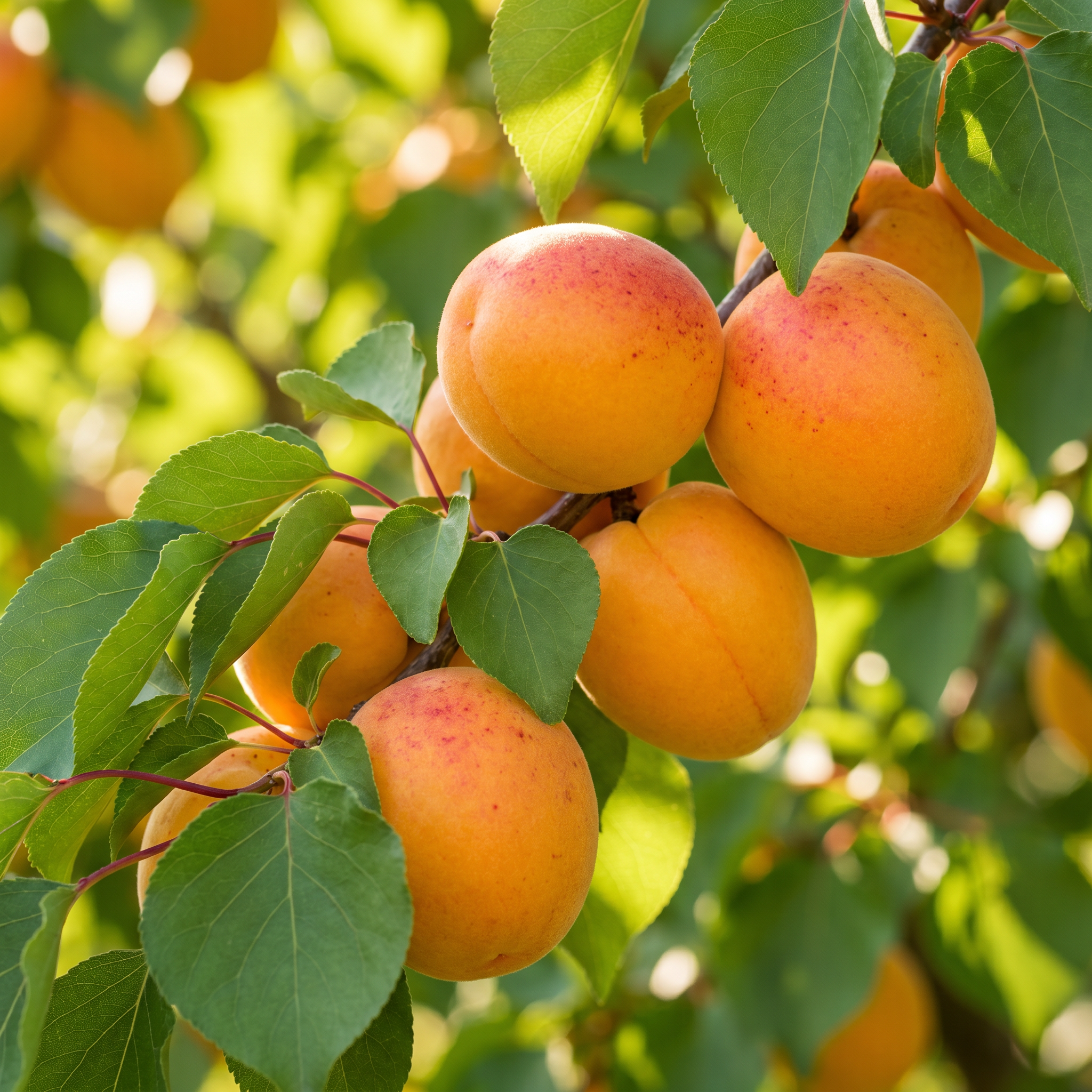
Fruit brings the garden to life
Blossom, foliage and fruit change the garden through the seasons. The pictured apricot is one example of stone fruit; each type needs its own position and care.
Details & background
For the next home of your fruit plant: this ready-to-use compost is intended for fruit and nut trees, columnar fruit and trained fruit plants in pots and garden ground. It includes an initial nutrient supply.
Choose a dedicated acidic compost for blueberries and other strong acid-lovers. This growing medium at pH 5.8 is not a blanket recommendation for every berry species.
Compost & root space
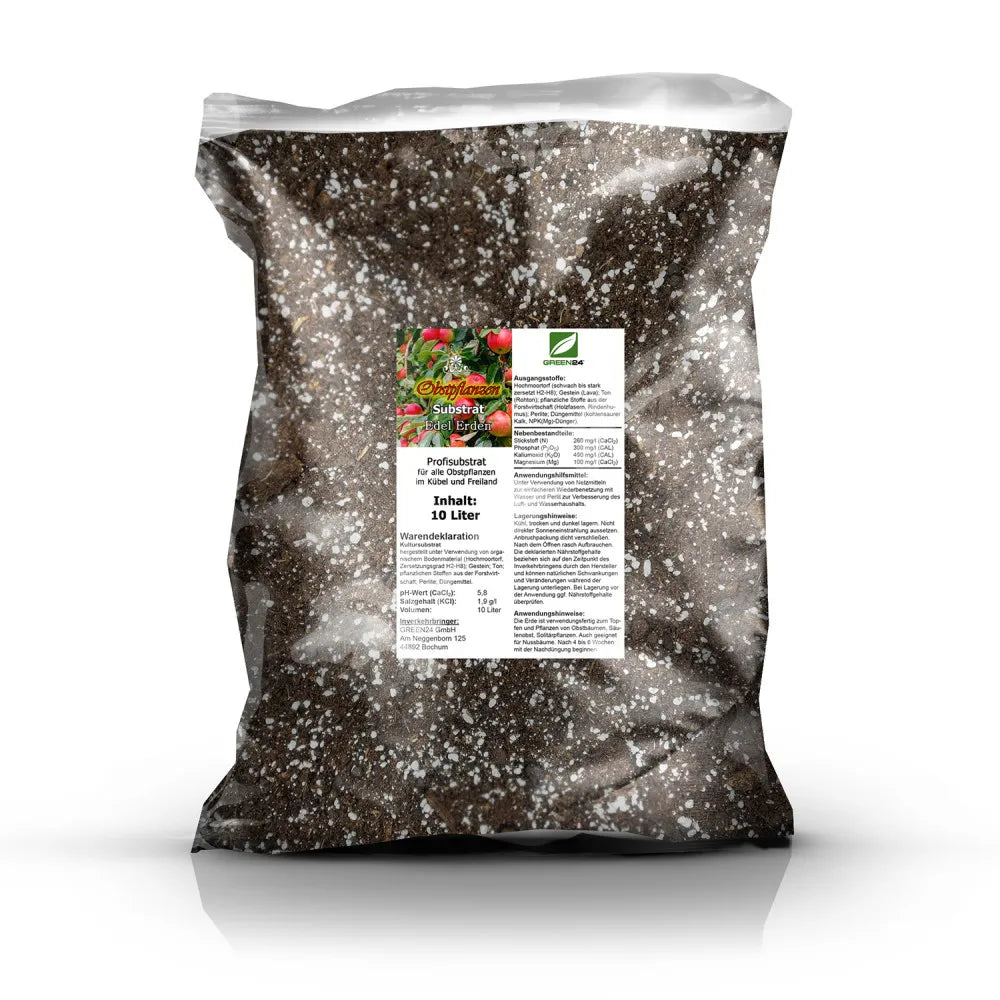
A bag with a clear declaration
The original bag contains 10 litres of Fruit Plant growing medium. Inputs, pH, salt content and nutrient values are collected in the product information.
Details & background
The old root-ball compost and fresh growing medium can have different moisture levels. Check both during establishment. Free drainage remains as important as sufficient watering.
Repotting: the complete process
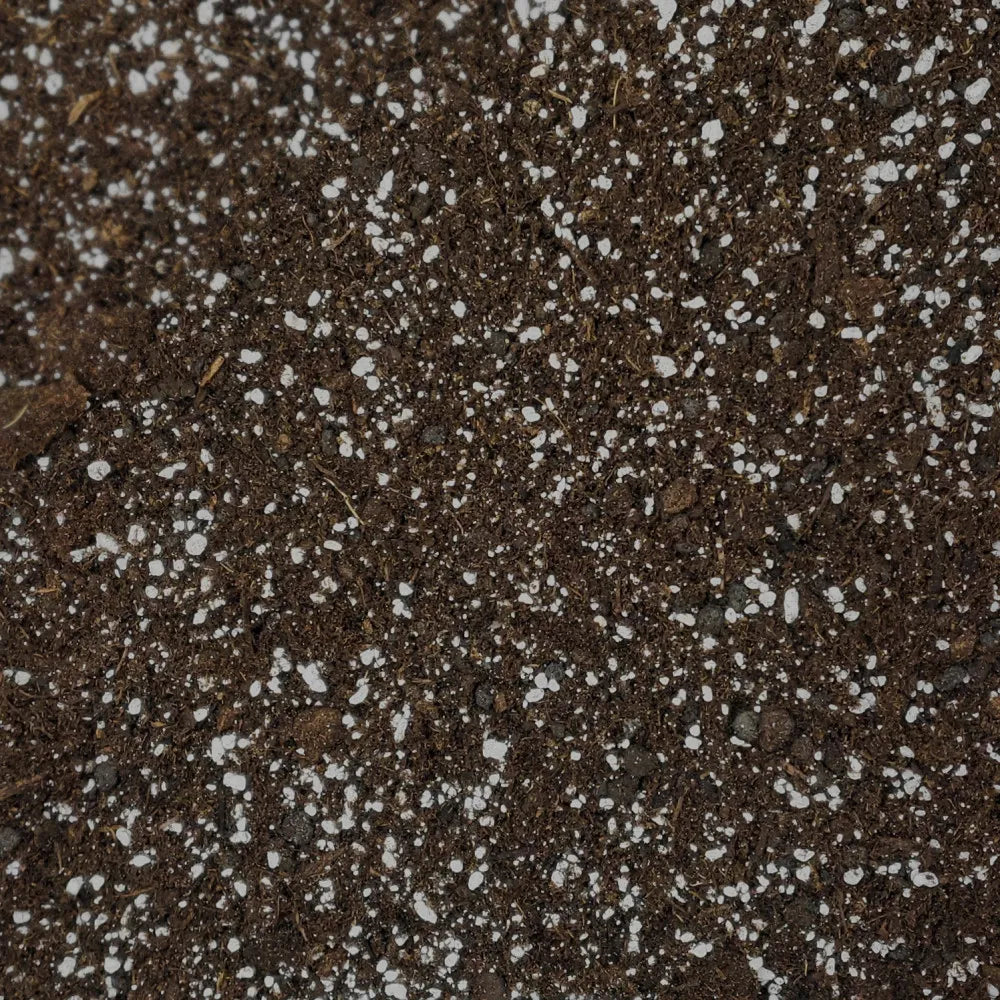
Fill gently with fresh compost
Add growing medium around the root ball in small portions. Allow for a watering rim, the correct planting depth and drainage. Eight illustrated steps guide the complete repotting process.
For rooted fruit trees in containers. Bare-root planting and planting in garden ground need preparation matched to the existing soil.
-
Check the plant and position
Identify species, rootstock, eventual size and position. These steps describe repotting a rooted fruit tree; use dedicated acidic compost for blueberries.
-
Prepare the container
Choose a stable container with drainage. Keep holes open; an outer pot must not collect water around the root ball.
-
Moisten the root ball
Check moisture before removing the pot. Gently rehydrate a dry root ball so old and new compost can take up water more evenly.
-
Release the plant carefully
Loosen the pot from the sides and support the root ball. Do not pull on the crown or graft union. Assess badly circling or damaged roots rather than routinely pruning roots hard.
-
Check depth and graft union
Add some compost and establish the previous planting depth. Keep the stem base and graft union exposed or at the specified height for the particular fruit type.
-
Fill around the sides
Add compost around the root ball in portions and firm gently. Close large voids without compacting the root zone; leave a watering rim at the top.
-
Water thoroughly
Water slowly to settle compost against the root ball. Allow excess water to drain and check stability again.
-
Support establishment
Check moisture in both the old root ball and fresh compost in the following weeks. Account for the nutrients included and begin subsequent feeding after 4–6 weeks according to plant needs.
Stay attentive after planting
Check root-zone moisture
Check new plantings and containers regularly. Water thoroughly when needed, allow drainage and check soil beneath mulch. Pay particular attention during fruit development and dry spells.
Distinguish dormancy from blossom frost
Hardy garden species remain outdoors; protect container roots from severe freezing. Later, open flowers are often more sensitive than dormant wood, so watch forecasts and local late frost.
For later feeding: Guava Fertiliser.
Choose the plant, soil and compost together
Choose a dedicated acidic compost for blueberries and other strong acid-lovers. This growing medium at pH 5.8 is not a blanket recommendation for every berry species.
Feeding, pruning and pollination depend on the fruit species. Choosing compost is one part of care, not a yield guarantee.
Fruit Plant Compost questions
Which plants is this compost intended for?
The bag label covers fruit trees, columnar fruit and trained fruit plants, including nut trees. The source gives apples, pears, cherries and plums as examples. Match soil and position to the particular plant.
Can I use it for blueberries?
Choose a dedicated acidic compost for blueberries and other strong acid-lovers. This growing medium at pH 5.8 is not a blanket recommendation for every berry species.
Is this compost peat-free?
No. The original label lists raised-bog peat H2–H8 and other plant-derived and mineral materials. No unverified peat percentage is added.
When should supplementary feeding start?
The bag label calls for supplementary feeding to begin after 4–6 weeks. Account for the particular plant’s needs, growth phase and existing nutrient supply.
Will one bag fill my container?
The bag contains 10 litres. You need the new space around the existing root ball, not automatically the full container volume. Allow a watering rim.
Can it replace all the soil in my garden?
The compost is also intended for planting in garden ground. Assess the root zone and existing soil; a small planting hole filled with new compost does not correct widespread compaction or waterlogging.
Get to know fruit plants
Plant group
A usage group comprising pome fruit, stone fruit and berry bushes, rather than one botanical family.
Position
Usually a sunny, airy position with sufficient rooting space and drainage. Currants also tolerate partial shade. Avoid frost pockets; blueberries require a separate acidic root environment.
Propagation & grafting
Many fruit trees are grafted: the cultivar determines key fruit characteristics, while the rootstock influences vigour and site adaptation. Do not cover a graft union with soil without checking the particular planting instructions.
View the fruit and berry plant profile Kiwi & Kiwiberry Pomegranate
Safety and storage
Safety instructions
Wash your face and hands thoroughly. Use diluted fertiliser promptly and keep it out of water bodies and wastewater.
Product GPSR safety information
A safety PDF is not currently available for this product. Please refer to the product information below and the label.
Storage
Please follow the product-specific information on the label and in the full description.
Read the full product description →Manufacturer / company placing the product on the market
GREEN24 GmbH
Am Neggenborn 125
44892 Bochum, Germany
info@green24.de
www.green24.de