
Practical knowledge for your plants
Liebig’s law of the minimum
When a plant barely grows, more fertiliser is rarely the best first response. The law of the minimum focuses attention on what is lacking relative to demand.
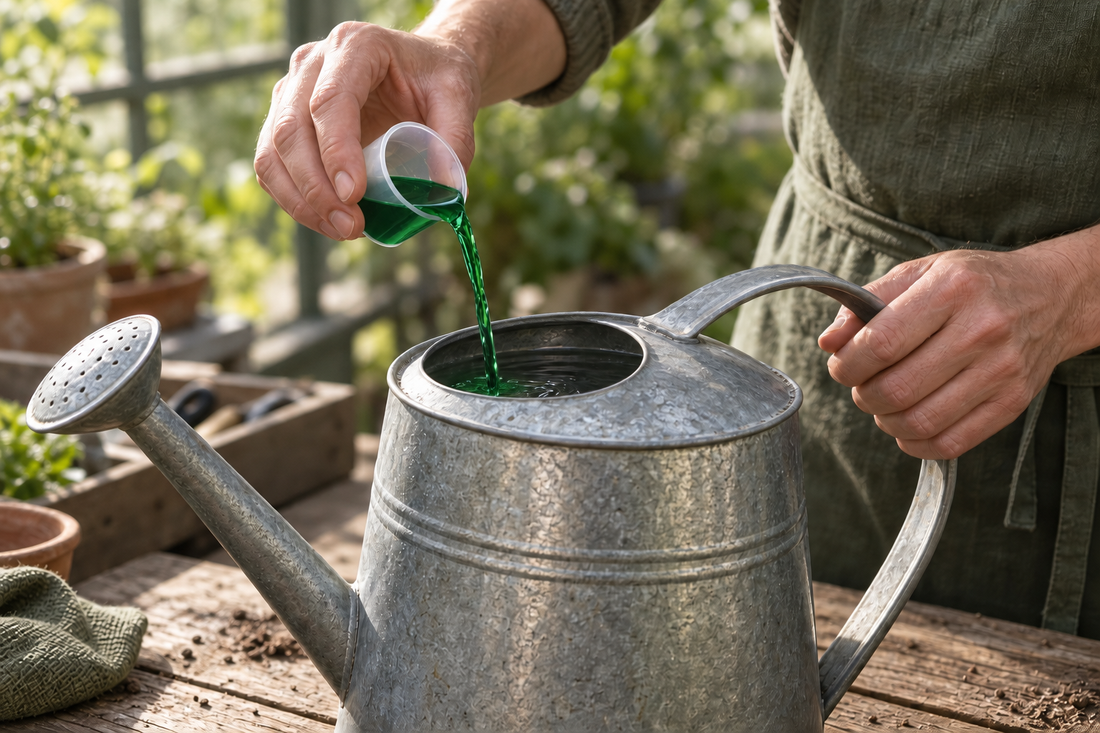
- Demand
- Supply relative to demand
- Conditions
- Check light, water and roots
- Model
- No dose or yield prediction
The shortest supply relative to demand
One essential nutrient can limit growth even when others are abundant. What matters is supply relative to demand, not the smallest number of grams on a label. A micronutrient is needed in small quantities and is not automatically the bottleneck.
The law of the minimum associated with Liebig directs attention to this limitation: adding more of an adequately supplied nutrient does not correct a shortage of another.
Explore the minimum
Why can adding more of one nutrient make no difference? Choose an example and change the supply. The barrel and network show the same relationship.
Try it & understand
One shortage changes the whole picture
Tap a stave or choose a factor.
Limiting: Iron.
Several factors are jointly limiting.
Iron
35 / 100Iron is needed in trace quantities yet can still be limiting. Availability also depends on the substrate and its pH.
Iron is limiting. Try increasing another factor first.
In the starting example, iron has 35 model points. More phosphorus leaves the limit unchanged. Improving iron to 55 raises the limit to 55. With iron at 75, light becomes limiting at 65. The interactive controls become available with JavaScript.
Imagined supply relative to demand. 100 means adequate in this model, not 100% growth. No dose or yield prediction.
Each stave represents one selected factor. Its height represents imagined supply relative to demand. The shortest stave sets the water level; water can escape at its top. The water level is a model limit, not a calculated yield.
In the supply network, the same factors lead to the plant. An adequately supplied route cannot replace a shortage on another. Both views remain synchronised when you switch.
Include light, water and roots
The barrel shows five selected nutrients, not a complete nutrient list. Light, water and root function extend the nutrient principle as a simplified teaching model. Fertiliser cannot replace light in dark winter quarters. Dry substrate restricts supply through soil water. Persistently wet, oxygen-poor soil can impair root function.
Root function combines many processes into one value. A low model value does not identify a particular root problem or explain how to correct it.
More can also cause harm
Fertiliser beyond demand does not increase growth indefinitely. High salt concentrations can make water uptake harder; nutrient excesses can worsen imbalances. Water and light also have favourable ranges that depend on the plant: more is not automatically better.
The model scale ends at adequate supply. It simulates neither over-fertilisation nor a safe dose. The “Improve the bottleneck” action represents an imagined change; in practice, the cause determines which action is useful.
From a symptom to a useful action
- Check light, moisture, drainage and root condition.
- Consider plant identity, growth stage, substrate and previous feeding.
- Do not automatically interpret yellow leaves as nutrient deficiency. Similar symptoms can have different causes.
- Suitable soil or substrate tests may help with recurring problems.
- Choose an appropriate product and follow its own label. Do not transfer a dose from a different fertiliser.
A thinking tool with limits
Several factors act together in living plants. Demand, temperature, pH and nutrient availability change, and limitations can shift. Conditions can also be jointly limiting. Plants have species-specific growth limits.
The fixed model limit is deliberately simple. A real plant may not respond immediately or proportionally to an intervention. The model helps organise your reasoning and does not replace diagnosis.
Frequently asked questions
Can the model identify my plant’s limiting nutrient?
You choose the model values yourself. They cannot identify an actual deficiency in your plant. For advice, provide photos, the plant species, substrate and details of previous care and feeding.
Where can I find the correct dose?
On the product’s application and dosage information and on its own label. Composition and concentration differ between fertilisers.
Products for this project
Equipment for the tasks described here. Each product page explains its intended use and application.
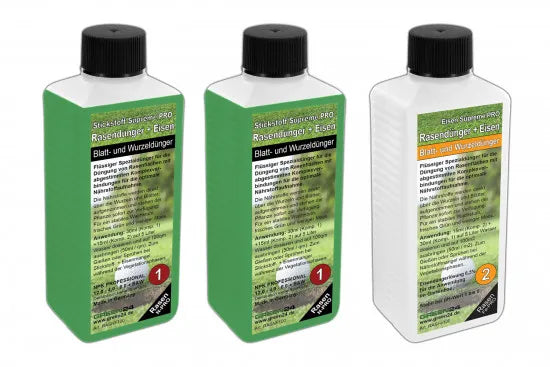
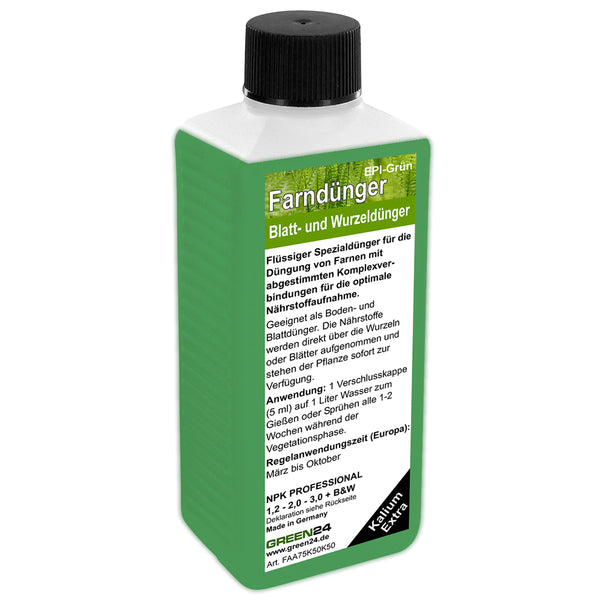
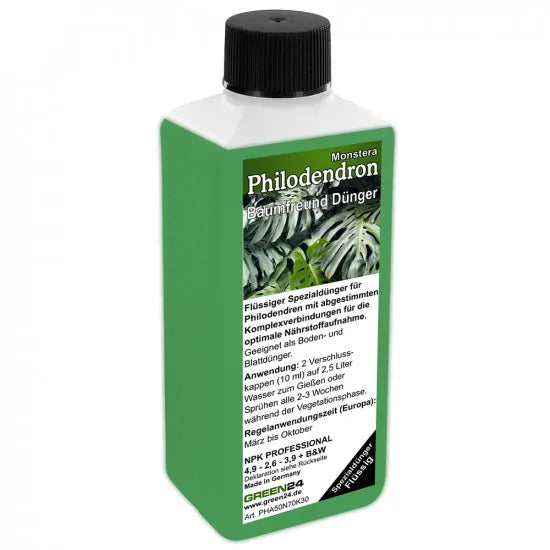
Related plants in the catalogue
Keep exploring

Plant nutrition: understand demand and feed appropriately
Plants need nutrients, but feeding cannot be separated from light, water and roots. Learn to read product information and make a considered feeding decision.
Read the guideUSDA hardiness zones for Germany & Europe
How cold does it get where you live? Explore weather stations in Germany and Europe, compare USDA half-zones and plan winter care for your plants.
Read the guide