


At a glance
Hydrangea Compost
Ready-to-use growing medium for planting and repotting hydrangeas.
- Growing situation
- Beds & containers
For hydrangeas, including mophead and panicle types.
- Pack size
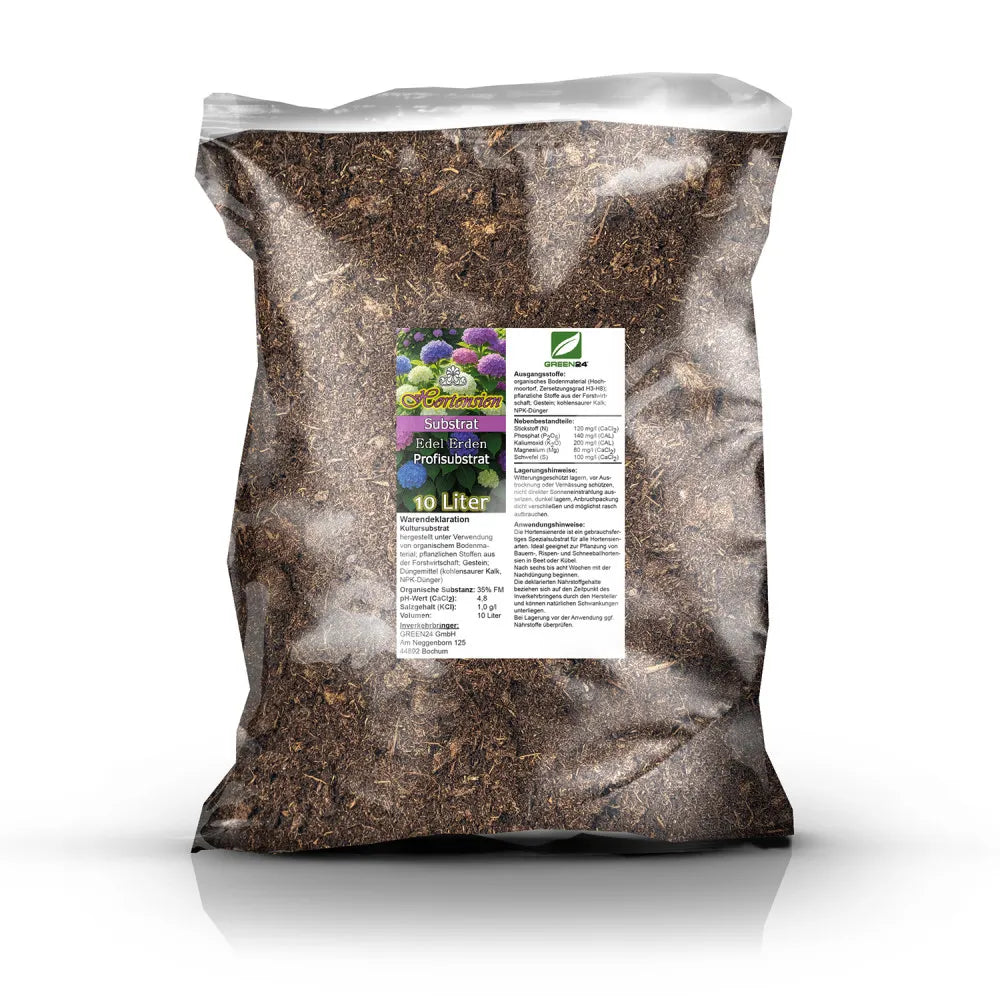
- 10 litres
Ready to use for planting and repotting.
- Growing medium
- Contains peat
With plant materials from forestry and mineral ingredients.
- Initial nutrition
- Pre-fertilised
The label specifies supplementary feeding after 6–8 weeks.
Follow the directions on the product label.
Supplementary original leaflet 140222 – soils & growing media (PDF, German) Opens in a new window.Easy application
The compost is ready to use in beds and containers.
- Prepare the rooting space
Choose a container with open drainage or prepare the planting area to suit the existing soil.
- Keep the root-ball level
Set the hydrangea at its previous depth, fill around the ball and firm gently.
- Water and check
Moisten both the old root ball and fresh compost evenly. Check moisture over the following days.
Account for nutrients already included. The label specifies supplementary feeding after 6–8 weeks; consider season, growth and previous feeds.
View the complete repotting guideProduct information
Application & repottingReady to use for hydrangeas in beds and containers.
Use for planting and repotting hydrangeas. Match the container, planting area and watering to the plant’s size and species. Retain the previous surface level of the root ball.
The label specifies supplementary feeding after 6 to 8 weeks. Allow for existing nutrients and active growth; then follow the instructions for the chosen fertiliser.
View the illustrated repotting guide
View the original label (German) Opens in a new window.
Supplementary original leaflet 140222 – soils & growing media (PDF, German) Opens in a new window.
PropertiesProduct characteristics and guidance
The mix contains organic soil material from raised-bog peat with decomposition grades H3 to H8, plant materials from forestry, rock material, calcium carbonate and NPK fertiliser.
The growing medium contains peat and nutrients. Its acidic character is one part of the growing conditions; flower colour depends on hydrangea species, cultivar and other conditions around the roots.
Declared growing-medium valuesOrganic matter, pH, salt content and nutrients from the label.
Values apply when the product is placed on the market and can vary naturally. After storage, check nutrient contents before use if needed.
- Organic matter: 35% of fresh mass.
- pH (CaCl₂): 4.8.
- Salt content (KCl): 1.0 g/l.
- Nitrogen (N): 120 mg/l (CaCl₂).
- Phosphate (P₂O₅): 140 mg/l (CAL).
- Potassium oxide (K₂O): 200 mg/l (CAL).
- Magnesium (Mg): 80 mg/l (CaCl₂).
- Sulphur (S): 100 mg/l (CaCl₂).
Declaration on the original bag (German) Opens in a new window.
Pairs well with
Selected additions for your plant care.
-

Hydrangea Fertiliser
From €9,85 View productFor later feeding. The compost is pre-fertilised; the label specifies supplementary feeding after 6–8 weeks, allowing for active growth.


GREEN24 · Product knowledge
About Hydrangea Compost
For hydrangeas in beds and containers
A fresh space for the root ball
Ready-to-use compost for hydrangeas in beds and containers. The 10-litre bag fills space around the existing root ball; retain its previous planting depth.
Details & background
Use this ready-to-use compost when planting or repotting rooted hydrangeas. The species and its eventual size determine position and space requirements.
Mophead, panicle and other hydrangeas differ in flowering and pruning. Suitable compost is one part of their care; light, watering and the existing garden soil matter too.
Compost & rooting space

A closer look at the compost
The mix combines organic materials, mineral ingredients and initial nutrition. Roots also need free drainage and even moisture.
Details & background
In a container, compost around the root ball can be renewed selectively. In the garden, existing soil, irrigation water and rainfall affect the rooting space. A small amount of specialist compost does not permanently change every garden soil.
This compost already supplies nutrients. Plan extra feeding after establishment and in line with active growth. The full declared values are collected in the product information.
Planting & repotting step by step
Care continues after planting
Dense leaves and pink flowerheads make a hydrangea a garden feature. Check the root ball regularly after planting and adapt water, later feeding and pruning to your hydrangea species.
The illustrated sequence shows repotting a hydrangea in a container. The same principles of retaining root-ball height and providing even moisture apply to a newly purchased rooted plant.
Repotting: the complete sequence
-
Check the plant and need to repot
Check whether roots fill the pot densely or the ball no longer takes up water evenly. Prepare compost, a suitable container, water and tools.
Choose a frost-free day without excessive heat. Handle flowering plants especially gently and avoid unnecessary root damage.
-
Select a suitable container
The new pot needs drainage holes and enough room around the existing root ball. Its size and stability should suit the hydrangea.
Allow space for a watering rim. The compost required is the free space around and beneath the ball, rather than the whole container volume.
-
Prepare drainage
Check openings at the base and the pot’s final position. Drained water must not remain around the roots.
The illustration shows a possible arrangement using coarse material and permeable fleece. Open drainage holes and suitable watering are still required.
-
Release the root ball gently
Moisten a very dry root ball first. Ease it carefully out of the old container, supporting it from beneath.
Do not pull on branches or flowerheads. Preserve healthy roots and loosen firm circling roots at the edges only gently.
-
Set the ball at the correct height
Add an initial layer of compost and position the root ball to check its level. Its previous surface should align with the planned new compost surface.
Adjust the amount of compost beneath the ball. Do not bury the shoot bases more deeply, and retain a watering rim.
-
Fill the spaces evenly
Add fresh compost around the sides in small amounts, keeping the hydrangea upright. Firm gently to close large gaps.
Do not compact it hard. Recheck planting depth and leave room beneath the rim so that water can soak in slowly.
-
Water slowly and thoroughly
Water in several gentle stages until the old root ball and new compost are evenly moist. Check drainage at the pot base.
Check for water collecting in an outer pot and remove it if necessary. If water bypasses the old ball, inspect its moisture and continue moistening carefully.
-
Support establishment
Top up compost that settles at the sides after watering without burying the hydrangea more deeply. Pay particular attention to root-ball moisture over the following days.
Record the date: the compost is pre-fertilised, with supplementary feeding specified after 6–8 weeks. Include season, growth and previous nutrient applications in further care.
Planting in a bed
Loosen the soil around the planting position and assess drainage. Fit the hole to the root ball and retain its previous surface level. On calcareous soil, container growing can be easier to manage for colour-changing blue hydrangeas.
Care for water, flowers and growth
Check root-ball moisture
Check the compost regularly after planting. Hot, windy days can increase water demand. Keep it evenly moist and avoid standing water in an outer pot.
Plan supplementary feeding
Begin supplementary feeding after 6–8 weeks according to the label. The plant needs to be actively growing; consider dormancy and previous feeds. Use the fertiliser at its own stated dilution.
Understand flower colour
For certain mophead and lacecap hydrangeas, acidic conditions and available aluminium can support blue shades. No added blueing agent is listed in the compost declaration. White cultivars and panicle hydrangeas do not respond in the same way.
Where iron is needed: Purital F06 iron fertiliser. Follow its dilution and application instructions.
Observe first, then act
Wilting leaves, brown edges or few flowers can relate to water, roots, weather or pruning. Check root-ball moisture and affected shoots before changing compost or feeding.
When the cause is unclear, photographs of the whole plant and symptoms, plus species, position and care details, help. Changing compost is not a general treatment for disease or pests.
Questions about Hydrangea Compost
Is the compost ready to use?
Yes. Use it for planting and repotting hydrangeas in beds and containers. Provide drainage and retain the previous root-ball level.
Is Hydrangea Compost peat-free?
The mix contains raised-bog peat, plant materials from forestry and mineral ingredients. The product information gives the complete composition.
Will this turn every hydrangea blue?
No. Only colour-changing species and cultivars respond in this way to root-zone conditions. Available aluminium, soil and irrigation water also matter. This compost alone does not guarantee a particular blue colour.
How long does the initial fertiliser last?
The label specifies supplementary feeding after 6–8 weeks. Match further applications to growth, season and existing nutrients. Do not feed during dormancy simply because that period has elapsed.
How much compost does a container need?
Estimate the free space beneath and around the existing root ball, which already occupies part of the container. Allow for a watering rim and a little compost for topping up after watering.
Your hydrangea through the year
The plant profile explains species differences, flowering periods and suitable pruning. Use its facts and care calendar to place the next repotting within the complete hydrangea care routine.
View the hydrangea profile → View the care calendar → Personal advice →
Safety and storage
Safety instructions
Keep out of reach of children and pets. Not for consumption. Avoid creating dust when filling and wash hands after use.
Wash your face and hands thoroughly. Use diluted fertiliser promptly and keep it out of water bodies and wastewater.
Product GPSR safety information
Storage
Store sheltered from the weather in a dark place. Protect from drying out, waterlogging and direct sunlight.
Seal opened packs tightly and use the contents as soon as possible.
Manufacturer / company placing the product on the market
GREEN24 GmbH
Am Neggenborn 125
44892 Bochum, Germany
info@green24.de
www.green24.de