Leaf
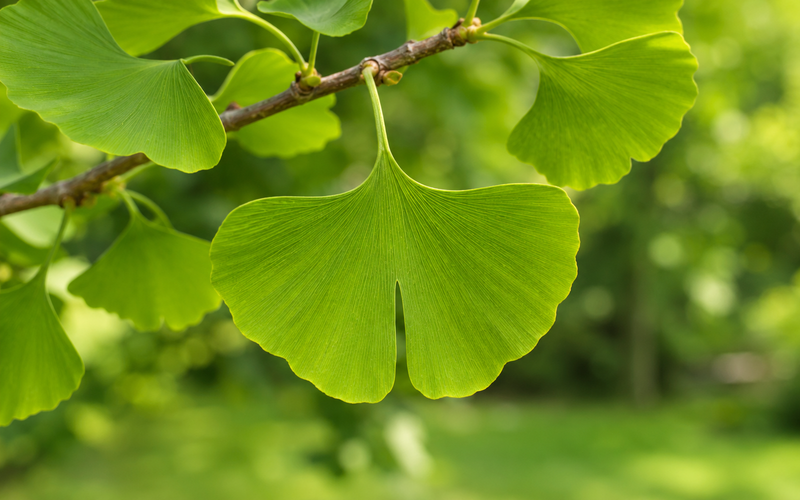
Fan-shaped leaves
The fan-shaped, often two-lobed leaves have forking veins and turn a clear yellow in autumn.


GREEN24 Ginkgo Fertiliser is a liquid NPK concentrate for ginkgo (Ginkgo biloba) in gardens and pots. Nitrogen is the largest share, phosphate the smallest. Feeding takes place during the growing season from April to September.
1 Use
1 capful · every 2–3 weeks · April to September
5 ml= 1 capful per 1 l of water
2 GREEN24 · Plant knowledge
Feeding season April to September. Growth April to October, peak May to August, rest November to March.
Leaf
The fan-shaped, often two-lobed leaves have forking veins and turn a clear yellow in autumn.
Flower
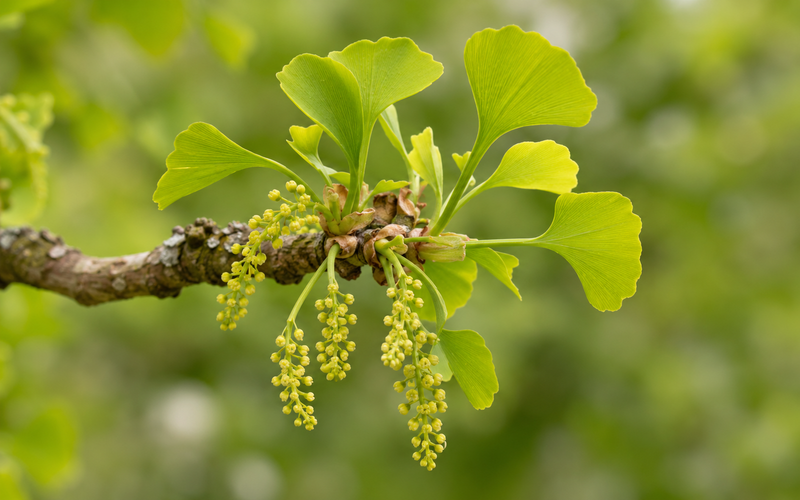
The ginkgo is dioecious; the greenish flower and cone clusters appear in spring and are inconspicuous.
Seeds
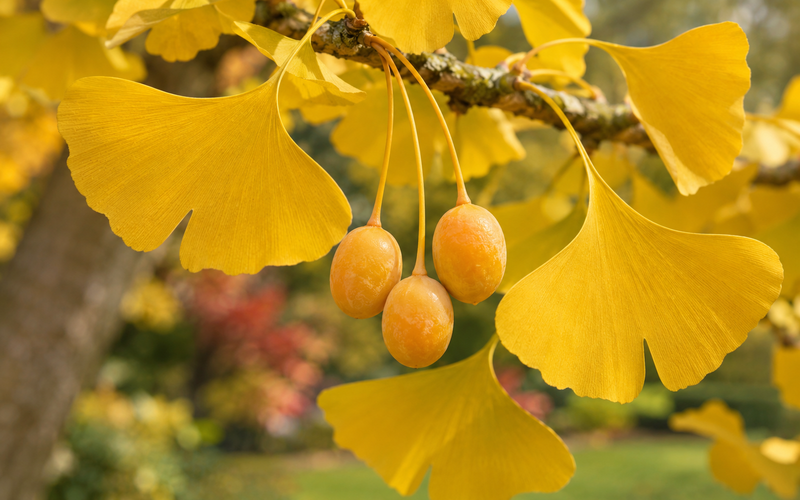
Female trees bear yellowish-orange seeds in autumn; the pulp smells unpleasant and can irritate the skin on contact.
3 Nutrients
| Nutrient | Content |
|---|---|
| Total nitrogen (N) | 4.8 % |
| of which urea nitrogen | 4.6 % |
| Water-soluble phosphate (P₂O₅) | 2.7 % |
| Water-soluble potassium oxide (K₂O) | 4.0 % |
| Boron (B) | 0.005 % |
| Copper (Cu) · EDTA chelate | 0.002 % |
| Iron (Fe) · EDTA chelate | 0.01 % |
| Manganese (Mn) · EDTA chelate | 0.006 % |
| Molybdenum (Mo) | 0.0005 % |
| Zinc (Zn) · EDTA chelate | 0.002 % |
All nutrients are water-soluble, with the trace nutrients copper, iron, manganese and zinc bound as chelates. A buffer system supports the pH of the mixture; good wetting spreads the spray solution over the leaves.
4 Goes with
5 Questions and answers
Every 2–3 weeks during active growth, regularly from April to September.
5 ml. That is 5 ml (1 capful) per 1 litre of water; for a 10-litre watering can 50 ml (10 capfuls).
250 ml makes approx. 50 litres of watering solution – about 5 cans of 10 litres. Twin pack 2 × 250 ml: approx. 100 litres.
Yes, for watering or spraying at the same dilution. Do not spray open flowers, do not apply in direct sunlight or below 5 °C or above 30 °C.
Preferably low-lime water or rainwater at 15–25 °C.
The regular application period ends in September. Feed only during the growing season, according to growth.
In a dry, dark place above 8 °C and at no more than 38 °C, out of reach of children and animals.
Watering · through the rootsWater ginkgo onto the pre-moistened root zone. The soil should be free-draining; permanently wet soil does not suit the ginkgo.
Spraying · onto the leafWet the fan-shaped leaves on both sides with a fine mist.
6 Knowledge
Compatibility applies to the fertiliser plus one product at a time, not to all products with each other. Observe crop, target organism, place of use, dose and waiting periods in both sets of instructions; the stricter requirement applies. Never mix undiluted concentrates with each other.
Use plant protection products safely. Always read the label and product information before use.
Discover more
 FertiliserCherry Laurel Fertiliser FE ProFor cherry laurel · Liquid concentrate with 0.10% iron
 FertiliserRhododendron & Azalea FertiliserFor rhododendrons, azaleas and acid-loving plants · Liquid concentrate
 FertiliserWeeping Willow FertiliserLiquid concentrate · 250 ml or twin pack
 FertiliserSilk Tree FertiliserLiquid concentrate · 250 ml or twin pack


Wash your face and hands thoroughly. Use diluted fertiliser promptly and keep it out of water bodies and wastewater.
Dry · dark · above 8 °C to a maximum of 38 °C Store in a dry, dark place above 8 °C and at no more than 38 °C. Keep out of reach of children and animals.
Keep tightly closed in the original container, separate from food and animal feed.
Dry · dark · above 8 °C to a maximum of 38 °C Store in a dry, dark place above 8 °C and at no more than 38 °C. Keep out of reach of children and animals.
Keep fertiliser residues and wash water out of waterways and sewage. Follow packaging disposal directions.
Prepare only the amount needed and never apply undiluted.
The original leaflet supplements this product’s own instructions. Use dilution stages only within their stated scope; standard dilution remains the basis of yield.
GREEN24
From 9.85 €
( 39.40 €/ l)
Compare within the range: Cherry Laurel Fertiliser.
250 ml · 500 ml – twin pack (2 × 250 ml) · 1 litre
Delivery time: In stock · 1–3 days (DE)
Incl. VAT, plus shipping costs
GREEN24
From 9.95 €
( 39.80 €/ l)
Compare within the range: Giant Sequoia Fertiliser.
250 ml · 500 ml – twin pack (2 × 250 ml) · 1 litre
Delivery time: In stock · 1–3 days (DE)
Incl. VAT, plus shipping costs

Plant species, pests, diseases and care in seconds – plus products that really fit, free of charge.