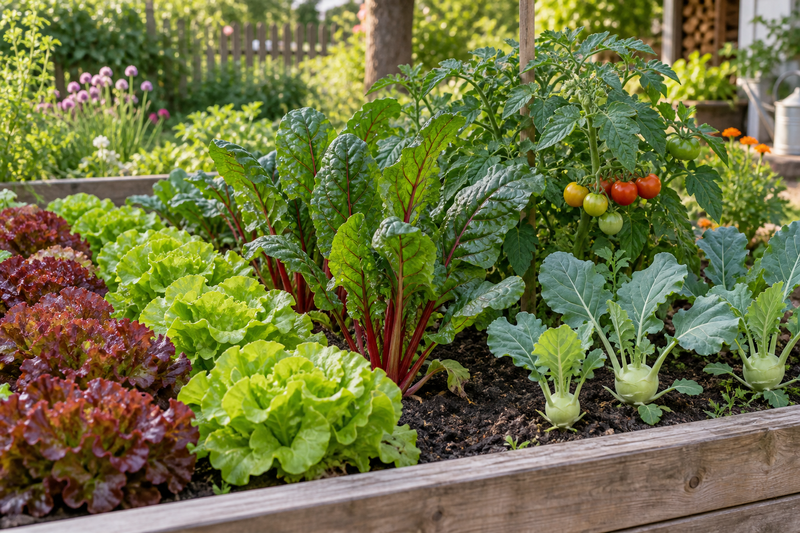
From the first balcony lettuce to vegetables under glass, this peat-free compost provides fresh root space. It is ready to use, pre-fertilised and intended for vegetable crops outdoors, in greenhouses and in containers.
Use
Vegetables
Ready-to-use growing medium
Pack size
10 litres
With an initial nutrient supply
Ingredients
Peat-free
Own bag declaration
Supplementary feeding
According to crop needs
Account for initial nutrients
Easy application
From the first balcony lettuce to vegetables under glass, this peat-free compost provides fresh root space. It is ready to use, pre-fertilised and intended for vegetable crops outdoors, in greenhouses and in containers.
Check whether repotting is needed
Check root development and compost structure before repotting. Work near the start of active growth where possible.
Keep the original planting depth
Choose planting depth for the crop. Keep a lettuce crown clear and never bury a graft union.
Follow establishment
The compost contains fertiliser. Its original label gives no fixed number of weeks before supplementary feeding; timing depends on crop, growth and existing nutrients.
The compost contains fertiliser. Its original label gives no fixed number of weeks before supplementary feeding; timing depends on crop, growth and existing nutrients.
Application & repottingFor root and tuber vegetables, fruiting vegetables, brassicas and bulb vegetables as listed on the label. Match spacing, planting depth and nutrient demand to the crop. The illustrated sequence shows a rooted young plant in a pot.
The compost contains fertiliser. Its original label gives no fixed number of weeks before supplementary feeding; timing depends on crop, growth and existing nutrients.
From the first balcony lettuce to vegetables under glass, this peat-free compost provides fresh root space. It is ready to use, pre-fertilised and intended for vegetable crops outdoors, in greenhouses and in containers.
Consider the root zone and plant together
Peat-free Vegetable Compost
For root and tuber vegetables, fruiting vegetables, brassicas and bulb vegetables as listed on the label. Match spacing, planting depth and nutrient demand to the crop. The illustrated sequence shows a rooted young plant in a pot.
Check the root ball and planting space
Check root development and compost structure before repotting. Work near the start of active growth where possible.
Roots and aftercare
The compost contains fertiliser. Its original label gives no fixed number of weeks before supplementary feeding; timing depends on crop, growth and existing nutrients.
Application & repotting
For root and tuber vegetables, fruiting vegetables, brassicas and bulb vegetables as listed on the label. Match spacing, planting depth and nutrient demand to the crop. The illustrated sequence shows a rooted young plant in a pot.
The compost contains fertiliser. Its original label gives no fixed number of weeks before supplementary feeding; timing depends on crop, growth and existing nutrients.
Properties & ingredients
Peat-free.
plant materials from forestry, plant materials from garden and landscape maintenance and agriculture, calcium carbonate and calcium ammonium nitrate.
Ingredient types
From this product’s declaration
plant materials from forestry, plant materials from garden and landscape maintenance and agriculture, calcium carbonate and calcium ammonium nitrate.
A place to grow
The plant comes first
From the first balcony lettuce to vegetables under glass, this peat-free compost provides fresh root space. It is ready to use, pre-fertilised and intended for vegetable crops outdoors, in greenhouses and in containers.
From the first balcony lettuce to vegetables under glass, this peat-free compost provides fresh root space. It is ready to use, pre-fertilised and intended for vegetable crops outdoors, in greenhouses and in containers.
For root and tuber vegetables, fruiting vegetables, brassicas and bulb vegetables as listed on the label. Match spacing, planting depth and nutrient demand to the crop. The illustrated sequence shows a rooted young plant in a pot.
Growing medium & roots
Drainage, pot size and attentive watering work together. New compost does not automatically heal damaged roots.
For root and tuber vegetables, fruiting vegetables, brassicas and bulb vegetables as listed on the label. Match spacing, planting depth and nutrient demand to the crop. The illustrated sequence shows a rooted young plant in a pot.
For root and tuber vegetables, fruiting vegetables, brassicas and bulb vegetables as listed on the label. Match spacing, planting depth and nutrient demand to the crop. The illustrated sequence shows a rooted young plant in a pot.
1
Check whether repotting is needed
Check root development and compost structure before repotting. Work near the start of active growth where possible.
2
Choose a suitable container
Choose a stable pot with a little space beside the root ball. An oversized container can remain wet around a small root system.
3
Provide free drainage
Keep drainage holes open. Ensure you can empty the outer pot or saucer later.
4
Release the root ball gently
Support the root ball and release it gently from the old pot. Retain healthy roots and avoid pulling leaves or stems.
5
Keep the original planting depth
Choose planting depth for the crop. Keep a lettuce crown clear and never bury a graft union.
6
Fill around the root ball
Add fresh compost beneath and beside the root ball. Close large air pockets gently and leave a watering rim without compacting the medium hard.
7
Water and allow drainage
Check moisture in the old root ball and fresh compost after planting. Moisten as needed and allow excess water to drain.
8
Follow establishment
The compost contains fertiliser. Its original label gives no fixed number of weeks before supplementary feeding; timing depends on crop, growth and existing nutrients.
The following weeks
The compost contains fertiliser. Its original label gives no fixed number of weeks before supplementary feeding; timing depends on crop, growth and existing nutrients.
From the first balcony lettuce to vegetables under glass, this peat-free compost provides fresh root space. It is ready to use, pre-fertilised and intended for vegetable crops outdoors, in greenhouses and in containers.
Can I use the soil straight away?
Yes, the soil is ready to use. Follow the planting instructions for your plant and choose a container with drainage holes.
When should I start fertilising?
The compost contains fertiliser. Its original label gives no fixed number of weeks before supplementary feeding; timing depends on crop, growth and existing nutrients.
How much soil will I need?
10 litres. You need soil for the empty space below and around the existing root ball. Pot shape and root-ball size determine how many plants one bag will serve.
Safety and storage
Safety instructions
Minimise dust and do not inhale it. Avoid eye contact and prolonged skin contact.
Keep away from food and animal feed, out of reach of children and animals. Wash hands after use.
Store protected from weather, in dry and dark conditions; protect against drying out, excessive moisture and direct sun. Reseal opened packaging tightly and use promptly.
Minimise dust and do not inhale it. Avoid eye contact and prolonged skin contact.
Keep away from food and animal feed, out of reach of children and animals. Wash hands after use.
Manufacturer / company placing the product on the market
Customers and visitors to our shop can leave reviews. We do not check for every review whether a purchase was made; “Verified” means the review is linked to an order. Reviews taken over from our previous shop are not verified; they are labelled “Review collected from another provider”. Verified product reviews earn blossom points, regardless of the rating. How our reviews are collected
Matching seeds
For your next sowing – varieties that suit this product.