


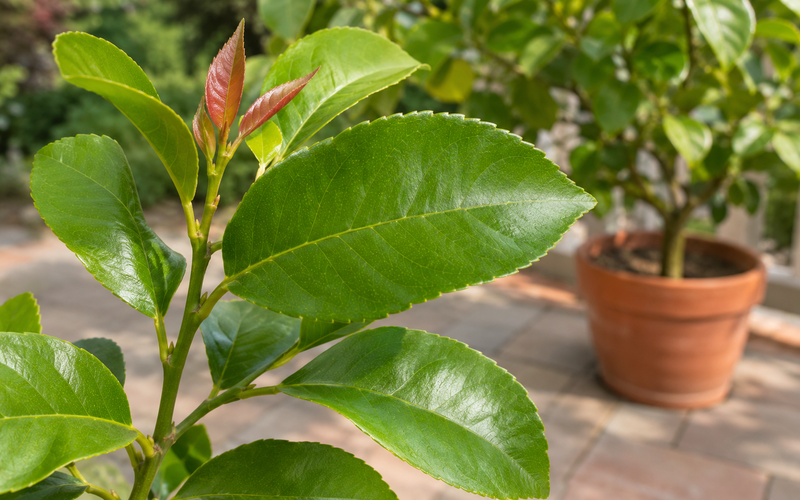
Leaf
Leathery, aromatic leaves
Leathery, aromatic leaves; shoots may carry strong thorns depending on type and age.


GREEN24 Citrus Fertiliser is a liquid NPK concentrate for citrus plants (Citrus species) in containers. Nitrogen is the largest share, phosphate the smallest. Feeding takes place during the growing season from April to September.
1 Use
1 capful · every 1–2 weeks · April to September
5 ml= 1 capful per 2.5 l of water
2 GREEN24 · Plant knowledge
Feeding season April to September. Growth March to October, peak April to August, rest November to February.
Leaf
Leathery, aromatic leaves; shoots may carry strong thorns depending on type and age.
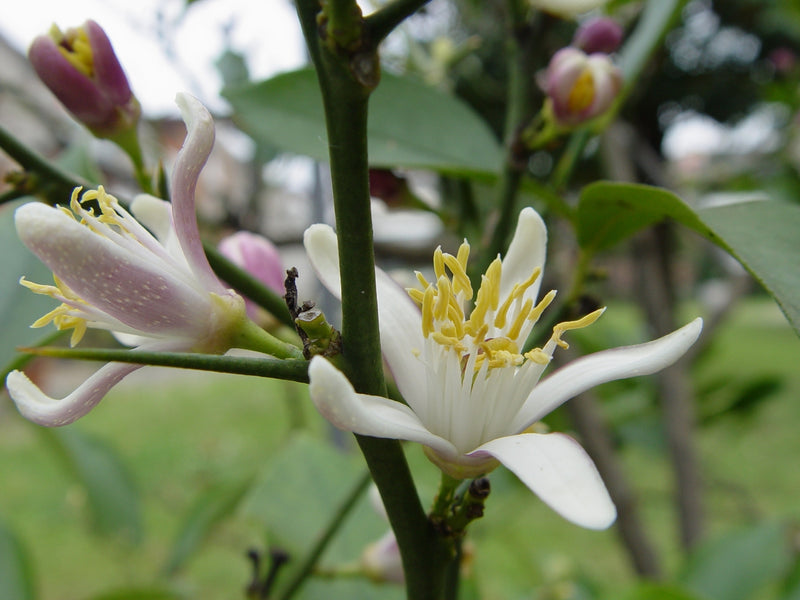
Flower
Flowering depends on species and cultivar, and some plants flower several times a year; the flowers are fragrant.
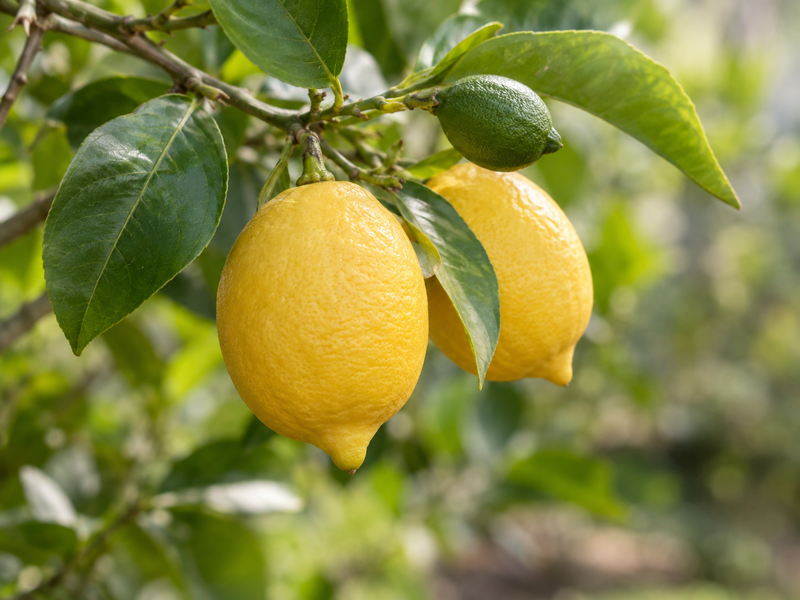
Fruit
Lemons, oranges, mandarins and other citrus develop leathery-skinned fruits with juicy interiors. Flowers and fruit at different stages may occur on the same plant.
3 Nutrients
| Nutrient | Content |
|---|---|
| Total nitrogen (N) | 5.1 % |
| of which urea nitrogen | 5.0 % |
| Water-soluble phosphate (P₂O₅) | 2.5 % |
| Water-soluble potassium oxide (K₂O) | 3.7 % |
| Boron (B) | 0.005 % |
| Copper (Cu) · EDTA chelate | 0.002 % |
| Iron (Fe) · EDTA chelate | 0.03 % |
| Manganese (Mn) · EDTA chelate | 0.006 % |
| Molybdenum (Mo) | 0.0005 % |
| Zinc (Zn) · EDTA chelate | 0.002 % |
All nutrients are water-soluble; the trace nutrients copper, iron, manganese and zinc are bound as chelates. A buffer system supports the pH of the mix; good wetting spreads the spray solution over the leathery leaves.
4 Goes with
5 Questions and answers
Every 1–2 weeks during active growth, regularly from April to September.
2 ml. That is 5 ml (1 capful) per 2.5 litres of water; for a 10-litre watering can 20 ml (4 capfuls).
250 ml makes approx. 125 litres of watering solution – about 12 cans of 10 litres. Twin pack 2 × 250 ml: approx. 250 litres. 1 litre: approx. 500 litres.
Yes, for watering or spraying at the same dilution. Do not spray open flowers, do not apply in direct sunlight or below 5 °C or above 30 °C.
Preferably low-lime water or rainwater at 15–25 °C.
The regular application period ends in September. Feed only during the growing season, according to growth.
In a dry, dark place above 8 °C and at no more than 38 °C, out of reach of children and animals.
Watering · through the rootsWater citrus plants onto the pre-moistened root ball. Excess water must be able to drain away.
Spraying · onto the leafWet the leathery leaves on both sides with a fine mist. Avoid open flowers.
6 Knowledge
Compatibility applies to the fertiliser plus one product at a time, not to all products with each other. Observe crop, target organism, place of use, dose and waiting periods in both sets of instructions; the stricter requirement applies. Never mix undiluted concentrates with each other.
Use plant protection products safely. Always read the label and product information before use.
Discover more
 FertiliserCitrus Complex AF – 5 Litres of Ready-to-Use, Lime-Free Special Fertiliser with Extra Iron against Chlorosis in Lemons, Oranges & All Citrus Plants. For Lush Green Leaves and a Rich HarvestFor lemons, oranges and other citrus plants · Ready-to-use feed
 FertiliserOrange Tree FertiliserLiquid concentrate · 250 ml or twin pack
 FertiliserKumquat FertiliserLiquid concentrate · 250 ml or twin pack
 FertiliserMandarin Tree FertiliserLiquid concentrate · 250 ml or twin pack


Avoid contact with eyes, skin and clothing. Do not inhale spray mist. Wear protective clothing, rubber gloves and safety glasses when handling the product. Keep away from food and beverages. Wash your face and hands thoroughly after use. Official advisory recommendations take precedence. Fertilisers may leave permanent stains on surfaces. Do not allow fertiliser to enter bodies of water or wastewater.
Official advisory recommendations take precedence.
Wash your face and hands thoroughly. Use diluted fertiliser promptly and keep it out of water bodies and wastewater.
Dry · dark · above 8 °C to a maximum of 38 °C
Store in a dry, dark place above 8 °C and at no more than 38 °C.
Keep out of reach of children and animals.
The original leaflet explains safe mixing and application. Use this citrus concentrate’s product-specific dilution in the calculator. Use half strength for young and sensitive plants according to leaflet 130405.
GREEN24
19.95 €
( 3.99 €/ l)
Ready-to-use alternative for citrus. Follow its own instructions rather than the concentrate dilution.
Delivery time: In stock · 1–3 days (DE)
Incl. VAT, plus shipping costs
GREEN24
15.95 €
Citrus set alternative: already includes 10 litres of compost and 250 ml matching fertiliser. Do not buy the same contents twice.
10 l compost + 250 ml fertiliser
Delivery time: In stock · 1–3 days (DE)
Incl. VAT, plus shipping costs
GREEN24
19.95 €
( 26.60 €/ l)
Set with citrus, universal and autumn fertilisers for separate uses. Follow each label and the plant’s needs.
3 × 250 ml
Delivery time: In stock · 1–3 days (DE)
Incl. VAT, plus shipping costs
GREEN24
From 11.95 €
( 47.80 €/ l)
Universal fertiliser for suitable container plants, with its own formulation. Not the same specialist formula; follow its own dilution and the plant’s needs.
250 ml · 500 ml – twin pack (2 × 250 ml) · 1 litre
Delivery time: In stock · 1–3 days (DE)
Incl. VAT, plus shipping costs

Plant species, pests, diseases and care in seconds – plus products that really fit, free of charge.


