


At a glance
Grapevine Compost
Ready-to-use growing medium for potting and planting grapevines
- Use
- Grapevines
For potting and planting, including containers or trellises.
- Contents
- 10 litres
Ready to use; match the amount to the space around the root ball.
- Mix
- Organic & mineral
With peat, lava, clay, forestry materials, sand and perlite.
- Initial supply
- Pre-fertilised
The label specifies supplementary feeding after 4–6 weeks.
Follow the product label.
Easy application
Ready to use for rooted grapevines. Plan the container, support and drainage together.
- Prepare root space
Choose a stable draining container or suitable garden soil.
- Position the vine
Maintain root-ball depth and keep the graft union above the compost.
- Water and tie in
Water slowly, allow drainage and tie shoots loosely to their support.
The compost is pre-fertilised. Its label specifies feeding after 4–6 weeks; account for growth, season and other nutrient inputs.
View the complete repotting guideProduct information
ApplicationFor potting and planting grapevines.
Ready-to-use compost. Provide clear drainage holes in containers; in the garden, assess soil conditions and nutrients already available.
Begin supplementary feeding after 4–6 weeks. Allow for season, actual growth and other nutrient inputs.
PropertiesProduct characteristics and guidance
Label ingredients: slightly to strongly decomposed raised-bog peat (H2–H8); rock (lava); raw clay; forestry plant materials (wood fibres and bark humus); naturally derived sand; perlite; calcium carbonate and NPK(Mg) fertiliser with trace nutrients.
Wetting agents aid rewetting. Perlite contribute to air and water conditions. The mix contains peat; clear drainage holes and appropriate watering remain necessary.
Declared growing-medium valuesThe declaration for this grapevine compost.
Values apply when placed on the market and may vary naturally. After storage, check nutrient contents before use if needed. The declared compost pH does not guarantee the resulting pH of garden soil.
- pH (CaCl₂): 5.9.
- Salt content (KCl): 1.5 g/l.
- Nitrogen (N): 180 mg/l (CaCl₂).
- Phosphate (P₂O₅): 210 mg/l (CAL).
- Potassium oxide (K₂O): 310 mg/l (CAL).
- Magnesium (Mg): 190 mg/l (CaCl₂).
- Sulphur (S): 50 mg/l (CaCl₂).
Pairs well with
Selected additions for your plant care.
-

Grapevine Fertiliser
From €9,85 View productFor later nutrition of your vine. The compost is pre-fertilised; its label specifies supplementary feeding after 4–6 weeks.
-

Grapevine Fertiliser FE Pro with Iron
From €11,85 View productSeparate FE Pro complete fertiliser for later feeding. Account for initial compost nutrients; feed after 4–6 weeks. Do not routinely add to a full dose of another complete fertiliser.


GREEN24 · Product knowledge
Grapevine compost explained
Root space for your grapevine

Fresh compost for your vine
The original bag contains 10 litres of ready-to-use growing medium for potting and planting grapevines. Measure the empty space around the existing root ball; initial fertiliser counts towards later nutrition.
Details & background
Whether on a trellis or in a container, plan soil, drainage and support together. This compost is ready to use for potting and planting grapevines.
Compost & root conditions

A closer look at the texture
Dark organic materials and pale perlite are visible in the original texture photograph. Lava, sand and clay also belong to the declared recipe. Moisture later depends on the container, position and watering too.
Details & background
The mix combines organic and mineral ingredients with initial fertiliser. The complete declaration is collected once in the product information.
Repotting: the complete sequence
Continue growing on the trellis
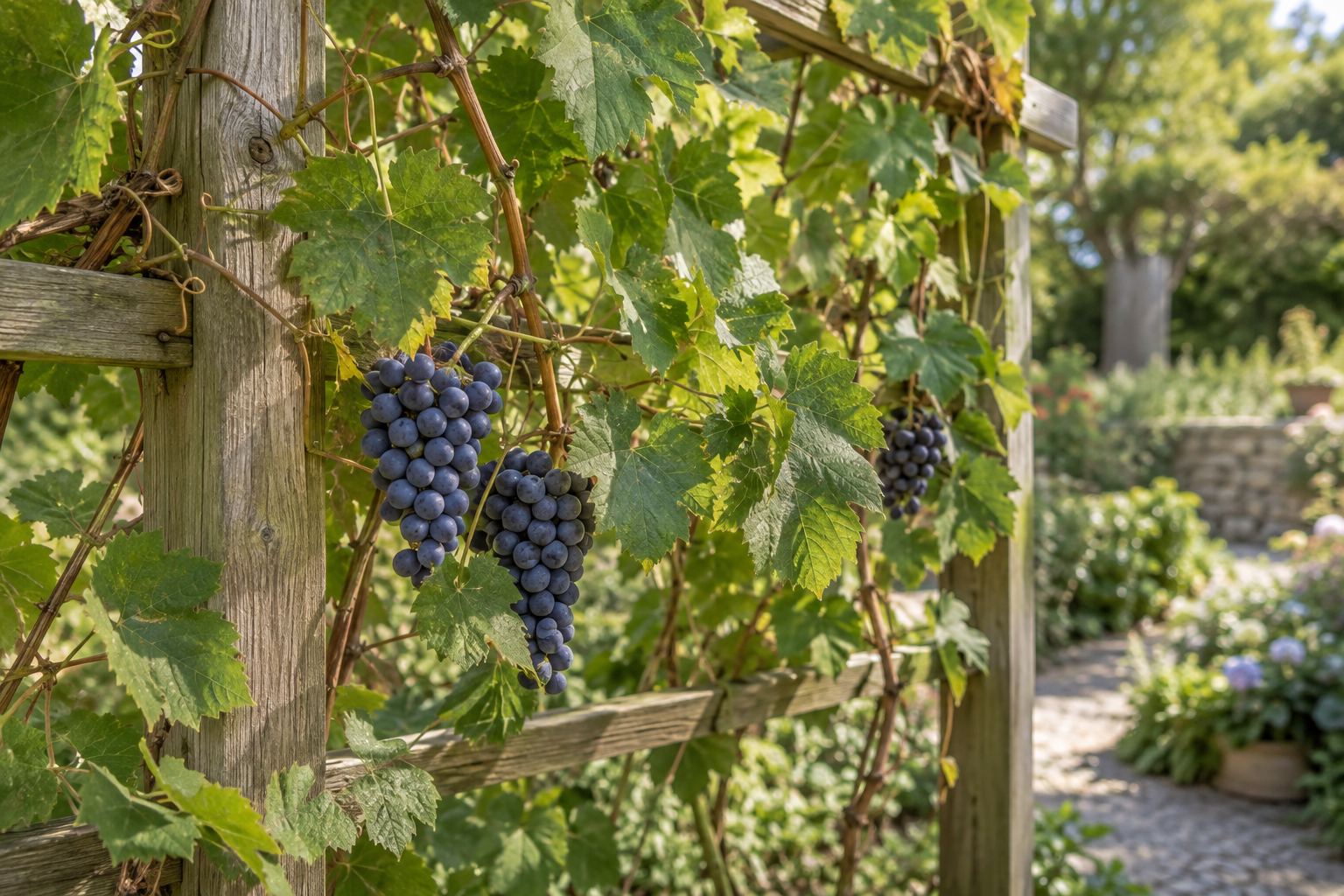
The garden scene shows an established vine with leaves, tendrils and grapes. After planting, open shoot training, monitored root-ball moisture and appropriate nutrition support continued growth.
Eight illustrated steps show moving a rooted potted vine. Pay particular attention to its graft union and future shoot support.
-
Check the vine and timing
Use a rooted potted vine for this illustrated sequence. In spring before vigorous new growth, the root space is easy to assess; protect leafy young stock when frost threatens.
This sequence covers repotting. Bare-root grafted vines need planting preparation appropriate to their delivery form.
-
Plan a stable container
Choose adequate root space, a stable pot and a strong support. The vine will develop more leaf area and catch more wind as it grows.
Check the support anchoring independently of a thin nursery cane. The container needs clear drainage holes.
-
Check the outlet
Water must leave freely. Inspect bottom holes, the standing surface and any saucer.
The drawing shows one possible arrangement with coarse material and fleece. A bottom layer cannot replace open holes or appropriate watering.
-
Release the root ball carefully
Moisten the root ball first if needed. Ease off the pot and support the vine by its root ball; do not use delicate tendrils or green shoots as handles.
Gently loosen only densely circling roots at the edge. Preserve healthy fine roots and the integrity of the existing root ball.
-
Check depth and graft union
Add a little compost and test the root-ball position. Keep its original surface level and leave a watering rim clear.
On grafted vines, keep the visible graft union above the compost. Do not bury it or constrict it with ties.
-
Fill around the root ball
Add grapevine compost around the sides in portions. Hold the vine steady and firm the mix only lightly.
Close gaps without compressing the root zone hard. Keep the trunk and planned shoot support stable.
-
Water slowly
Gradually moisten the root ball and new compost. Match the amount to existing moisture and container size, allowing drainage below.
Empty the saucer after drainage. Tie the trunk and selected shoots loosely to suitable support.
-
Follow the new growth
Watch root-ball moisture and new shoots after repotting. Acclimatise gradually to an unfamiliar sunny position and check ties regularly.
Fertiliser is already included. The label specifies supplementary feeding after 4–6 weeks, matched to growth, season and other nutrition.
After planting
Check root-ball moisture
Fresh compost and the old root ball may dry at different rates. Check both, especially in sun and beneath roof overhangs.
Train shoots loosely
Guide new growth onto the trellis early. Ties must not cut in as stems thicken; maintain airflow between leaves and grapes.
Coordinate supplementary feed
After 4–6 weeks, assess further feeding according to the label. A dormant vine does not need regular nutrition like an actively growing container plant.
Consider the whole position
Compost cannot replace a stable support, a sunny position or appropriate pruning. Yellow leaves and low yields can have several causes.
Peat and fertiliser are included. Sensitive seed propagation or specialised hydroponics require different growing conditions.
Questions about grapevine compost
Which vines is this compost intended for?
It is intended for potting and planting grapevines. Consider the variety, rootstock, container and existing garden soil when choosing it.
Is this compost peat-free?
No. The label lists raised-bog peat alongside lava, clay, forestry materials, sand and perlite. The full ingredients and measured values are collected in the product information.
When should I start supplementary feeding?
The label specifies 4–6 weeks. Account for growth, season and other nutrient inputs; the fertiliser chosen later has its own dilution rate.
Should the graft union be buried?
No. On a grafted vine, keep the graft union above the compost surface. Do not sink the existing root ball just to make a long trunk look shorter.
Does specialist compost replace assessing garden soil?
No. A persistently waterlogged or compacted site does not automatically become suitable after adding some compost to the planting hole. Good garden soil may need no additional improvement.
Is there a quantity price for several bags?
From 2 bags of Grapevine Compost, each 10-litre bag costs €9.45; from 4 bags, €8.95. The applicable quantity price is calculated automatically in the cart.
Get to know Vitis
The plant profile connects key facts, a seasonal calendar and pruning with choosing suitable varieties and retail forms.
Safety and storage
Safety instructions
Keep out of reach of children and pets. Not for consumption. Avoid raising dust when filling and wash hands after use.
Wash your face and hands thoroughly. Use diluted fertiliser promptly and keep it out of water bodies and wastewater.
Product GPSR safety information
A safety PDF is not currently available for this product. Please refer to the product information below and the label.
Storage
Store sheltered from the weather in a dark place.
Protect from drying out, waterlogging and direct sunlight. Seal opened bags tightly and use promptly.
Manufacturer / company placing the product on the market
GREEN24 GmbH
Am Neggenborn 125
44892 Bochum, Germany
info@green24.de
www.green24.de