Water-soluble & available
All nutrients are water-soluble. In the fully diluted mixture, they are available for feeding through roots and leaves.


Conifers include trees and shrubs with needles or scale leaves. Pines, thuja, yews and larches differ in habit, foliage retention and site requirements. This guide connects use of the concentrate with knowledge for your particular garden or container plant.
Application in one place
Dilution: 5 ml per 1 l of water.
1 capful = 5 ml. Use a suitable measuring aid for smaller partial amounts.
Enter a water amount from 0.1 to 1,000 litres.
A rough root-watering guide for one conifer only. Measure height from soil level and the full leafy crown width, not individual needles or trunk circumference. For a hedge, enter the actual water volume. Check moisture, soil, roots and weather; do not force the suggested volume. This is not a foliar spray volume.
General GREEN24 guide: height (m) × width (m) × 3–4 litres. Centimetres are converted to metres. The concentrate amount follows this fertiliser’s dilution. The guide does not measure individual water requirements.
Use a clean watering can or sprayer; preferably low-lime water or rainwater at 15–25 °C.
Enter the water volume or measure one conifer. For hedges, calculate from the actual water volume. Check root-ball moisture and drainage before watering.
Start by filling the container with part of the chosen water volume.
Shake the bottle. 1 capful = 5 ml; use a measuring aid for smaller partial amounts.
Add the calculated amount of concentrate to the water.
Top up to the chosen water volume and mix well. Watering or spraying: see below.
When to feed? 5 ml per 1 l of water. Every 3–4 weeks during the growing season. Regular application period: April–August.
Pre-moisten the root ball and distribute the solution through the absorbing root zone. Do not water only immediately beside the trunk. Ensure drainage in containers; address the cause of waterlogging or drought-damaged roots first.
Finely wet needles or scale leaves in the morning, evening or under overcast skies, avoiding open flowers. Foliar feeding belongs to the same nutrition plan as root feeding. A different leaf shape does not justify a higher spray concentration.
Net mass: 273 g for 250 ml; 1094 g for 1 litre.
The dilution is the same for both pack sizes.
| Pack size | Price | Yield at label dilution |
|---|---|---|
| 250 ml | 9.85 € Unit price ( 39.40 €/ l) | 50.0 l |
| 500 ml – twin pack (2 × 250 ml) | 18.95 € Unit price ( 37.90 €/ l) | 100.0 l |
| 1 litre | 29.95 € Unit price ( 29.95 €/ l) | 200.0 l |
Yield at the labelled standard dilution; account for pack size and existing nutrients.
For conifers with needles or scale leaves. Genus and cultivar determine the further growing plan; Ginkgo and indoor Norfolk Island pines are not included under a single shared care description.
During active growth, normally April–August. Account for soil nutrients, fresh compost and previous applications.
Fresh compost may already contain fertiliser. After planting or repotting, account for its initial nutrients and root condition when planning further feeding.
Beyond NPK · understand the formulation
Water-soluble nutrients and formulation properties support mineral nutrition in conifers. The diluted solution can be applied to the root zone or to needles and scale leaves.
All nutrients are water-soluble. In the fully diluted mixture, they are available for feeding through roots and leaves.
Copper, iron, manganese and zinc are declared as EDTA chelates. This binding helps keep these trace nutrients available in solution.
The buffer system helps regulate the pH of the finished watering or spraying solution. The source water also influences the resulting value.
Good wetting and adhesion help distribute the spray solution over needles and scale leaves. Dissolved nutrients are available there for foliar uptake; wetting alone does not establish how much has been absorbed.
The formulation helps reduce unwanted effects of hard water and deposits on needles and scale leaves. Low-lime water or rainwater provides a useful starting point.
High plant compatibility under appropriate use is relevant to sensitive crops too. The specified dilution and protection from sun and heat remain important for young conifer shoots.
Nitrogen is needed to build chlorophyll and proteins, phosphorus for energy transfer, and potassium for water regulation and transport. These functions concern needles and scale leaves as well as growing roots and shoots. Well-maintained foliage does not mean a promised colour; blue, golden and deciduous cultivar characteristics still matter.
Chelation can reduce unwanted hard-water effects; it does not remove calcium or magnesium from the water. Product pH 6.8 describes the concentrate, not the soil or a fixed target pH for the finished solution. The starting water also influences the solution’s pH.
Use clean, suitable watering or spraying equipment. Measure the water and calculated concentrate quantity carefully.
Use other care products according to their own instructions. A product recommendation does not confirm tank mixing.
Do not mix undiluted concentrates. Follow each product’s own application method and dose.
Declared nutrient percentages. Product pH: 6.8.
GREEN24 · Plant knowledge
Pines carry needles, while thuja usually has closely overlapping scale leaves. Cushion forms, columns and large trees need different amounts of space. Many conifers are evergreen; larch, dawn redwood and bald cypress shed their foliage in autumn.

Pine needles occur in bundles whose number varies by species; larches carry softer needles and are deciduous. Old inner needles can change colour during normal foliage renewal. Dying shoot tips or larger brown patches need a separate assessment.
Thuja and many members of the cypress family have small, overlapping scale leaves. Green outer shoots need light. Do not routinely cut into old bare wood; the ability to regenerate differs between genera.
New shoots extend the leafy crown. Dwarf pines, columnar thuja and large larches grow at different rates and widths. Natural habit is not a reason to increase fertiliser concentration.
GREEN24
8.90 €
( 0.89 €/ l)
For trees and shrubs in containers and garden ground. After about four to six weeks, check nutrient levels and begin supplementary feeding if needed. Existing nutrients already count towards the supply; follow the chosen fertiliser for subsequent doses.
10 litres
Delivery time: In stock · 1–3 days (DE)
Incl. VAT, plus shipping costs
BERGER
74.95 €
For suitable hedges and shaping. Follow the species’ pruning limits and check for occupied nests first.
Delivery time: 5–10 days (DE)
Incl. VAT, plus shipping costs
BERGER
9.95 €
For adding growing medium and small planting jobs. Avoid damaging roots.
Delivery time: In stock · 1–3 days (DE)
Incl. VAT, plus shipping costs
GREEN24
10.90 €
For collecting clippings and plant debris during care and repotting.
Delivery time: In stock · 1–3 days (DE)
Incl. VAT, plus shipping costs


Leaves use light; roots take up water and mineral nutrients. The diagrams show how plant organs work together and how nutrients are absorbed.
Moisture and oxygen must both be available around the roots. Soil requirements differ between conifer species. Mycorrhizal fungi help many conifers interact with the soil; the ectomycorrhiza common in pines is not one uniform model for every conifer genus.
Xylem carries water and dissolved substances upwards. Sugars from green foliage move through other conducting tissue to growing or storage tissues. A leading shoot is part of many upright forms; routine topping is not a necessary feeding or care measure.
Nitrogen is part of chlorophyll and proteins; iron and manganese have further metabolic roles. Leaf shape and protective surfaces differ between genera. Bluish or golden cultivar colour and normal foliage renewal are not automatically signs of deficiency.
New cells require nutrients and sugars made by the plant. Phosphorus contributes to energy transfer. Growth rate and regeneration also depend on the genus: yews can reshoot from older wood, while many thuja and cypresses do not reliably regrow from bare old sections.
Select a point in the picture or choose a stage.
Stage 01 / 04
Apply the finished dilution to the pre-moistened root zone. Soil water brings dissolved nutrients into contact with absorbing root surfaces.
Good to knowCheck soil moisture and drainage before feeding; brown needles alone do not establish a need.
Apply the finished dilution to the pre-moistened root zone. Soil water brings dissolved nutrients into contact with absorbing root surfaces. Check soil moisture and drainage before feeding; brown needles alone do not establish a need.
Stage 02 / 04
Absorbing fine roots are in contact with the soil. In many conifers, mycorrhizal fungi extend the soil volume explored. This does not replace regulated entry into living plant cells.
Good to knowPine mycorrhiza is one example, not a uniform fine-root structure for all conifers.
Absorbing fine roots are in contact with the soil. In many conifers, mycorrhizal fungi extend the soil volume explored. This does not replace regulated entry into living plant cells. Pine mycorrhiza is one example, not a uniform fine-root structure for all conifers.
Stage 03 / 04
Membranes and transport proteins regulate uptake of dissolved nutrients. This differs from the movement of water alone. Healthy, oxygenated roots remain essential.
Good to knowDo not try to correct waterlogging or damaged roots with more concentrate.
Membranes and transport proteins regulate uptake of dissolved nutrients. This differs from the movement of water alone. Healthy, oxygenated roots remain essential. Do not try to correct waterlogging or damaged roots with more concentrate.
Stage 04 / 04
Xylem can carry water and absorbed nutrients towards needles, scale leaves and shoots. Transport and use also depend on growth stage and root function.
Good to knowThe slower growth of a dwarf conifer is not a reason to feed more strongly.
Xylem can carry water and absorbed nutrients towards needles, scale leaves and shoots. Transport and use also depend on growth stage and root function. The slower growth of a dwarf conifer is not a reason to feed more strongly.
Stage 01 / 04
Distribute the finished dilution finely over green foliage. Follow the specified temperature and light conditions.
Good to knowPlan root and foliar applications together rather than automatically feeding twice.
Distribute the finished dilution finely over green foliage. Follow the specified temperature and light conditions. Plan root and foliar applications together rather than automatically feeding twice.
Stage 02 / 04
Needles and scale leaves have protective surfaces. Dissolved nutrients can cross them; species, leaf age and conditions influence the amount taken up.
Good to knowDifferent leaf shapes do not justify a higher spray concentration.
Needles and scale leaves have protective surfaces. Dissolved nutrients can cross them; species, leaf age and conditions influence the amount taken up. Different leaf shapes do not justify a higher spray concentration.
Stage 03 / 04
After crossing the surface, leaf cells can take up nutrients and use them in metabolism. Nitrogen, phosphorus and potassium have different roles. A visible drop does not itself prove uptake.
Good to knowCultivar colour and natural shedding of old needles must still be distinguished from deficiency.
After crossing the surface, leaf cells can take up nutrients and use them in metabolism. Nitrogen, phosphorus and potassium have different roles. A visible drop does not itself prove uptake. Cultivar colour and natural shedding of old needles must still be distinguished from deficiency.
Stage 04 / 04
Redistribution from foliage depends on the nutrient and plant condition. Not every nutrient reaches other organs to the same extent. This does not establish immediate feeding of the entire conifer.
Good to knowBrown old sections do not regrow simply because a foliar feed is applied.
Redistribution from foliage depends on the nutrient and plant condition. Not every nutrient reaches other organs to the same extent. This does not establish immediate feeding of the entire conifer. Brown old sections do not regrow simply because a foliar feed is applied.
Development influences requirements
After planting, even root-ball moisture, soil contact and protection from drying wind matter. Account for pre-fertilised compost and existing nutrients. No additional young-plant dilution setting is verified for this concentrate.
Feed at the specified interval during active growth. Dwarf forms naturally grow more slowly than tree-sized conifers. Do not try to change their growth habit through extra or more concentrated applications.
Green winter foliage does not automatically mean active growth. Do not fertilise during rest, but check root-ball moisture in frost-free weather. Autumn foliage loss is normal in larch, dawn redwood and bald cypress.
Genus, cultivar and foliage age help interpretation. Compare normal inner foliage renewal with new damage to outer shoots. Seasonal changes do not establish an additional dilution setting.
Application & calculator →Adapt care to the growing conditions and stage of growth. If you notice changes, check light, water and roots first — then take targeted action.
Use a pot suited to the plant’s habit with open drainage holes. Check root-ball moisture regularly without keeping every conifer equally wet. Account for initial nutrients and planting depth when repotting; fertiliser concentration remains unchanged.
Choose light, soil moisture and future space according to species: pines generally prefer sun, while yews tolerate shade. Maintain the original planting depth. Established conifers in adequately supplied soil do not automatically need regular supplementary feeding.
Hardiness is not uniform across the group. Hardy outdoor species stay outside; more tender Mediterranean cypresses need protection suited to the region. Protect container roots from severe freezing and do not leave evergreen foliage over a dry root ball. Norfolk Island pines need their own indoor care plan.
For suitable hedge forms, a narrower top helps light reach the lower branches. Do not cut thuja and many cypresses deeply into bare old wood. Yews are an important exception in their ability to regenerate. Check for occupied bird nests before clipping.
Older inner needles are naturally replaced. Large brown patches and wilting shoot tips instead call for a check of soil moisture, drying winds, frost and previous pruning.
Inspect shoots for aphids, sticky honeydew and dark sooty mould. Green spruce aphid can damage older spruce needles, especially after mild winters; identify both plant and pest.
Check junipers, cypresses and arborvitae for small attached pale or brown scales. Not every deposit signals a severe infestation; juniper scale does not produce honeydew.
If a plant fades and browns despite wet soil, inspect drainage and roots. Waterlogging and root diseases such as Phytophthora can look alike; reliable identification may require specialist diagnosis.
These details help distinguish normal foliage renewal, site problems and possible pests:
Individual yellow or brown needles do not establish a deficiency. Check roots and soil when larger sections fail; identify aphids or scale insects before treatment. The mixing partners below are not automatically authorised for every conifer species or problem.

Explore position, root space and care for the actual plant species.
View the plant guide
Consider light, water, root space and nutrients together. More fertiliser cannot solve every care problem.
Read the guideAt the stated dilution, 250 ml makes a calculated 50 litres of fertiliser solution. The twin pack of two 250 ml bottles makes 100 litres; 1 litre of concentrate makes 200 litres. The concentration is the same.
The original labels specify every three to four weeks during active growth, with April to August as the regular period. Feed when needed and account for nutrients already supplied by fresh compost.
Brown needles alone do not establish nutrient deficiency. Drought, wet roots, frost, pruning damage and pests are other possibilities. Autumn needle loss is normal in larches and dawn redwoods. Identify the species and pattern first.
The label permits both routes. Choose the one suited to the situation and account for every application. Foliar feeding is not an extra standard dose on top of routine root feeding.
Water and soil requirements depend on the species. The linked Tree & Shrub Compost is a general growing medium; it does not replace choosing the right site or ensuring drainage. Specialist cultivation such as bonsai needs its own root environment.
SDS – Safety data sheet available on request.
Official advisory recommendations take precedence.
Wash your face and hands thoroughly. Use diluted fertiliser promptly and keep it out of water bodies and wastewater.
The original leaflet explains safe preparation and use. For this conifer concentrate, use the product-specific dilution in the calculator. It does not establish an additional young-plant setting or more frequent applications.
Dry · dark · above 8 °C to a maximum of 38 °C Store in a dry, dark place above 8 °C and at no more than 38 °C. Keep out of reach of children and animals.
Keep tightly closed in the original container, separate from food and animal feed.
Dry · dark · above 8 °C to a maximum of 38 °C Store in a dry, dark place above 8 °C and at no more than 38 °C. Keep out of reach of children and animals.
Do not allow fertiliser residues or rinsing water to enter waterways or wastewater. Follow the disposal instructions on the packaging.
Measure concentrate accurately and apply only after dilution. More fertiliser does not compensate for insufficient light, drought or damaged roots.
About review authenticity
Customers and visitors to our shop can leave reviews. We do not check for every review whether a purchase was made; “Verified” means the review is linked to an order. Reviews taken over from our previous shop are not verified; they are labelled “Review collected from another provider”. Verified product reviews earn blossom points, regardless of the rating. How our reviews are collected
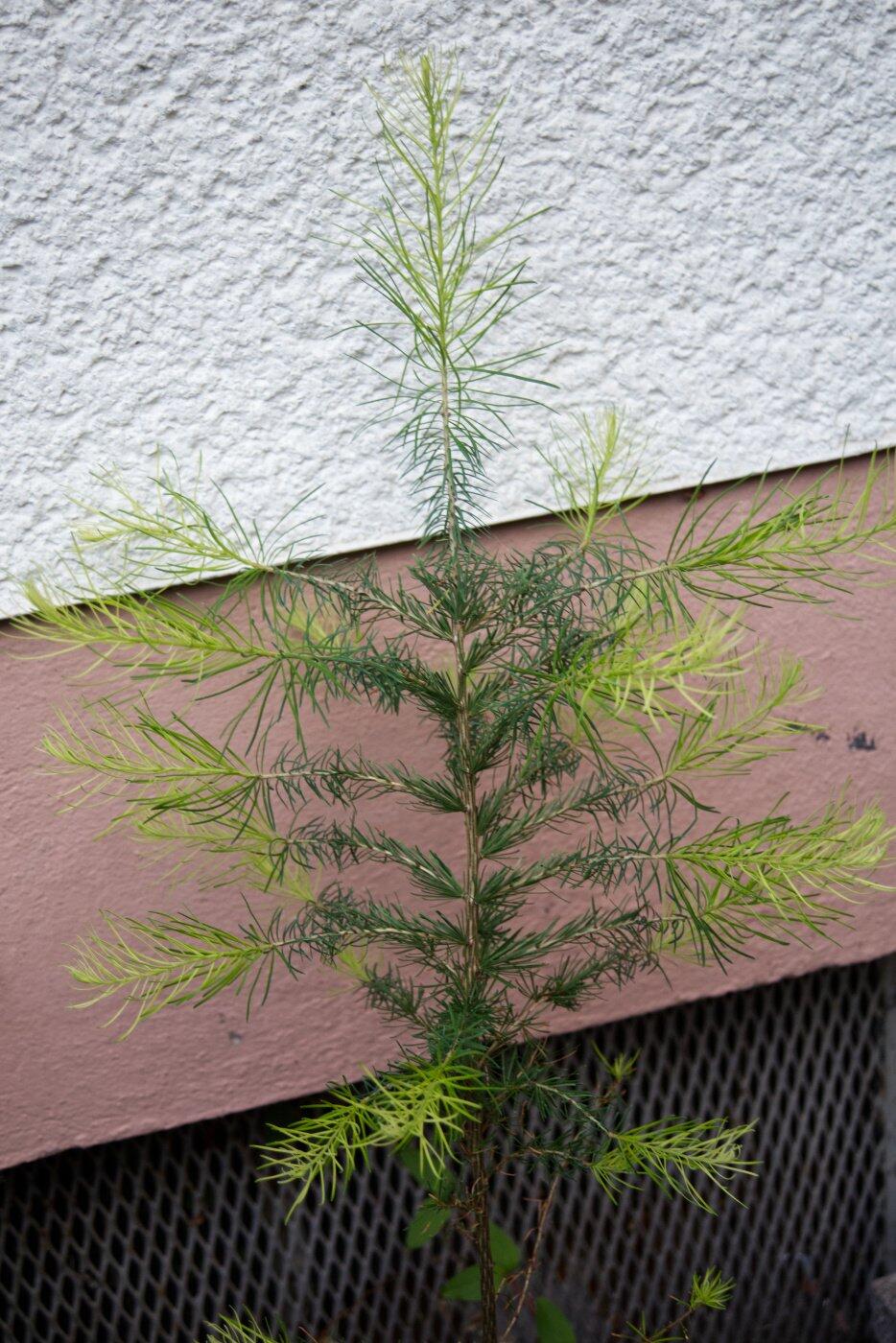
Diesen Dünger nutze ich schon seit Jahren mit überwältigendem Erfolg für alle meine Nadelbäume, Koniferen und Zypressen. Selbst sehr sparsame Anwendung führt zu sichtbarem Wachstum und sattgrünen Trieben. Rechtzeitig im Spätsommer stelle ich die Düngegaben ein, damit die Gehölze für den Winter ausreifen können. Ich hatte noch nie Frostprobleme. Wenn sich die ersten Triebe im Frühjahr zeigen, fange ich wieder an zu Düngen. Diese Lärche (auf dem Bild) habe ich nach Erhalt mit dem Koniferendünger von Green24 gedüngt und sie ist daraufhin sehr freudig gewachsen, ist nochmal stark durchgetrieben, und hat sogar viel größere Nadeln bekommen. Aber jetzt zum Herbst hin hat sie Winterknospen entwickelt und wirft jetzt auch allmählich die Nadeln ab. Genau, wie es sein soll. Insgesamt bin ich äußerst zufrieden mit dem sehr ergiebigen Koniferendünger von Green24.
Ich verwende diesen Dünger für im Herbst 2016 gepflanzte Smaragd Thuja(ca. 160cm hoch) und bin damit bisher zufrieden. Mit dem Koniferen Dünger XL Profi Linie 1 muss ich nur alle 3 Wochen düngen, mit dem preisgünstigeren auch guten Dünger von der BayWa jede Woche, hatte also 3 mal mehr Arbeit. Durch das wöchentliche Düngen entstehen mit dem preisgünstigen Dünger die gleichen Kosten wie mit dem Koniferen Dünger XL Profi Linie 1, den ich nur alle 3 Wochen verwende.
Ware kam eie gewohnt sehr schnell, Verpackung war angemessen. Der Dünger taugt was ist nur zu empfehlen. Ich habe ihn bereits 2016 bestellt und die Jahr wieder, gleicht den Mangel sehr gut aus. Spitzen werden wieder grün
Habe das Produkt gekauft weil meine, im letzten Jahr gepflanzten, Smaragdthujen kein Wachstum erkennen ließen.
Der Dünger wurde sehr schnell geliefert und war ordentlich verpackt.
Nach dem Kauf bekommt man vom Händler eine E-Mail mit diversen Hinweisen und Anwendungsbeispielen.
Ich habe dann 1x im Monat meine Thujen mit dem Dünger gegossen ( man kann die Thujen auch damit besprühen, so das der Dünger über die Blätter aufgenommen wird ). Im 3. Monat - ich hatte schon nicht mehr daran geglaubt, begannen die Thujen plötzlich an den Spitzen auszutreiben!!
Somit scheint das Produkt seine Arbeit zu machen - ist zwar nicht billig, aber ich werde diesen Dünger sicher wieder kaufen und verwenden!!
Ich dünge meine Thujahecke mit dem Produkt einmal im Jahr und die Hecke sieht sehr gut aus und wächst prima. Da meine Hecke gemulcht ist scheidet ein Granulatdünger aus. Kann das Produkt nur empfehlen.
Die Handhabung dieses Flüssigdüngers ist nicht schlecht, aber für größere Pflanzen im Verbrauch und bezogen auf die Inhalts-Menge preislich nicht so interessant.
Tut was er soll - jedenfalls wenn ich mit das Gedeihen der gedüngten Lebensbäume anschaue. Werde im Herbst noch einmal nachdüngen. Hoffe die Wirkung hält lange an.
Den Flüssigdünger probeweise Ende April eingesetzt und positive Entwicklung an den Koniferen (Topfpflanzen) beobachtet.
Ende Mai weitere 2 Einheiten bestellt.
Superschneller Versand kommt hinzu und ich kann mit gutem Gewissen Empfehlung aussprechen.
Ich benutze den Dünger regelmäßig. Und seitdem bekommen die Koniferen kaum noch unschöne braune Stellen. Alles in allem sind wir sehr zufrieden und können den Dünger nur empfehlen.
Prompte Lieferung. Sehr gutes Produkt. Ich empfehle eine Spritzpumpe. Wir haben ca. 50 Meter Hecke auf 3 Meter Höhe und etliche große Tannen und Fichten. Letztes Jahr war das Produkt schon im Einsatz und hat dem sauren Boden (Nadelfall) sehr gut entgegengewirkt. Sattes grün!
Vielen Dank
GREEN24
From 10.95 €
( 43.80 €/ l)
FE Pro supplies nutrients and iron to growing conifers such as firs, spruces and cypresses. Dilute the liquid concentrate before application. Identify the plant and consider root health and watering as part of a targeted care routine. 5 ml per 1.5 litres of water Follow its own instructions and account for existing nutrients.
250 ml · 500 ml – twin pack (2 × 250 ml)
Delivery time: In stock · 1–3 days (DE)
Incl. VAT, plus shipping costs
GREEN24
From 9.85 €
( 39.40 €/ l)
For yew when the actual plant is Taxus. Follow its own label and account for previous feeds.
250 ml · 500 ml – twin pack (2 × 250 ml) · 1 litre
Delivery time: In stock · 1–3 days (DE)
Incl. VAT, plus shipping costs
GREEN24
From 9.95 €
( 39.80 €/ l)
For suitable sequoias. Identify the tree first and follow this product’s own dilution.
250 ml · 500 ml – twin pack (2 × 250 ml) · 1 litre
Delivery time: In stock · 1–3 days (DE)
Incl. VAT, plus shipping costs
GREEN24
19.95 €
( 26.60 €/ l)
Alternative bundle: check contents and each product’s instructions. Account for included compost and fertiliser; avoid duplicate feeding.
3 × 250 ml
Delivery time: In stock · 1–3 days (DE)
Incl. VAT, plus shipping costs

Plant species, pests, diseases and care in seconds – plus products that really fit, free of charge.