
Practical knowledge for your plants
Secateurs: choose well and make clean cuts
Good secateurs fit your hand and the job. The right cutting mechanism and a little maintenance make everyday pruning more manageable.
- Mechanism
- Distinguish bypass and anvil
- Fit
- Hand size, grip opening and operation
- Maintenance
- Clean, inspect and maintain as specified
Bypass or anvil?
Bypass secateurs slide a sharp blade past a counterblade. This mechanism suits clean cuts on living shoots. Anvil secateurs press a blade against a supporting surface and are often chosen for dry, hard material. The mechanism is only part of the decision: condition, cutting capacity and correct use matter as well.
Let the tool fit your hand
Check hand size, maximum handle opening and whether you can comfortably operate the catch and spring. Oversized secateurs force you to readjust your grip; excessive weight becomes tiring over repeated cuts. Some models are designed specifically for right- or left-handed use. Available spare parts and straightforward maintenance are useful for a tool you intend to keep.
Cut without crushing or levering
Keep shoots within the tool's stated cutting capacity. With bypass secateurs, position the sharp blade towards the part of the plant you are keeping where practical. Make a controlled cut without twisting the tool sideways. If the cut needs excessive force, change tools. Secateurs do not replace loppers or a saw for larger branches.
Keep the cutting surfaces clean
After use, remove plant sap and dirt using a method suitable for the tool. Dry the secateurs and maintain moving parts as the manufacturer directs. Suspected diseased plant material requires appropriate additional tool hygiene; remove visible residues first. Before the next session, check the blade, spring, catch and fastenings for damage or wear.
Sharpen using the correct method
A blunt or damaged blade may tear rather than cut cleanly. When sharpening, follow the original bevel and your model's instructions. Do not grind both sides indiscriminately or alter the blade shape. A replacement blade may be more appropriate for substantial damage. Store the closed, secured tool dry and ready for the next maintenance task.
Frequently asked questions
Why are my secateurs crushing shoots?
Possible causes include a blunt or dirty blade, incorrect adjustment or material beyond the tool's capacity. Check the tool and its limits instead of applying more force.
Can one pair do every cutting job?
Suitable secateurs handle many small pruning tasks. Hedge surfaces, large branches and specialised materials require other tools according to the job.
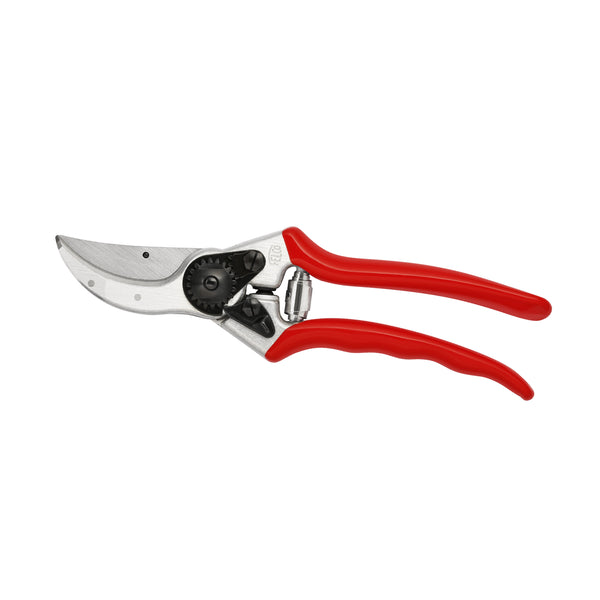
Products for this project
Equipment for the tasks described here. Each product page explains its intended use and application.
Keep exploring
Pruning plants: a clear purpose and the right timing
Good pruning starts by looking at the whole plant. Learn the key decisions, then use the plant profile for species-specific timing and technique.
Read the guide
Hedge trimming: match the tool, shape and plant
A dense hedge starts with an appropriate cut. Let leaf size, shoot thickness and the intended shape guide your choice of tools and technique.
Read the guide
Plant protection: identify the problem, then act
Spots, wilting shoots and yellow leaves are observations, not yet a diagnosis. A clear sequence helps you investigate causes and choose suitable action.
Read the guide