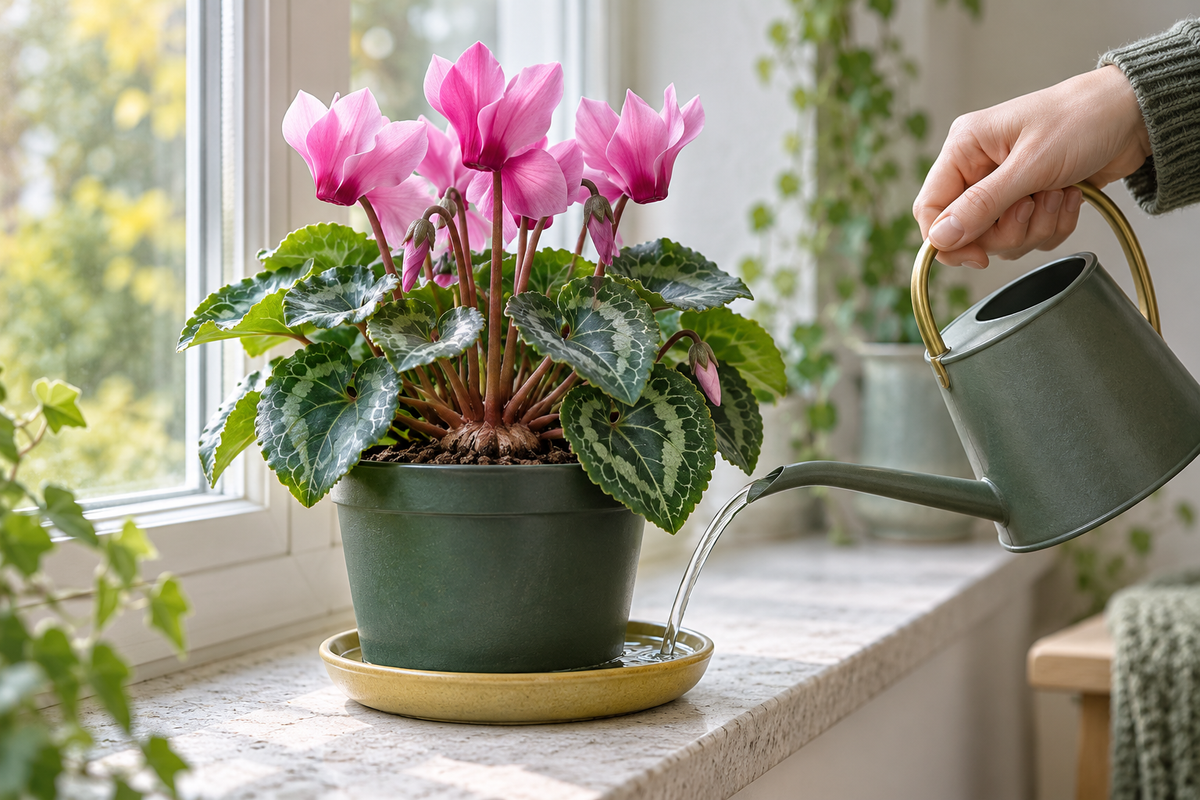
Preventing winter moth damage: now is the time for a glue band
After substantial winter moth damage in spring, late September is the time for the right barrier: fitted closely, checked regularly and used for a limited period.
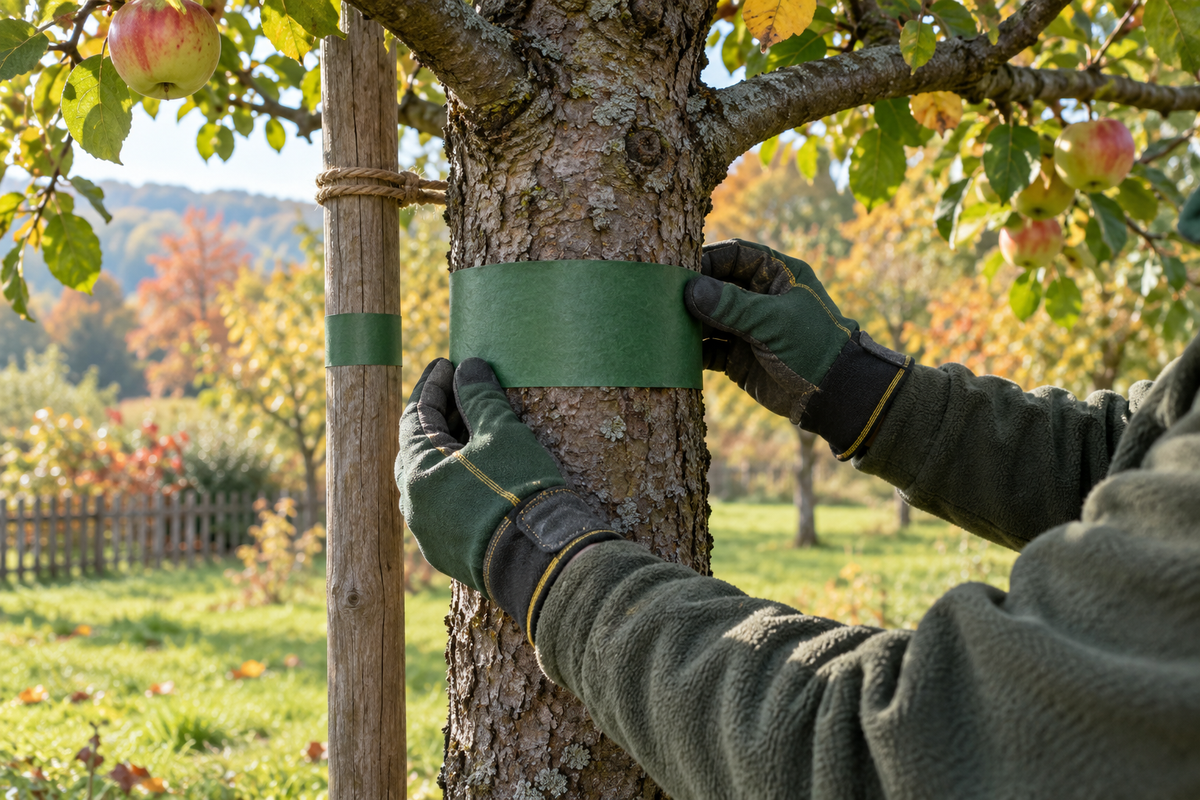
If winter moth caterpillars caused obvious damage to your fruit trees in spring, this is the right time to consider prevention. After the first cold nights, the flightless females climb the trunk to lay their eggs in the crown. A closely fitted glue band can interrupt that route.
The aim is not to use as much sticky surface as possible, but to use it selectively and for a limited period: in late September or early October, below the first crown branches and without a gap against the bark.
Assess the damage first
A glue band is not a routine precaution for every tree. It is most relevant where winter moth caterpillars caused substantial feeding damage in spring. At low levels, the caterpillars also form part of the diet of many garden animals. A diverse, wildlife-friendly garden supports their natural predators.
Review any notes or photographs you took in spring. Were young leaves badly perforated, were flowers or young fruit eaten, and did the caterpillars move with the characteristic looping action? Only use the measure when the signs match.
Why late September matters
Female common winter moths and mottled umber moths are flightless. Depending on the region, they become active after the first cold nights and travel from the ground up the trunk into the crown. The band therefore needs to be in place before this movement begins, often from late September or early October.
Five steps to a closed barrier
Choose the correct position
Fit the band around the main trunk below the first crown branches. If a support stake reaches the crown, it also needs a barrier below its connection to the tree.
Prepare the trunk
Carefully remove only loose bark and dirt without damaging living bark. On a deeply fissured surface, there must be no gap through which insects can crawl beneath the band.
Cut to size as directed
Measure the trunk and, where relevant, the support stake. Cut and position the glue band exactly as described on the label and in the product information.
Fasten it closely and securely
The band must sit flush all the way around. Secure it in accordance with the manufacturer’s instructions without constricting the trunk or damaging the bark.
Inspect it regularly
Remove wind-blown leaves and twigs that create a bridge. Check whether the band has become dirty, dry, damaged or loose.
Limit sticky traps carefully
Glue bands can catch other insects and, when left unchecked, can endanger birds. Inspect the barrier regularly and use it only for the recommended seasonal period. When used to prevent winter moth damage, remove the band by the beginning of March at the latest.
A winter moth glue band does not control codling moth and is not an answer to the familiar “worm in the apple”. Identify the damage before taking action.
Work safely
- Wear suitable gloves and keep the material out of reach of children.
- Wash your hands thoroughly after use.
- Always read the label and product information before use.
- Do not treat the band as a permanent fixture; use it selectively and keep it under review.
A short inspection is enough for today: confirm the spring damage, measure the trunk and support stake, and prepare a band only where its use is justified. This makes it a targeted barrier rather than a permanent trap.
The product photograph shows the original pack actually offered.