Outgrown its space? Divide summer-flowering perennials now
Many summer-flowering, clump-forming perennials can be divided in autumn. Check the timing, roots and aftercare – without automatically cutting back or feeding.

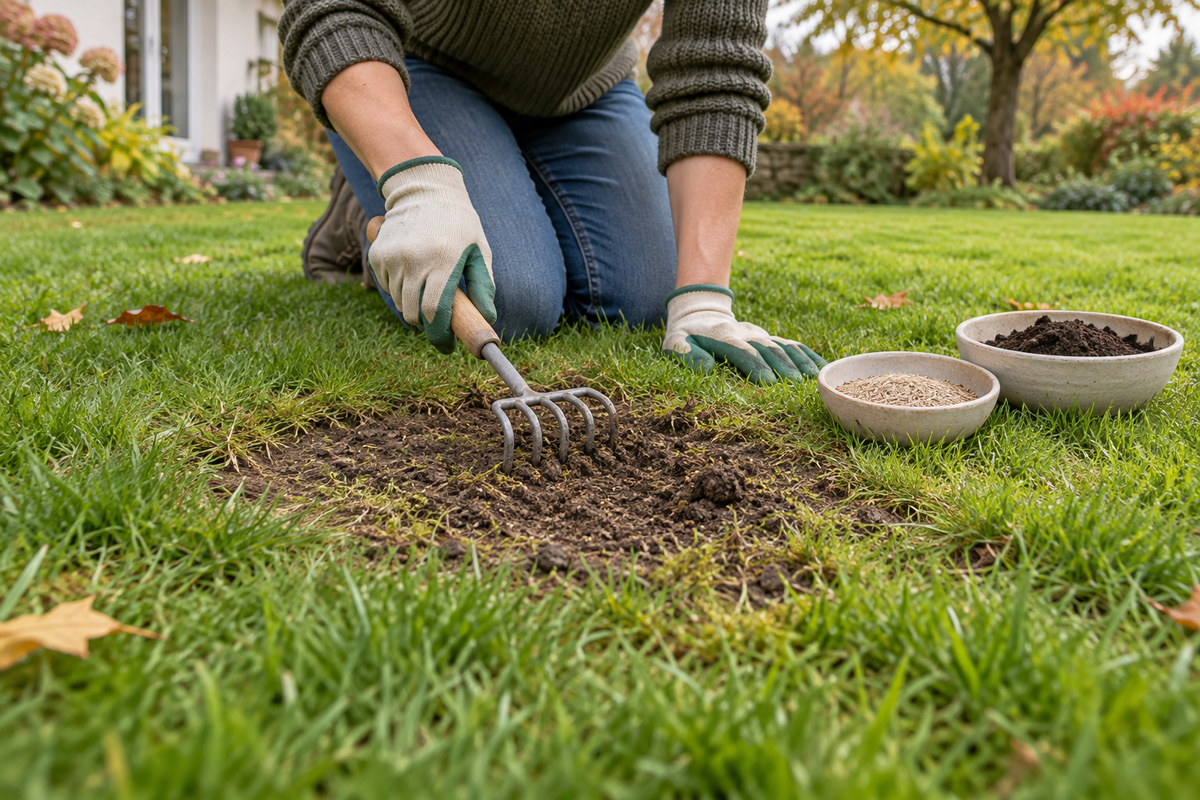
Cover image: AI-generated illustrative image.
A perennial clump is pushing beyond the edge of the border, its centre is becoming sparse, or you would like to grow a favourite plant in another part of the garden. In these situations, division may be more useful than cutting the plant back. Autumn opens a suitable window for many summer-flowering, clump-forming perennials – provided the soil has drained and is workable.
Use Sunday for a calm review: which plant genuinely needs more room, which stems can remain as winter structure, and which species would be better left until spring?
Not every perennial needs dividing
Healthy, clump-forming perennials and many ornamental grasses are the main candidates. Division can reduce a plant that has outgrown its space, rejuvenate an older clump or provide plants for another part of the border. It should not become a fixed routine for every perennial.
Identify the plant and assess its condition first. Many summer-flowering perennials can be divided from September to November. In wet, heavy soil, or with a more tender species, waiting until spring is usually the better choice. Many spring-flowering plants follow different schedules; irises are often divided in summer after flowering. Do not move diseased or rotting material to a new position.
How to divide a perennial in five steps
Prepare the new position first
Choose a place that matches the perennial’s needs for light, soil and space. Loosen the planting area and have water ready. This keeps the roots from remaining exposed for longer than necessary.
Lift the clump carefully
Work carefully around the clump with a garden fork and lift the rootball as gently as possible. Remove only enough loose soil to see the roots and any natural points of division.
Match the method to the roots
Small fibrous clumps can often be teased apart carefully by hand. For large, firm clumps, two garden forks placed back to back can provide leverage. Use a sharp, suitable cutting tool only where the clump cannot be separated another way. Work on a stable surface and keep your hands away from the cutting line.
Keep strong divisions
Each division needs healthy roots and enough vigorous shoots or buds. Remove material that is clearly dead or diseased. The goal is not to produce as many tiny plants as possible; a few strong divisions are easier to establish.
Replant promptly
Replant the divisions as soon as possible at their original depth, fill around them with soil and firm gently. Water thoroughly and make sure the root zone does not dry out while the plants establish.
Division is not a general autumn cut-back
Sturdy stems and seed heads can remain as winter structure in the border. Do not cut the whole perennial planting to ground level simply because you are dividing one clump. The right treatment for the remaining plants still depends on their species and the design of the border.
Fertiliser does not automatically belong in every new planting hole either. Assess the site, soil and the perennial’s needs separately. Where nutrient status is unclear, a soil test provides better guidance than a precautionary autumn application.
When it is better to wait
- The ground is waterlogged, sticky or frozen: postpone the job until conditions are suitable.
- The species is tender or uncertain: check species-specific guidance; spring is often the safer option when in doubt.
- The clump looks diseased or rotten: do not replant affected material; identify the cause first.
- The new position is not ready: leave the plant in the ground until the site and aftercare are prepared.
A manageable plan is enough for today: choose one suitable perennial, prepare its new position and make only as many strong divisions as you can replant and care for straight away.
The cover image is an AI-generated illustrative example. The product photograph shows the planting trowel actually offered.