Planting a rhododendron: check the soil before you start
Late September is the right time for a site check: assess soil, drainage and light before planting a rhododendron shallowly on a suitable day in October.
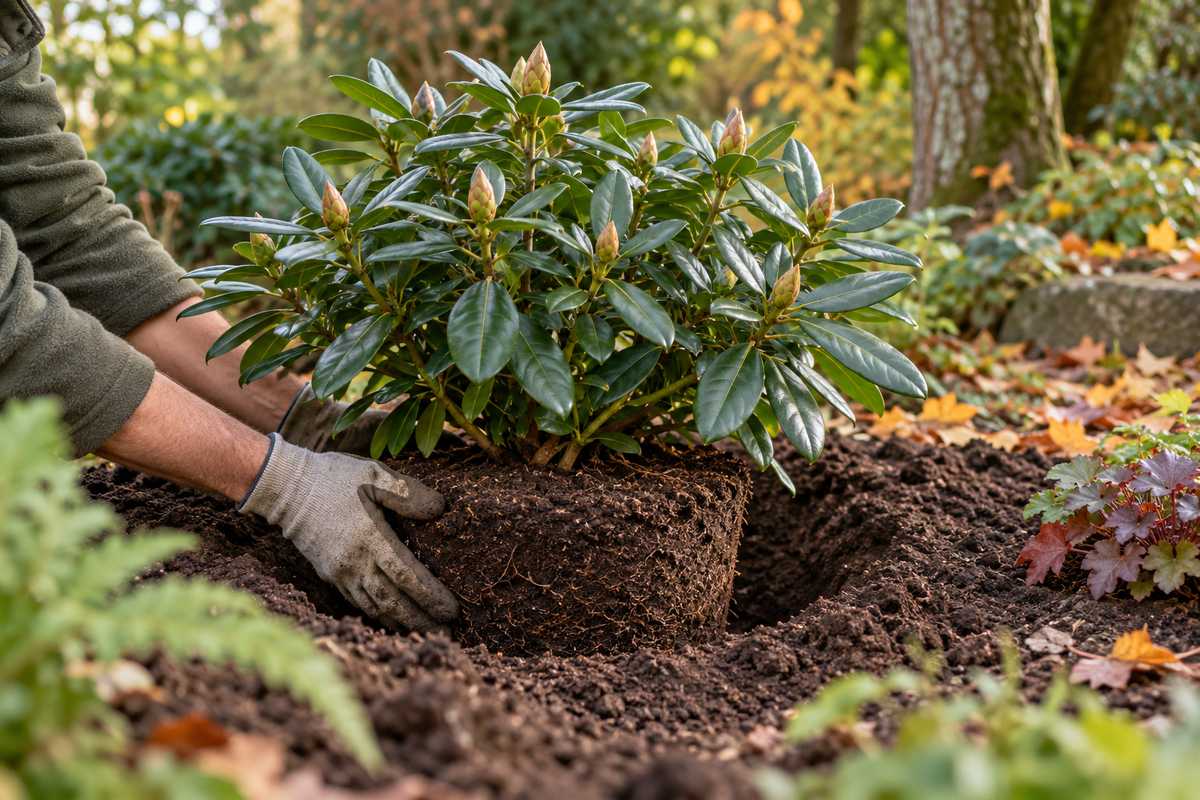
Cover image: AI-generated illustrative image.
Late September marks the beginning of the planting season for many hardy shrubs. Rhododendrons deserve one extra step before you reach for a spade: first decide whether the site, soil and water conditions genuinely suit them. An attractive position is not enough, because these shallow-rooted shrubs need an acidic root zone that stays evenly moist while still draining freely.
Use the weekend for a site check. Planting itself can follow on a frost-free day in October, when the ground is neither parched nor waterlogged.
Check the soil before buying the plant
Rhododendrons and azaleas prefer acidic soil. A pH of around 5 to 6 is a useful horticultural guide. A simple soil test provides valuable information before you dig a large planting hole. Check moisture conditions at the same time: the soil should retain water, but excess water must be able to drain.
If your garden soil is distinctly lime-rich or permanently wet, a small amount of specialist compost in one planting hole will not provide a reliable long-term solution. A sufficiently large container with open drainage holes and suitable compost is often the clearer choice. Select the cultivar with its eventual size in mind too.
Five steps for a good start
Read the site
Choose a sheltered place with light, dappled shade. Deep shade beneath large trees, drying winds and frost pockets are unsuitable. Allow for the mature size of your chosen cultivar.
Check soil and drainage
Test the pH and observe whether rainwater remains on the site. Do not plant into frozen, smeared or waterlogged ground.
Prepare the root ball
The root ball should be evenly moist before planting, but should not stand in water for hours. Remove the plant carefully from its pot and keep the root ball intact.
Prepare a wide planting area and plant shallowly
Rhododendrons root close to the surface. Do not plant the root ball deeply: keep its upper surface level with the surrounding soil and only just covered. Fill around it with suitable compost and firm gently.
Water in and monitor
Water thoroughly after planting and keep the root zone evenly moist during dry periods without creating waterlogging. In hard-water areas, collected rainwater is the better choice for rhododendrons.
Specialist compost is part of the solution, not the whole site
In a border, GREEN24 Rhododendron & Azalea Compost can complement the prepared acidic root zone. It cannot permanently turn unsuitable lime-rich or waterlogged ground into an ericaceous bed. The wider soil environment, drainage and ongoing water supply still matter.
A container gives you greater control over the root zone. It needs enough space and unobstructed drainage holes; do not allow water to remain in an outer pot. An evergreen rhododendron must not dry out completely in winter either.
Do not feed automatically now
The compost already contains a starter fertiliser, so there is no need to feed again immediately after planting. The product label says that supplementary feeding may begin after six to eight weeks; consider growth, season and the instructions for the fertiliser you choose.
A clear plan is enough for today: inspect the site, test the soil, check drainage and decide on a suitable plant size. When those four points fit, you can plant the rhododendron shallowly and without haste on a suitable day in October.
The cover image is an AI-generated illustrative example; the product photograph shows the original bag actually offered.