


At a glance
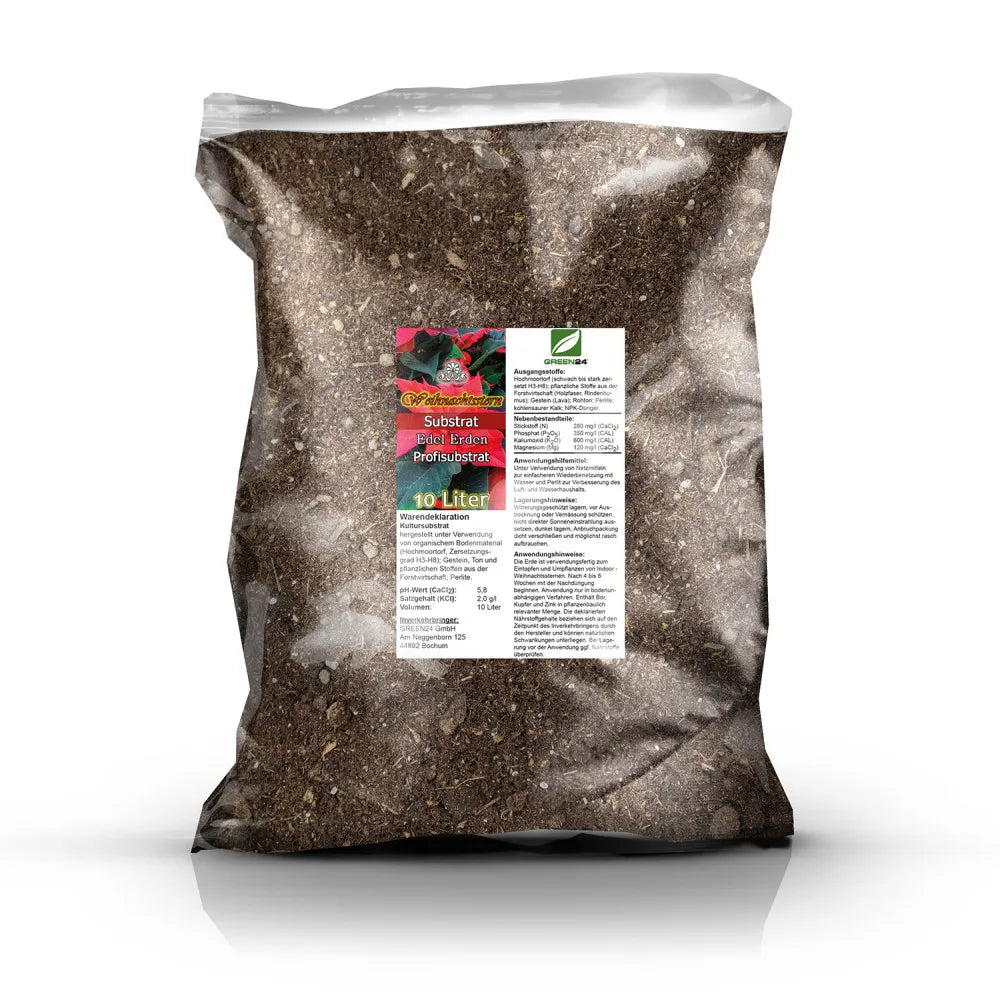
Poinsettia Compost
Ready-to-use specialist compost · 10 litres
- Use
- poinsettias
Planting and care by species and cultivar.
- Contents
- 10 litres
- Application
- Ready to use
- Initial nutrition
- Pre-fertilised
For planting and repotting poinsettias.
Repot with ease
Poinsettias can keep growing beyond the festive season. This ready-to-use mix is intended for potting and repotting indoor Euphorbia pulcherrima. Organic structural materials, mineral ingredients and an initial nutrient supply support the new potting space.
- Repot when root space is needed
Check root development and the current pot. Choose a slightly larger container with clear drainage holes; do not repot unnecessarily during every display period.
- Fill around the sides
Fill gaps with compost and firm lightly. Stabilise the plant without heavily compressing the medium.
- Support establishment
After about 4–6 weeks, feed responsively during active growth. Check root moisture regularly and adapt continued care to species and cultivar.
After about 4–6 weeks, feed responsively during active growth.
View the complete repotting guideProduct information
ApplicationReady for potting
Poinsettias can keep growing beyond the festive season. This ready-to-use mix is intended for potting and repotting indoor Euphorbia pulcherrima. Organic structural materials, mineral ingredients and an initial nutrient supply support the new potting space.
After about 4–6 weeks, feed responsively during active growth.
Use only in soil-independent growing systems, such as pots and containers.
PropertiesProduct characteristics and guidance
High-moor peat (H3–H8), plant materials from forestry (wood fibre, bark humus), lava, raw clay, perlite, calcium carbonate and NPK fertiliser. Contains wetting agents to aid rewetting.
Declared growing-medium valuesThis product’s declaration
Contains boron, copper and zinc in horticulturally relevant amounts. Nutrient values apply when placed on the market, may vary naturally and may require checking before use after storage.
- pH (CaCl₂): 5.8.
- Salt content (KCl): 2.0 g/l.
- Nitrogen: 280 mg/l (CaCl₂).
- Phosphate (P₂O₅): 350 mg/l (CAL).
- Potassium oxide (K₂O): 600 mg/l (CAL).
- Magnesium (Mg): 120 mg/l (CaCl₂).



Root space & plant care
Poinsettia Compost in everyday use
Which plant is it for?
Design with suitable plants
Provide bright conditions away from cold draughts. Check root-ball moisture and remove excess water. Coloured bracts require a suitable uninterrupted dark period later in the year; stronger feeding alone will not produce them.
Details & background
Poinsettias can keep growing beyond the festive season. This ready-to-use mix is intended for potting and repotting indoor Euphorbia pulcherrima. Organic structural materials, mineral ingredients and an initial nutrient supply support the new potting space.
Composition & nutrition
For new root space
Ready-to-use compost for poinsettias. The space around the root ball determines the amount required.
Details & background
See the product information for the full composition and nutrient declaration. Account for the existing nutrient supply before adding further fertiliser.
Repotting in eight steps
Prepare the mix
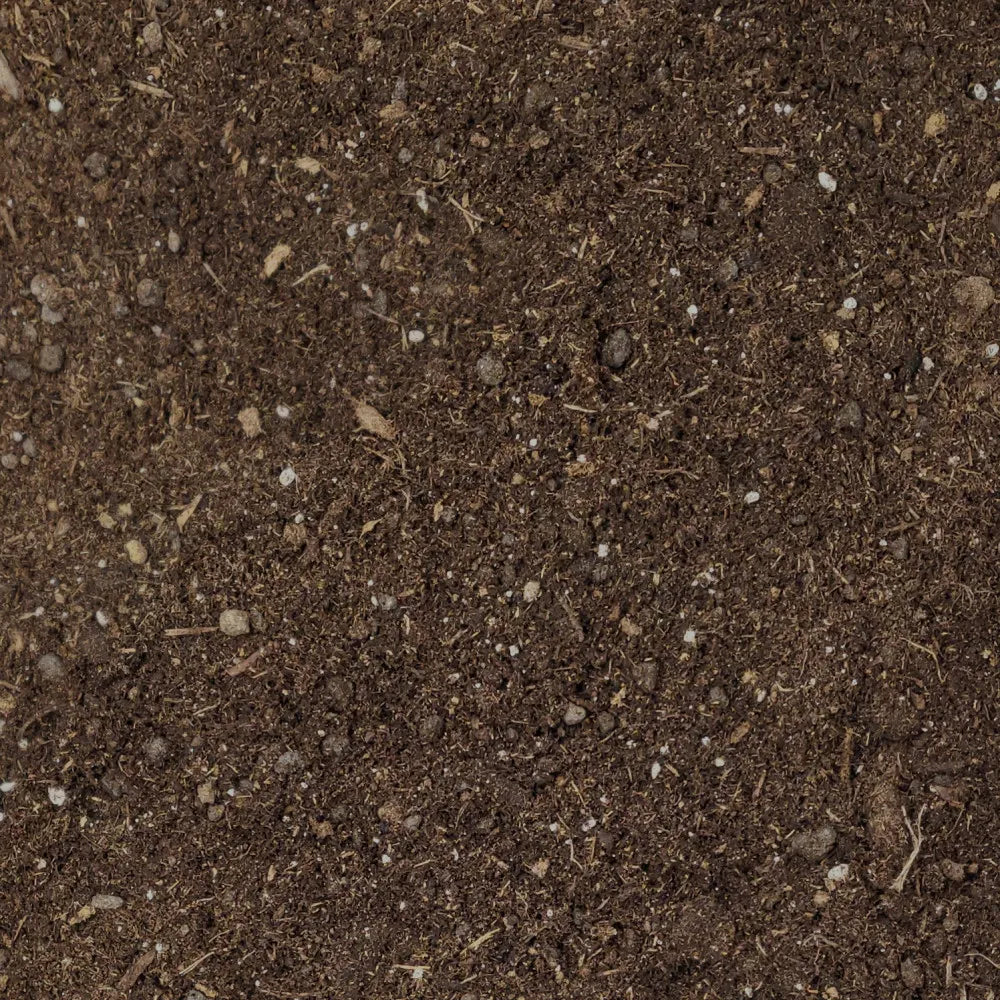
This texture image belongs to the product. Loosen before filling and firm only lightly around the root ball.
-
Repot when root space is needed
Check root development and the current pot. Choose a slightly larger container with clear drainage holes; do not repot unnecessarily during every display period.
-
Prepare the planting space
Prepare a clean container with clear drainage holes and suitable additional space around the root ball. For pot culture only, not for improving garden soil.
-
Release the root ball gently
Unpot while preserving healthy fine roots. Gently loosen a dense outer root mat without unnecessarily breaking up the ball.
-
Loosen the compost
Loosen the ready-to-use medium and add a base layer. Account for existing nutrients rather than automatically adding starter fertiliser.
-
Retain the planting level
Position the root-ball surface at its previous level. Do not bury the root collar or crown deeply; leave watering space in containers.
-
Fill around the sides
Fill gaps with compost and firm lightly. Stabilise the plant without heavily compressing the medium.
-
Water in slowly
Water slowly to settle the compost against the root ball. Allow excess water to drain completely from containers.
-
Support establishment
After about 4–6 weeks, feed responsively during active growth. Check root moisture regularly and adapt continued care to species and cultivar.
Ongoing plant care
Provide bright conditions away from cold draughts. Check root-ball moisture and remove excess water. Coloured bracts require a suitable uninterrupted dark period later in the year; stronger feeding alone will not produce them.
Frequently asked questions
Is this peat-free?
No. The mix contains high-moor peat and the other ingredients listed in the product information.
When should I feed?
After about 4–6 weeks, feed responsively during active growth.
How much compost do I need?
The space between the existing root ball and the new planting space is decisive. The bag contains 10 litres; the root ball already occupies part of the volume.
What matters in continued care?
Provide bright conditions away from cold draughts. Check root-ball moisture and remove excess water. Coloured bracts require a suitable uninterrupted dark period later in the year; stronger feeding alone will not produce them.
Safety and storage
Safety instructions
Wash your face and hands thoroughly. Use diluted fertiliser promptly and keep it out of water bodies and wastewater.
Product GPSR safety information
A safety PDF is not currently available for this product. Please refer to the product information below and the label.
Storage
Store under cover
Store sheltered from the weather and in the dark. Protect from drying out, excessive wetness and direct sunlight. Seal opened bags tightly and use promptly.