

SPERLI
SPERLI Petersilie Grüne Perle

Couldn't load pickup availability
Item details


Product knowledge
Details, use and guidance
Technical information, use and safety guidance in one place.
Parsley for pots, containers and raised beds: sow from March to August, harvest from June to October – one portion is enough for about 250 plants.
The story
Origins & history
Parsley comes from the Mediterranean. Its botanical name, Petroselinum, goes back to Greek and means roughly “rock celery”. Through the Romans and monastery gardens it spread throughout Central Europe; around 800, Charlemagne listed it for cultivation in his decree on royal estates.
Uses
Hardly any herb is as much at home in German cooking: over potatoes, in soups, sauces, herb butter and salads. Best used fresh and chopped just before serving. Cutting the outer stalks first lets the plant keep growing from the centre.
Meaning
Because it germinates so slowly, an old gardeners’ saying claims the seeds must travel to the devil and back several times before they come up. In the Middle Ages it was a fixture of every monastery and cottage garden.
A thought for giving
Parsley is biennial: in its first year it gives leaves, and only in the second does it flower. Some things reveal their whole form only when we give them more than one summer.
At a glance
- Contents: 1 packet for approx. 250 plants
- Botanical name: Petroselinum crispum
- Life cycle: biennial
- Position: sunny, partial shade
- Suitable for containers: yes (raised bed, container, pot)
- Sow indoors: all year round
- Sow outdoors: March–August
- Harvest: June–October
- Sowing depth: 0.5–1 cm
- Germination temperature: 15–20 °C
- Germination time: 14–21 days
- Plant spacing: 10 cm
- Row spacing: 25 cm
- Seed type: loose seed
How to sow
- Sow directly from March to August; indoors you can start it in Anzuchterde all year round.
- Place the seeds 0.5–1 cm deep in rows 25 cm apart.
- Keep evenly moist at 15–20 °C – parsley needs 14–21 days to germinate.
- Grow in sun or partial shade in a pot, container or raised bed and thin to 10 cm apart.
Delivery time: 1–2 weeks. Manufacturer: SPERLI GmbH. Seeds, not a plant – the image shows the original packet.
Manufacturer and product information
Manufacturer contact
Use & safety
Please follow the dosage, use and safety instructions in the full product description and on the product label.
View full product instructions →For your plant care
Useful additions & alternatives
Selected accessories, suitable substrates and alternative products. Please check each product’s intended use and instructions.
-
Suitable substrate
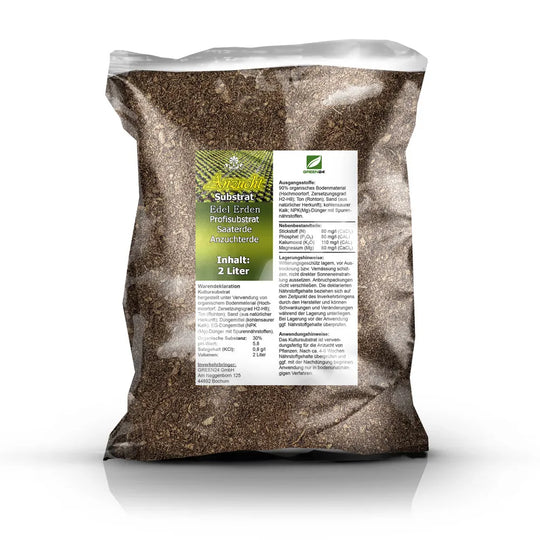
Seed Compost
Fine seed compost for sowing – low in nutrients so seedlings develop strong roots.
View product: Seed Compost →Regular price From 2.50 €Regular priceUnit price ( 1.25 €/ l)€Sale price From 2.50 € -
Suitable substrate
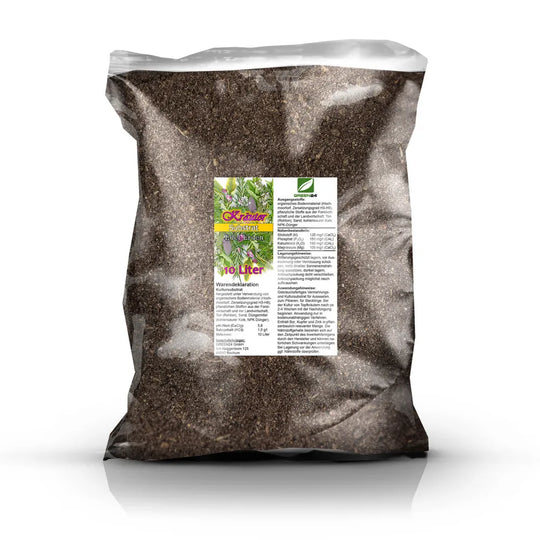
Herb Compost
Herb compost for pots, boxes and raised beds – for potting on the young plants.
View product: Herb Compost →Regular price 8.90 €Regular priceUnit price ( 0.89 €/ l)€Sale price 8.90 € -
Accessory
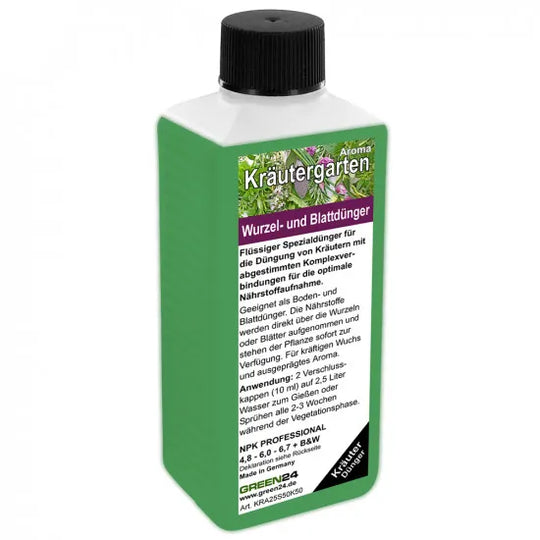
Herb Fertiliser
Herb fertiliser for aromatic, vigorous herbs in pots and beds.
View product: Herb Fertiliser →Regular price From 9.85 €Regular priceUnit price ( 39.40 €/ l)€Sale price From 9.85 € -
Suitable substrate
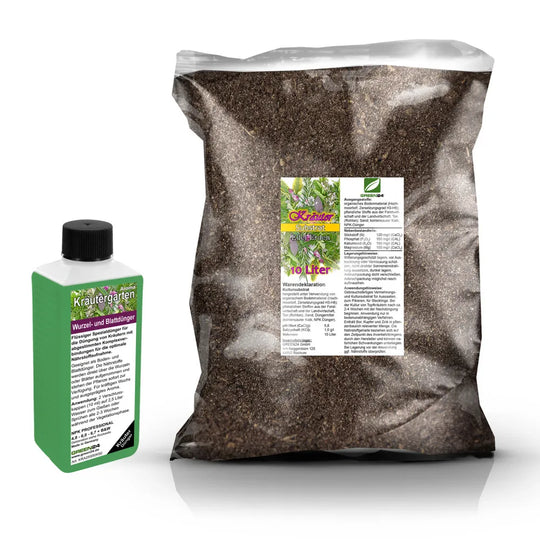
Herb Repotting Set · 10 l compost + 250 ml fertiliser
Herb repotting set: 10 l compost and 250 ml fertiliser in one pack.
View product: Herb Repotting Set · 10 l compost + 250 ml fertiliser →Regular price 15.95 €Regular price€Sale price 15.95 €
