


Container Plant Compost
For container plants on balconies and patios.




Container Plant Compost
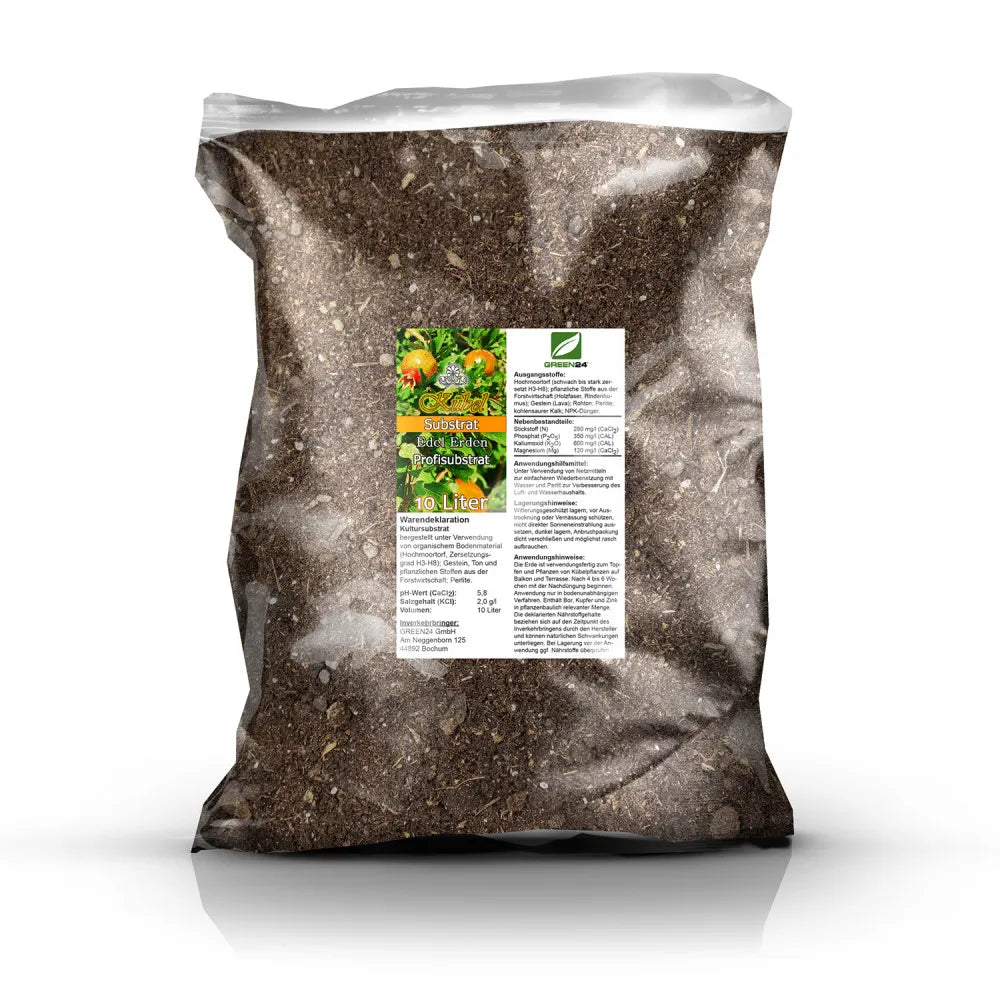
A container can transform a favourite corner. This ready-to-use compost gives suitable balcony and patio plants fresh root space. Peat, wood fibre, bark humus, lava, raw clay and perlite form the base, with nutrients already added.
For growing systems separated from the ground.
Ready to use with nutrients added.
With lava, raw clay and perlite.
Account for growth and existing nutrients.
The label and plant requirements determine use.
A container can transform a favourite corner. This ready-to-use compost gives suitable balcony and patio plants fresh root space. Peat, wood fibre, bark humus, lava, raw clay and perlite form the base, with nutrients already added.
Choose a suitable container with clear drainage holes. Repot only when additional root space is needed.
Position the root ball gently, fill around it and leave watering space.
Water as needed and allow excess to drain. Monitor moisture and growth during the following weeks.
The label specifies starting supplementary feeding after 4–6 weeks. Account for growth, existing nutrition and root condition, then follow the selected fertiliser’s dilution.
Read the complete repotting guideReady to use for potting and planting container plants on balconies and patios. The label limits use to growing systems separated from the ground, for example substrate culture in sealed trays.
The label specifies starting supplementary feeding after 4–6 weeks. Account for growth, existing nutrition and root condition, then follow the selected fertiliser’s dilution.
Raised-bog peat; forestry-derived plant materials (wood fibre, bark humus); rock (lava); perlite; clay (raw clay); calcium carbonate; NPK fertiliser. With wetting agents.
Raised-bog peat; forestry-derived plant materials (wood fibre, bark humus); rock (lava); perlite; clay (raw clay); calcium carbonate; NPK fertiliser. With wetting agents.
Selected additions for your plant care.
GREEN24
From 9.85 €
( 39.40 €/ l)
Agapanthus fertiliser for later feeding during active growth. Account for the compost’s initial nutrients first.
250 ml · 500 ml – twin pack (2 × 250 ml)
Delivery time: In stock · 1–3 days (DE)
Incl. VAT, plus shipping costs
GREEN24
From 9.95 €
( 39.80 €/ l)
For later feeding: allow for nutrients already in the compost and follow the fertiliser’s own label.
250 ml · 500 ml – twin pack (2 × 250 ml) · 1 litre
Delivery time: In stock · 1–3 days (DE)
Incl. VAT, plus shipping costs
GREEN24
From 9.95 €
( 39.80 €/ l)
For later feeding: allow for nutrients already in the compost and follow the fertiliser’s own label.
250 ml · 500 ml – twin pack (2 × 250 ml) · 1 litre
Delivery time: In stock · 1–3 days (DE)
Incl. VAT, plus shipping costs
GREEN24
From 9.95 €
( 39.80 €/ l)
For later feeding: allow for nutrients already in the compost and follow the fertiliser’s own label.
250 ml · 500 ml – twin pack (2 × 250 ml)
Delivery time: In stock · 1–3 days (DE)
Incl. VAT, plus shipping costs



Product knowledge & plant care
A container can transform a favourite corner. This ready-to-use compost gives suitable balcony and patio plants fresh root space. Peat, wood fibre, bark humus, lava, raw clay and perlite form the base, with nutrients already added.
For container plants on balconies and patios.
Choose a suitable container with clear drainage holes. Repot only when additional root space is needed.
The label specifies starting supplementary feeding after 4–6 weeks. Account for growth, existing nutrition and root condition, then follow the selected fertiliser’s dilution.
For container plants on balconies and patios.
Ready to use for potting and planting container plants on balconies and patios. The label limits use to growing systems separated from the ground, for example substrate culture in sealed trays.
The label specifies starting supplementary feeding after 4–6 weeks. Account for growth, existing nutrition and root condition, then follow the selected fertiliser’s dilution.
A ready-to-use mixture containing peat and minerals.
Raised-bog peat; forestry-derived plant materials (wood fibre, bark humus); rock (lava); perlite; clay (raw clay); calcium carbonate; NPK fertiliser. With wetting agents.
From this product’s declaration
Raised-bog peat; forestry-derived plant materials (wood fibre, bark humus); rock (lava); perlite; clay (raw clay); calcium carbonate; NPK fertiliser. With wetting agents.
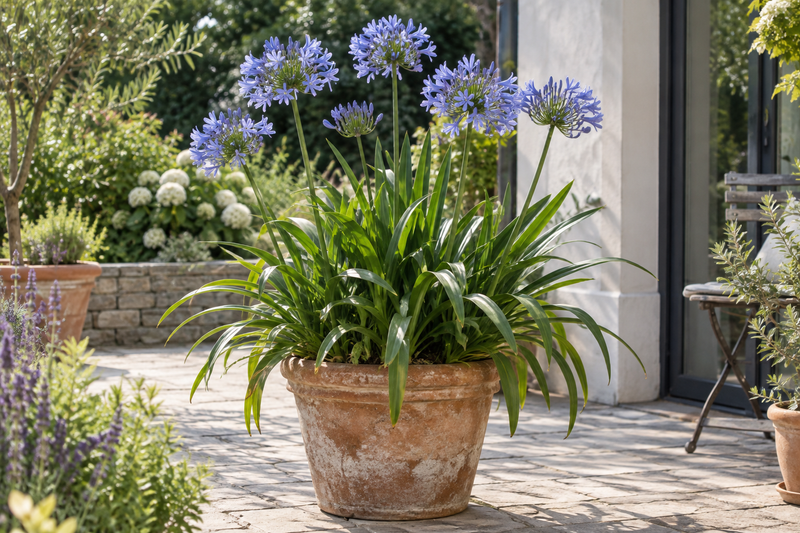
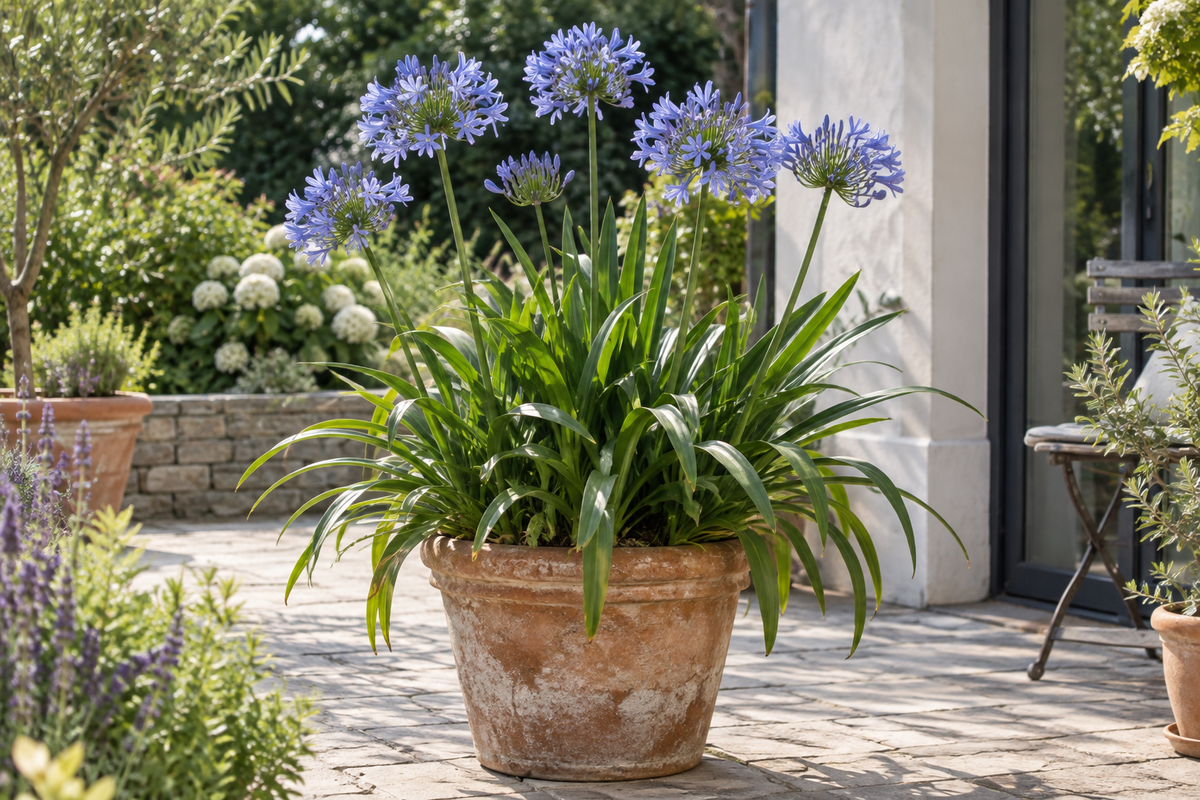
Agapanthus brings flowers to eye level and structure to sunny patio spaces. Suitable root space is part of its care, along with appropriate winter conditions.
A container can transform a favourite corner. This ready-to-use compost gives suitable balcony and patio plants fresh root space. Peat, wood fibre, bark humus, lava, raw clay and perlite form the base, with nutrients already added.
Ready to use for potting and planting container plants on balconies and patios. The label limits use to growing systems separated from the ground, for example substrate culture in sealed trays.
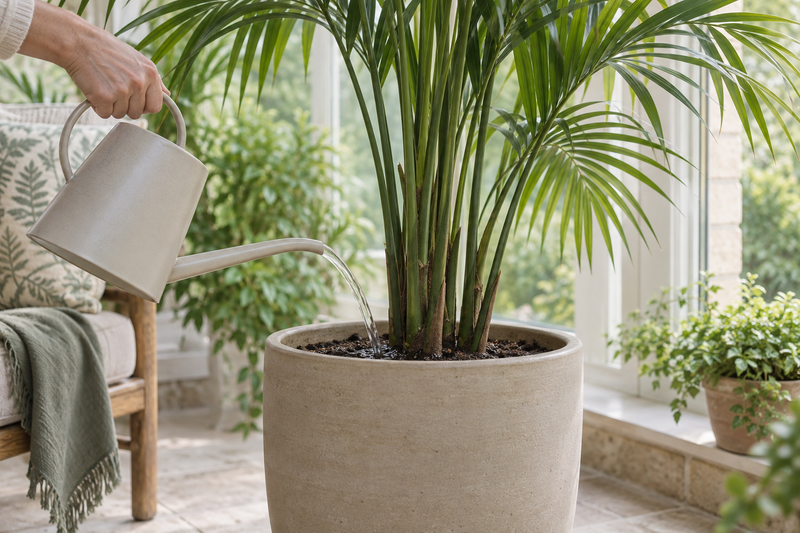
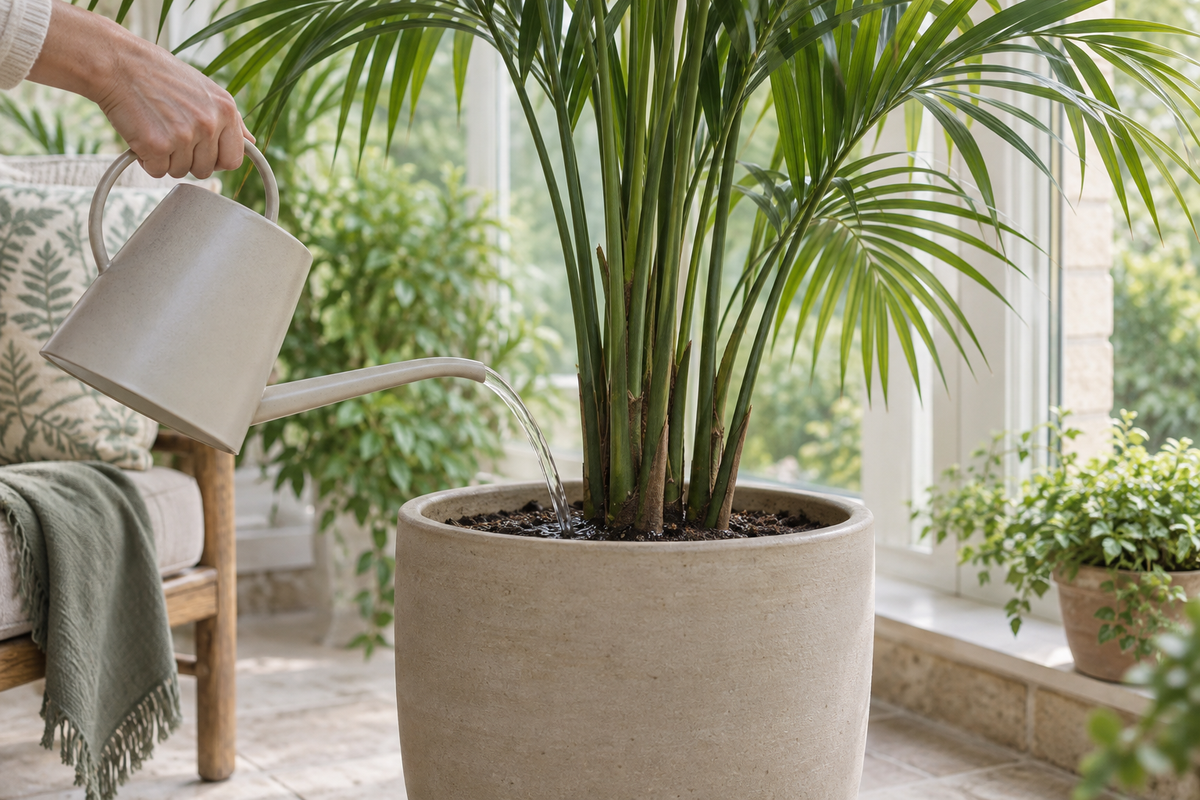
This potted-palm example shows watering onto the compost surface. For other suitable container plants, match water to root-ball condition and weather, allowing excess to drain.
The steps illustrate repotting a lily of the Nile. For other container plants, follow their own root and site requirements.

Inspect roots, medium and water uptake. Agapanthus does not need a much larger pot every year; a well-rooted ball alone is not an emergency.

Choose a stable pot offering only the extra root space needed. Clear drainage holes are important.

Prepare a work surface and tools. Keep drainage holes clear; a thick extra gravel layer is not a universal requirement.

Release the root ball without pulling leaves or flower stems. Preserve healthy fleshy agapanthus roots where possible.

Add medium beneath the root ball and keep its former height. Do not bury the plant base deeply.

Fill in small portions and let the medium settle gently. Avoid hard compaction and leave watering space.

Water according to the plant’s needs. Let excess water drain and check filled saucers.

Check moisture regularly and acclimatise to the final position after repotting. Account for initial nutrients; the label specifies further feeding after 4–6 weeks.
The label specifies starting supplementary feeding after 4–6 weeks. Account for growth, existing nutrition and root condition, then follow the selected fertiliser’s dilution. Myrtle Fertiliser: For container-grown Myrtus communis: ensure drainage and account for existing starter nutrients before feeding as needed during active growth.
For agapanthus, the species also determines winter conditions: evergreen and deciduous forms should not automatically receive identical care.
For later feeding: Cestrum Fertiliser.
Ready to use for potting and planting container plants on balconies and patios. The label limits use to growing systems separated from the ground, for example substrate culture in sealed trays.
Agapanthus combines strap-like leaves with flowers held high above them. The plant profile explains evergreen and deciduous forms.
Explore agapanthus Hibiscus Angel’s Trumpet Bougainvillea · Paperflower Four-o'clock · Mirabilis Passion flowers
Consider the linked plant species or cultivation group when choosing position and care.
Read more
Consider light, water, roots and nutrients together.
Read moreNo. The label lists raised-bog peat alongside other plant-derived and mineral materials.
The label specifies starting supplementary feeding after 4–6 weeks. Account for growth, existing nutrition and root condition, then follow the selected fertiliser’s dilution.
Select the mix according to plant needs. Acid-loving specialists, epiphytic orchids and sensitive cacti need other or individually assessed media.
Ready to use for potting and planting container plants on balconies and patios. The label limits use to growing systems separated from the ground, for example substrate culture in sealed trays.
Avoid eye contact and minimise dust. Keep away from food and animal feed.
Keep out of reach of children and pets. Clean hands after handling growing media.
Sheltered, dark and tightly sealed.
Store sheltered from the weather; protect from drying out and waterlogging. Keep out of direct sunlight.
Store in the dark, seal opened packs tightly and use promptly.

Plant species, pests, diseases and care in seconds – plus products that really fit, free of charge.