


The appropriate growing conditions
Choose a slightly larger, stable pot only when repotting is needed. Do not bury the swollen base deeper; watering after repotting depends on root condition and existing moisture.


Ponytail Palm Compost
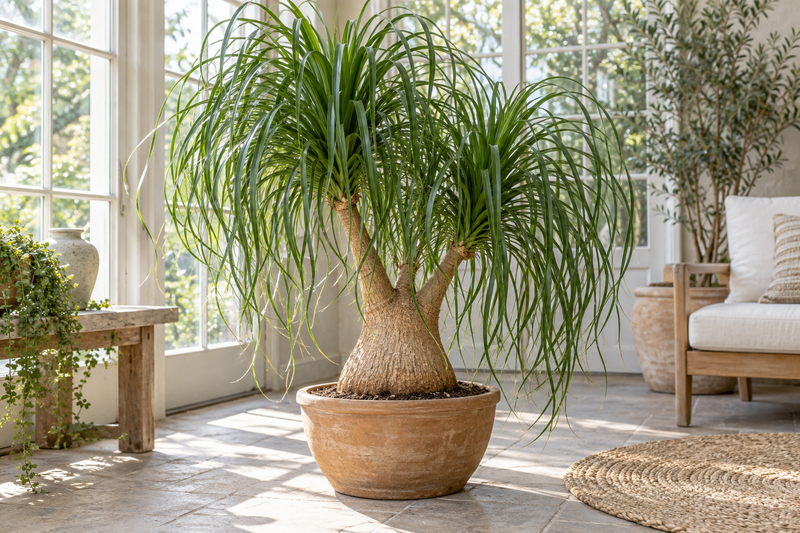
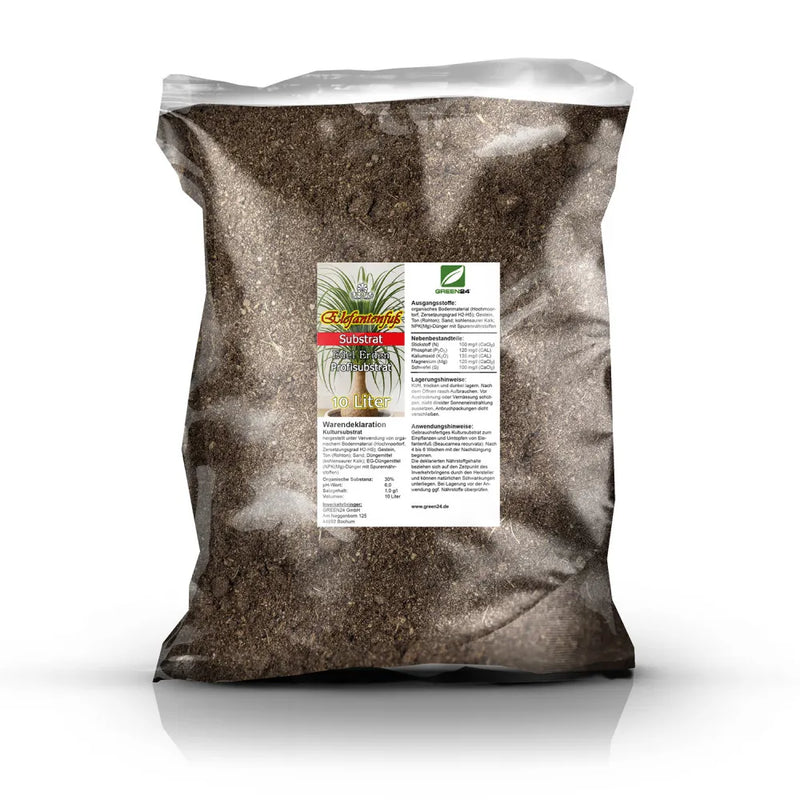
Keep a ponytail palm’s swollen base visible and allow the compost to dry between waterings. This ready-to-use growing medium is declared for planting and repotting Beaucarnea recurvata.
Ready-to-use growing medium
With an initial nutrient supply
Own bag declaration
Account for initial nutrients
Keep a ponytail palm’s swollen base visible and allow the compost to dry between waterings. This ready-to-use growing medium is declared for planting and repotting Beaucarnea recurvata.
Check root development and compost structure before repotting. Work near the start of active growth where possible.
Keep the swollen trunk base exposed at its previous level. Do not heap compost around it.
After 4–6 weeks, begin supplementary feeding as directed on the label if the plant is actively growing and needs more nutrients. Initial compost nutrients count towards its supply.
After 4–6 weeks, begin supplementary feeding as directed on the label if the plant is actively growing and needs more nutrients. Initial compost nutrients count towards its supply.
Read the full planting guideAfter 4–6 weeks, begin supplementary feeding as directed on the label if the plant is actively growing and needs more nutrients. Initial compost nutrients count towards its supply.
Raised-bog peat, stone, raw clay, sand, calcium carbonate and NPK(Mg) fertiliser with trace nutrients.
Supplementary care and product information. This does not replace the declaration on the original packaging.
Selected additions for your plant care.
GREEN24
From 9.85 €
( 39.40 €/ l)
For later feeding of the associated plants according to need. After 4–6 weeks, begin supplementary feeding as directed on the label if the plant is actively growing and needs more nutrients. Initial compost nutrients count towards its supply. Follow the fertiliser's own label for dilution.
250 ml · 500 ml – twin pack (2 × 250 ml)
Delivery time: In stock · 1–3 days (DE)
Incl. VAT, plus shipping costs
BERGER
9.95 €
Planting trowel for adding compost and small planting jobs. Handle roots gently.
Delivery time: In stock · 1–3 days (DE)
Incl. VAT, plus shipping costs
GREEN24
10.90 €
Optional for collecting loose compost and plant debris during planting and repotting.
Delivery time: In stock · 1–3 days (DE)
Incl. VAT, plus shipping costs



GREEN24 · Product knowledge
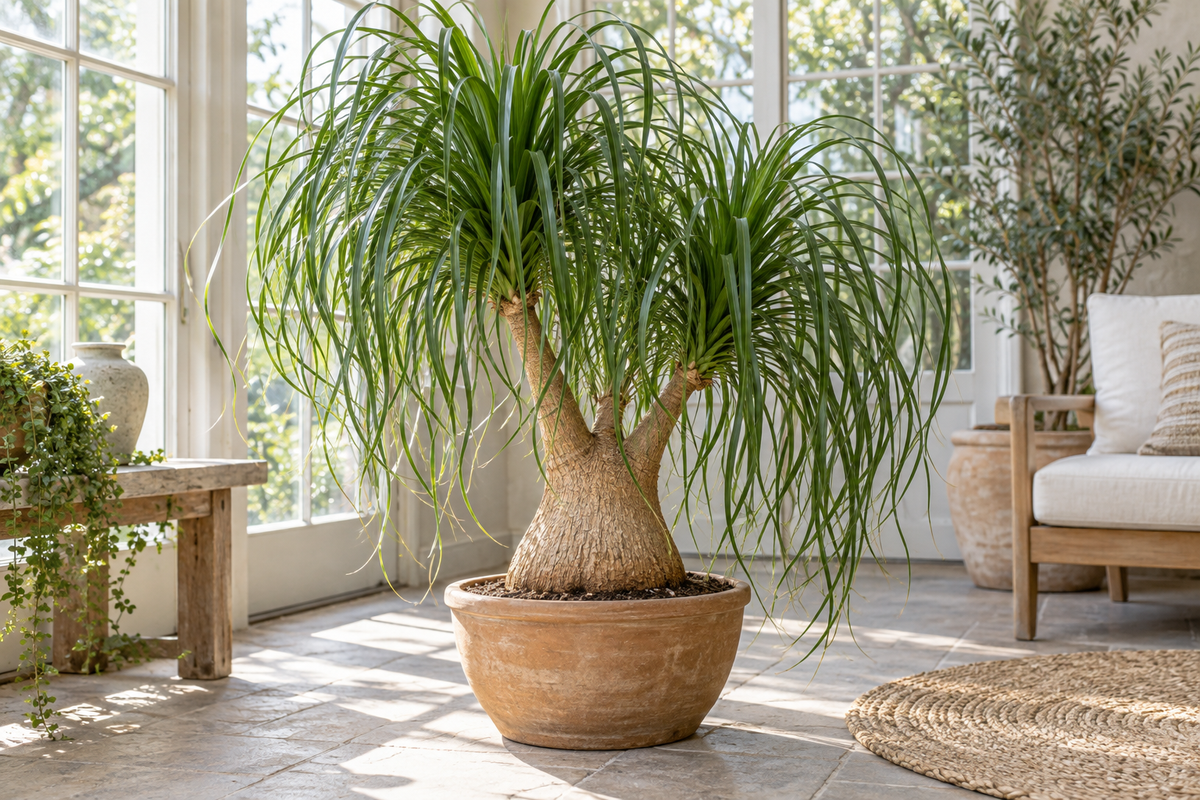
Keep a ponytail palm’s swollen base visible and allow the compost to dry between waterings. This ready-to-use growing medium is declared for planting and repotting Beaucarnea recurvata.
Choose a slightly larger, stable pot only when repotting is needed. Do not bury the swollen base deeper; watering after repotting depends on root condition and existing moisture.
Keep the swollen trunk base exposed at its previous level. Do not heap compost around it.
After 4–6 weeks, begin supplementary feeding as directed on the label if the plant is actively growing and needs more nutrients. Initial compost nutrients count towards its supply.
Choose a slightly larger, stable pot only when repotting is needed. Do not bury the swollen base deeper; watering after repotting depends on root condition and existing moisture.
After 4–6 weeks, begin supplementary feeding as directed on the label if the plant is actively growing and needs more nutrients. Initial compost nutrients count towards its supply.
Contains peat.
Raised-bog peat, stone, raw clay, sand, calcium carbonate and NPK(Mg) fertiliser with trace nutrients.
Ingredient types without quantities, proportions or nutrient values.
Supplementary care and product information. This does not replace the declaration on the original packaging.
Keep a ponytail palm’s swollen base visible and allow the compost to dry between waterings. This ready-to-use growing medium is declared for planting and repotting Beaucarnea recurvata.
Keep a ponytail palm’s swollen base visible and allow the compost to dry between waterings. This ready-to-use growing medium is declared for planting and repotting Beaucarnea recurvata.
Choose a slightly larger, stable pot only when repotting is needed. Do not bury the swollen base deeper; watering after repotting depends on root condition and existing moisture.
Drainage, pot size and attentive watering work together. New compost does not automatically heal damaged roots.
Choose a slightly larger, stable pot only when repotting is needed. Do not bury the swollen base deeper; watering after repotting depends on root condition and existing moisture.
Choose a slightly larger, stable pot only when repotting is needed. Do not bury the swollen base deeper; watering after repotting depends on root condition and existing moisture.

Check root development and compost structure before repotting. Work near the start of active growth where possible.

Choose a stable pot with a little space beside the root ball. An oversized container can remain wet around a small root system.

Keep drainage holes open. Ensure you can empty the outer pot or saucer later.

Support the root ball and release it gently from the old pot. Retain healthy roots and avoid pulling leaves or stems.

Keep the swollen trunk base exposed at its previous level. Do not heap compost around it.

Add fresh compost beneath and beside the root ball. Close large air pockets gently and leave a watering rim without compacting the medium hard.

Assess root injuries, existing moisture and temperature before watering. Avoid automatic heavy watering or a fixed dry waiting period.

After 4–6 weeks, begin supplementary feeding as directed on the label if the plant is actively growing and needs more nutrients. Initial compost nutrients count towards its supply.
After 4–6 weeks, begin supplementary feeding as directed on the label if the plant is actively growing and needs more nutrients. Initial compost nutrients count towards its supply.
Explore position, root space and care for the actual plant.
Read more
Consider light, water, roots and nutrients together.
Read moreThe root ball already occupies space. Fill the remaining space around it rather than assuming the full pot volume is needed.
No. The original label lists raised-bog peat as an ingredient.
After 4–6 weeks, begin supplementary feeding as directed on the label if the plant is actively growing and needs more nutrients. Initial compost nutrients count towards its supply.
Keep the swollen trunk base exposed at its previous level. Do not heap compost around it.
Minimise dust and do not inhale it. Avoid eye contact and prolonged skin contact.
Keep away from food and animal feed, out of reach of children and animals. Wash hands after use.
Store protected from weather, in dry and dark conditions; protect against drying out, excessive moisture and direct sun. Reseal opened packaging tightly and use promptly.
Minimise dust and do not inhale it. Avoid eye contact and prolonged skin contact.
Keep away from food and animal feed, out of reach of children and animals. Wash hands after use.
GREEN24 GmbH
Am Neggenborn 125
44892 Bochum, Germany
info@green24.de
www.green24.de

Plant species, pests, diseases and care in seconds – plus products that really fit, free of charge.