


Schädlings-Frei-Organic
€16,95
For spraying or watering, depending on the authorised use. The method depends on the plant, pest and location.
View product in our shop →
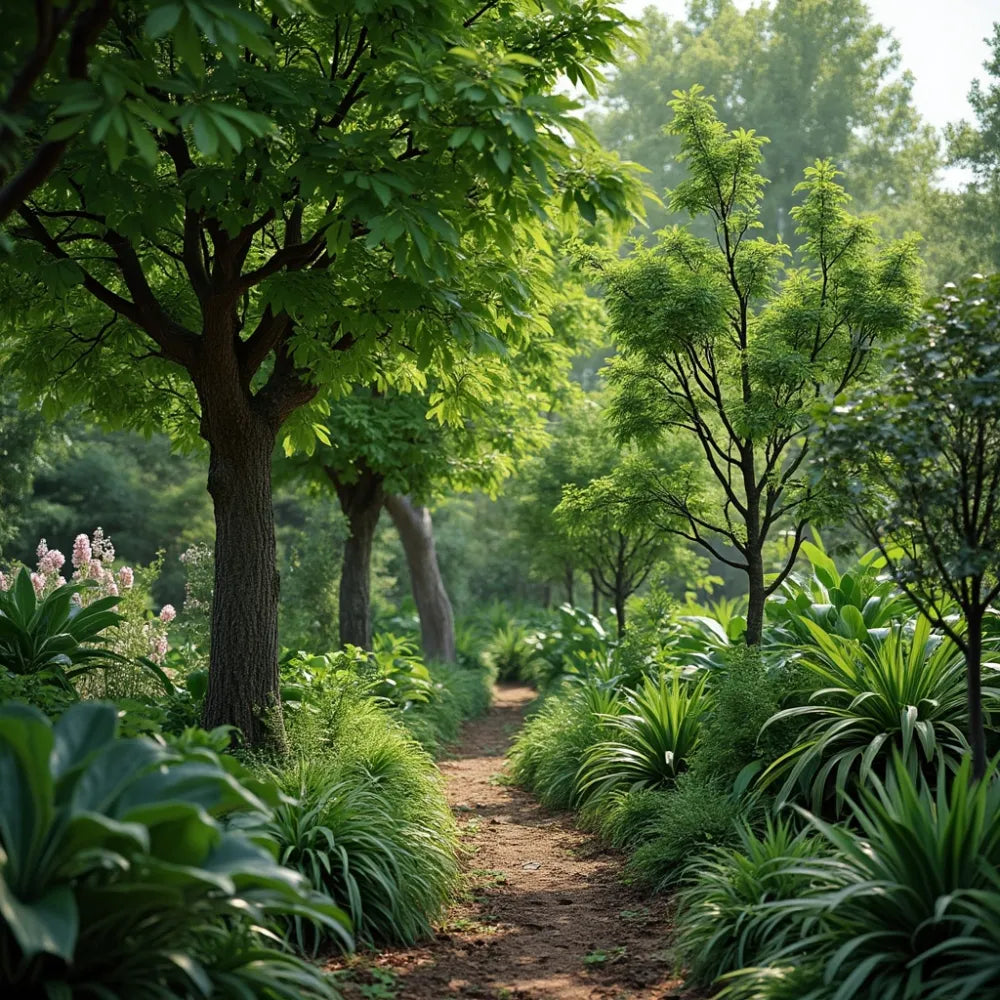

Check whether roots fill the pot densely or the compost has lost its structure. Repotting should improve root space rather than simply follow an annual date. Plan substantial work in suitable weather towards the start of growth. Choose timing especially carefully for newly leafed Japanese maples or unhealthy plants.
A stable container needs room for the ball and some fresh compost. The plant’s shape and eventual size also influence the choice. The existing ball already occupies volume. Calculate new compost for the free space beside and beneath it, not automatically the entire pot volume.
Inspect drainage holes and clear any blockage. A planting pot inside a closed decorative container needs its own open outlet. A coarse layer does not replace drainage holes. It must not obstruct the flow and is not necessary in every pot.
Support the weight at the root ball. Loosen the container by gently pressing or tapping it; do not pull the plant out by slender branches. Preserve healthy roots and remove loose old compost. Assess strongly circling or damaged roots separately; heavy root pruning is not an automatic repotting step.
Add some compost and position the root ball. Keep its surface at the previous depth, with space for watering below the rim. Do not heap compost around the stem base or an existing graft union. Check that the plant sits upright and stable.
Add compost to gaps around the ball in small portions. Gentle pressure closes larger air spaces. Do not compact the compost hard. Watch planting depth, stability and even watering space around the rim.
Water slowly and evenly so that the fresh compost beside the ball is moistened too. Observe drainage from the base. Match the quantity to existing moisture. Afterwards, remove standing water from the saucer or outer container; the pot should not remain in it.
During the following weeks, check moisture in both the old ball and new compost. For Japanese maples, a suitable position and even moisture protect delicate foliage. Record the repotting date: after about four to six weeks, the label calls for nutrient checks and supplementary feeding if needed. Do not feed dormant plants simply by the calendar.
10 ml per 2.5 l of water.
Every 2–3 weeks during the growing season.
April/May–September.
| Water | Standard 100 % | Young plants 50 % | Seedlings with leaves 20 % |
|---|---|---|---|
| 1 l | 4 ml | 2 ml | 0.8 ml |
| 5 l | 20 ml | 10 ml | 4 ml |
| 10 l | 40 ml | 20 ml | 8 ml |
Shake the concentrate before use.
Pour the required amount of water into a suitable container.
Use standard 100%, young plants 50%, or seedlings with leaves 20% of the basic dilution. Concentration does not determine the watering volume needed.
Measure the calculated amount accurately with a suitable measuring aid.
Add the concentrate to the water and mix evenly.
Feed the already moist root ball when nutrients are needed; do not overwater using a rigid water volume.
Do not mix the entire bottle into the bag. The compost is ready to use; dilute the concentrate separately with water.
Tree & Shrub Repotting Set: 10 litres of ready-to-use repotting compost and 250 ml liquid concentrate for later feeding according to need.
After about four to six weeks, check nutrient levels and begin supplementary feeding if needed. Existing nutrients already count towards the supply; follow the chosen fertiliser for subsequent doses.
NPK 4.2 + 3.0 + 4.5
Declared percentages. Product pH stated on the label: 6.9.
Product pH does not specify the pH of the diluted solution or soil.
Peat, perlite and raw clay with mineral fertiliser.
The original label lists 65% organic soil material from raised-bog peat H2–H5, perlite of natural origin, clay (raw clay), calcium carbonate and NPK(Mg) fertiliser.
Wetting agents aid water uptake. This product contains peat. The peat input percentage is distinct from the separately declared organic matter content.
Organic matter, pH, salt content and available nutrients.
Nutrient figures refer to the time the manufacturer places the product on the market. Levels may fluctuate or change in storage; check before using stored compost.
Included: one 10-litre bag of compost and one 250 ml bottle of fertiliser. Plant and pot are not included.
Plant profile and care calendar
For suitable deciduous trees and shrubs. Plan the site, root system and container weight together.
For trees and shrubs in containers and garden ground.
For planting trees and shrubs in containers and garden ground. Species, root system, soil and position determine how the compost is used. The illustrated guide explains repotting an already rooted woody plant.
After about four to six weeks, check nutrient levels and begin supplementary feeding if needed. Existing nutrients already count towards the supply; follow the chosen fertiliser for subsequent doses.
Dry · dark · above 8 °C to a maximum of 38 °C
Store in a dry, dark place above 8 °C and at no more than 38 °C.
Minimise dust and avoid inhaling it. Avoid contact with eyes, skin and clothing.
Keep away from food and beverages and out of reach of children and animals. Clean your hands thoroughly after use.
Sheltered from the weather, dark and tightly sealed.
Store sheltered from the weather and in the dark; protect against drying out or becoming waterlogged. Keep out of direct sunlight.
Seal opened packaging tightly. Nutrient levels may fluctuate or change during storage; check before using stored compost.
One 10-litre bag of compost and one 250 ml bottle of fertiliser. Plant and container are not included.
After about four to six weeks, check nutrient levels and begin supplementary feeding if needed. Existing nutrients already count towards the supply; follow the chosen fertiliser for subsequent doses.
10 ml per 2.5 litres of water. The table shows standard, young-plant and leafy-seedling strengths.
At standard dilution, approximately 62.5 litres of feed solution. Match watering volume to the plant.
No. Use the ready-to-use compost and dilute the concentrate separately with water for later feeding.
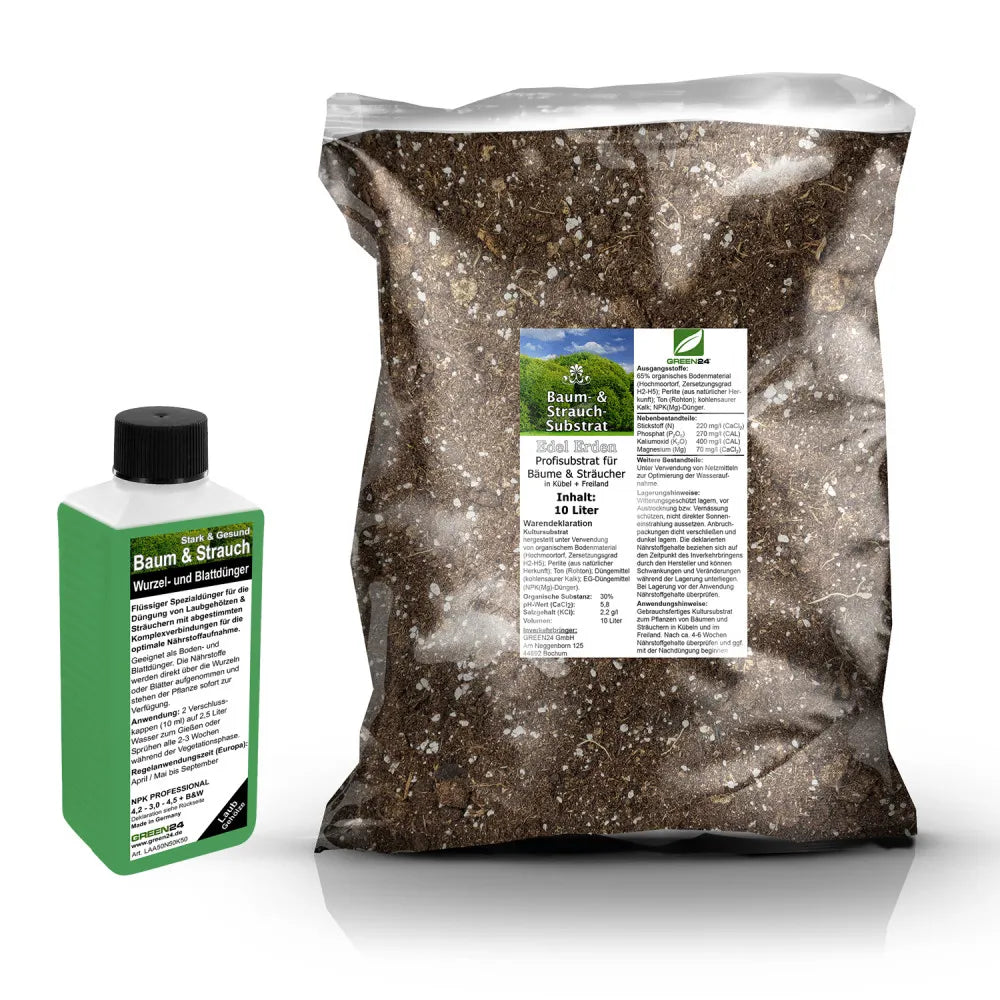
Tree & Shrub Repotting Set: 10 litres of ready-to-use repotting compost and 250 ml liquid concentrate for later feeding according to need.
After about four to six weeks, check nutrient levels and begin supplementary feeding if needed. Existing nutrients already count towards the supply; follow the chosen fertiliser for subsequent doses.
10 ml per 2.5 litres of water. Account for the initial nutrients in the compost.
The plant species, photographs and details of location, moisture and previous care help assess plant damage. Identify the cause and a suitable application before treatment.
More fertiliser is not a general solution to growing problems. A recommendation to buy products together does not confirm that they can be mixed.
General manufacturer information: these products have not been selected here as suitable treatments for the plant shown here. Before use, check the plant species, pest, application site and current instructions.


Use plant protection products safely. Always read the label and product information before use.
Selected additions for your plant care.

Buy the included fertiliser separately.

Buy the included compost separately.
