
Practical knowledge for your plants
Hydroculture: houseplants in mineral growing media
A water-level indicator, inner pot and clay medium work differently from an ordinary pot of compost. Understand the system before topping it up.
- Setup
- Inner pot, reservoir and water-level indicator
- Check
- Check water level alongside remaining moisture
- Nutrients
- A fertiliser suited to the system
What replaces the conventional pot?
In conventional houseplant hydroculture, roots anchor in a mineral medium. A suitable inner pot sits in a container with a reservoir, and a water-level indicator helps you judge the fill level. The medium supports the roots; feeding is a separate part of care. Use compatible components so that the pot base, reservoir and indicator height work together.
Start with a suitable plant
A plant already raised in hydroculture is usually an easier starting point than converting a large soil-grown root ball. Existing roots have to adapt to different conditions, so conversion can fail. Check whether the species is suitable and follow the system instructions. Set the plant at the depth intended for that particular inner pot.
Treat MIN as a prompt to check
Do not top up to MAX at every opportunity. Observe how quickly the plant uses water. When the indicator reaches MIN, check the remaining moisture and time the next watering to suit the plant and system. Also check that the float moves freely: a stuck indicator may give a misleading impression of the water level.
Mix the nutrient solution deliberately
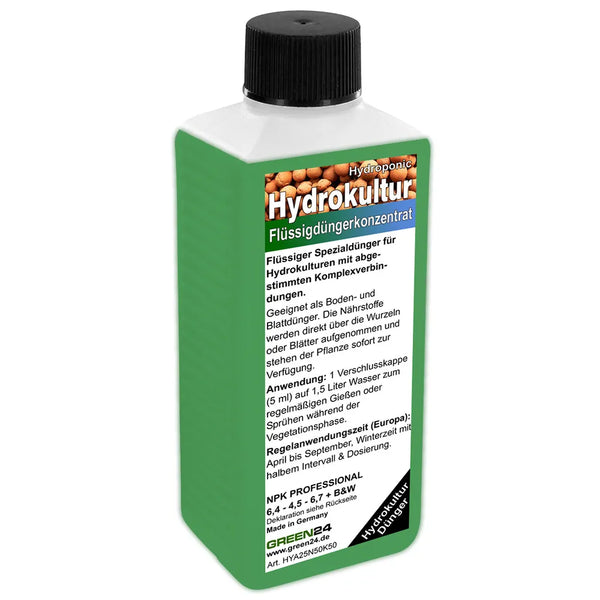
Choose a fertiliser intended for the particular hydroculture setup and follow its dilution and application instructions. Measure water and concentrate separately; do not pour undiluted concentrate onto roots. A feed for a houseplant reservoir is not automatically designed for a continuously recirculating hydroponic tank. Do not transfer its dose or solution-change routine without checking suitability.
Good care still requires observation
Watch the leaves, visible roots and water use. Low water consumption may reflect reduced light or cooler temperatures, among other causes. Yellow leaves alone do not prove a nutrient shortage. If you notice odour, soft roots or a persistently high water level, investigate root conditions first. Clean and maintain the system according to its instructions.
Frequently asked questions
Does any expanded clay suit every container?
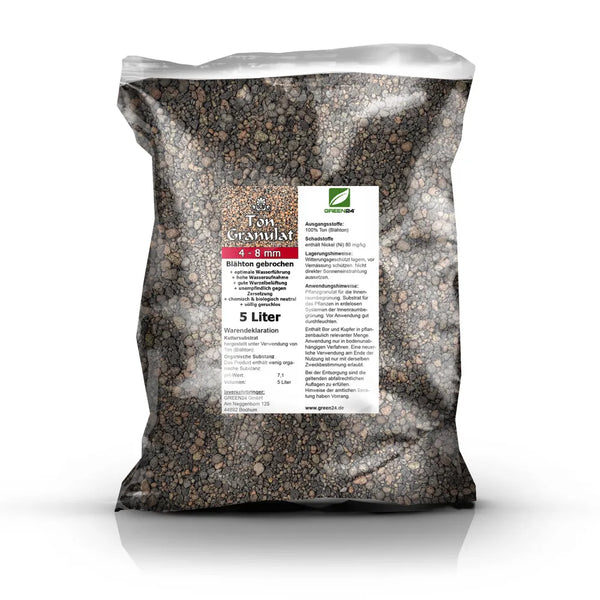
Particle size, material form and pot openings need to work together. Follow the medium and system specifications; a different grade can change water movement and stability.
Is hydroculture the same as DWC?
Both are forms of soilless growing. The houseplant setup described here works differently from an aerated deep water culture system with a nutrient tank.
Products for this project
Equipment for the tasks described here. Each product page explains its intended use and application.
Related plants in the catalogue
Keep exploring
Understanding hydroponics: DWC, NFT and other systems
Growing without soil means more than standing plants in water. Roots need nutrients and oxygen. Your chosen system determines how they receive them.
Read the guide
Plant nutrition: understand demand and feed appropriately
Plants need nutrients, but feeding cannot be separated from light, water and roots. Learn to read product information and make a considered feeding decision.
Read the guide
Plant protection: identify the problem, then act
Spots, wilting shoots and yellow leaves are observations, not yet a diagnosis. A clear sequence helps you investigate causes and choose suitable action.
Read the guide