Potting a hippeastrum: the route to winter flowers starts now
October marks the start of the potting season for hippeastrum bulbs. A stable pot, an exposed bulb neck and restrained watering provide the foundation; feeding begins only during active growth.
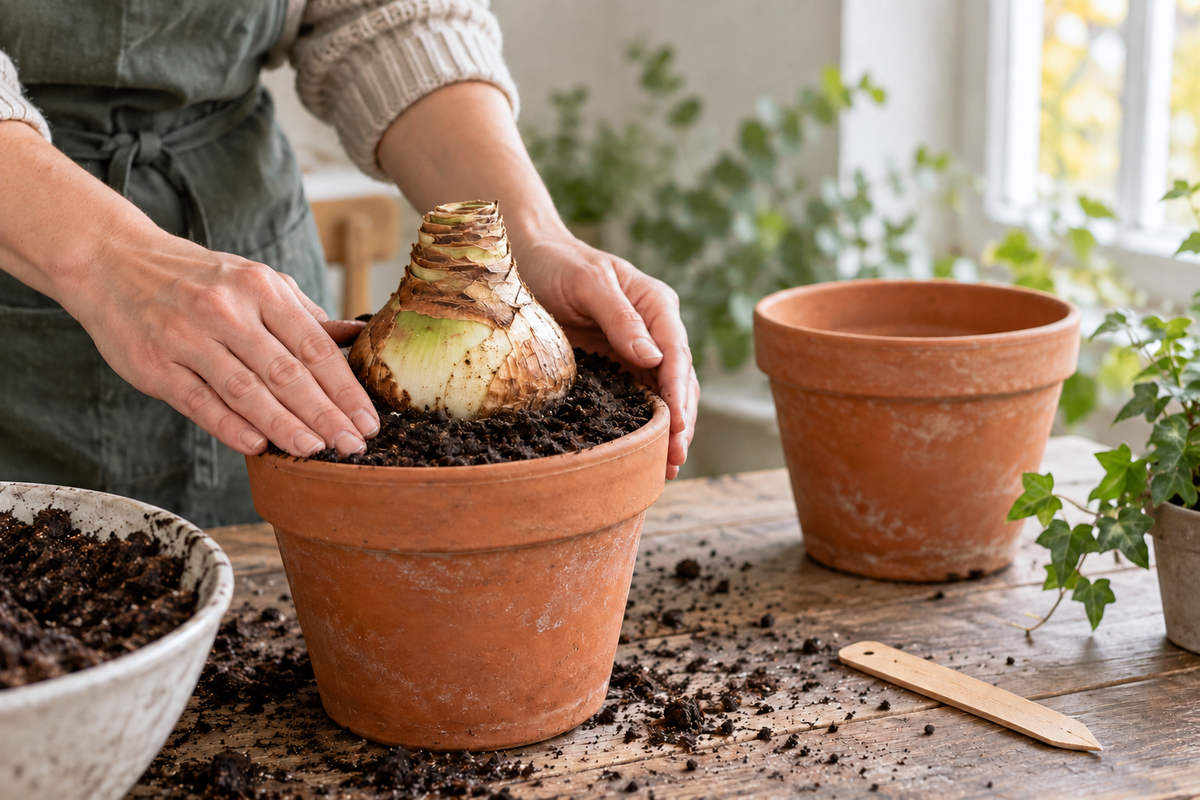
Hippeastrum bulbs are often sold under the common name “amaryllis”. From October onwards, these bulbs can be potted in preparation for flowering in winter. The exact date cannot be promised, however: bulb size, storage conditions, temperature and light all influence when growth begins.
The most important job in October is not feeding. It is choosing a suitable container, setting the bulb at the correct depth and watering cautiously at first. Many newly planted bulbs flower after several weeks; Christmas may be possible, but it is not guaranteed.
Inspect the bulb before potting
A firm bulb that feels heavy for its size, without soft or rotten patches, offers the best starting point. Dry outer tunics can remain in place if the tissue beneath is healthy. A damaged or mushy area should not simply be hidden under compost; isolate the bulb and assess it carefully.
Waxed hippeastrum bulbs are a separate product type. During their intended first flowering cycle, they are neither potted nor watered. Check what you have before following ordinary potting advice.
Five steps for a sound start
Choose a stable pot
The container should be only slightly larger than the bulb and must have an unobstructed drainage hole. A weighty pot is less likely to topple when the tall flower stem develops.
Add free-draining compost
Use a loose potting compost and keep the drainage hole clear. Do not compress the compost heavily; excess water needs an easy route out.
Plant the bulb high
Set the roots into the compost while keeping the neck and shoulders exposed. As a guide, roughly two-thirds of the bulb can remain visible above the surface.
Water sparingly
Water modestly after planting and empty any standing water from the decorative outer pot. Until clear growth appears, less water is generally safer than continually wet compost.
Start it in warmth and light
Place the pot in a bright, warm position. Once a flower stem begins to lean towards the light, turn the pot occasionally. Increase watering only when growth is clearly visible.
Feed according to growth, not the calendar
A date alone is not a reason to fertilise. While the bulb is dormant or only beginning to form roots, moisture management comes first. Once leaves are actively growing, feeding can be planned in accordance with the label and the nutrients already present in the compost.
This also avoids a common care mistake: extra water and fertiliser do not reliably speed up growth. Persistently wet compost instead increases the risk of root damage and rot.
Christmas flowering is not guaranteed
Newly potted hippeastrum bulbs commonly need several weeks to flower. Even when planted in early October, the exact date remains variable. Treat Christmas flowering as a possible aim rather than a promise, and enjoy a later winter display just as much.
Keep it safely positioned
Hippeastrums are toxic to dogs and cats; no part of the plant is edible, and the bulb in particular should be kept out of reach of children and pets. Do not confuse it with an edible onion, and wash your hands after handling it.
Your short plan for today
Inspect the bulb, choose a stable pot with drainage, plant it high and begin with restrained watering. Do not start feeding yet; wait until active growth begins. This helps the bulb towards a winter display without overfeeding it.
The product photograph shows the original product actually offered.