

SPERLI
SPERLI Andenbeere Inkapflaume

Couldn't load pickup availability
Item details


Product knowledge
Details, use and guidance
Technical information, use and safety guidance in one place.
The Cape gooseberry bears orange fruits in paper-thin husks – little lanterns to harvest from August to October, happily in a container too.
The story
Origins & history
Physalis peruviana comes from the Andes of South America, where it has long been gathered and grown in Peru, Ecuador and Colombia. It was later also grown in South Africa; its English name Cape gooseberry and the German Kapstachelbeere are often traced back to the Cape of Good Hope. The genus name comes from the Greek ‘physa’, bladder, after the inflated husk around the fruit.
Uses
A decorative plant for containers and raised beds in a sunny, warm spot; it needs room, about a metre in every direction. Only the ripe, orange fruits are eaten, fresh or as a garnish on desserts. Do not eat unripe fruit or the leaves.
Meaning
The Cape gooseberry is a member of the nightshade family and so a relative of the tomato and potato. Its German name Inkapflaume, Inca plum, recalls its home in the former Inca empire.
A thought for giving
The physalis fruit ripens safely wrapped in its husk until it is ready. Some things need shelter before they show themselves.
At a glance
- Contents: 1 packet for approx. 60 plants
- Botanical name: Physalis peruviana
- Life cycle: annual
- Position: sunny
- Suitable for containers: yes (raised bed, container)
- Sow indoors: February–April
- Harvest: August–October
- Sowing depth: 0.5–1 cm
- Germination temperature: 20–25 °C
- Germination time: 14–21 days
- Plant spacing: 100 cm
- Row spacing: 100 cm
- Seed type: loose seed
How to sow
- Sow indoors from February to April in the PRO24 propagator (Anzuchthaus PRO24): sow seeds 0.5–1 cm deep.
- At 20–25 °C the seeds germinate in 14–21 days.
- Plant out in full sun only after the frosts, 100 cm apart within and between rows.
- In containers use peat-free vegetable compost (Gemüseerde torffrei) and feed with tomato fertiliser (Tomaten-Dünger).
Delivery time: 1–2 weeks. Manufacturer: SPERLI GmbH. Seeds, not a plant – the image shows the original packet.
Manufacturer and product information
Manufacturer contact
Use & safety
Please follow the dosage, use and safety instructions in the full product description and on the product label.
View full product instructions →For your plant care
Useful additions & alternatives
Selected accessories, suitable substrates and alternative products. Please check each product’s intended use and instructions.
-
Suitable substrate
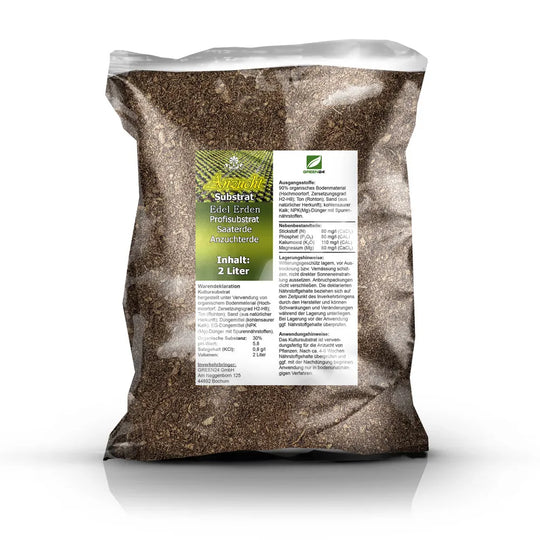
Seed Compost
Fine seed compost for sowing – low in nutrients so seedlings develop strong roots.
View product: Seed Compost →Regular price From 2.50 €Regular priceUnit price ( 1.25 €/ l)€Sale price From 2.50 € -
Accessory
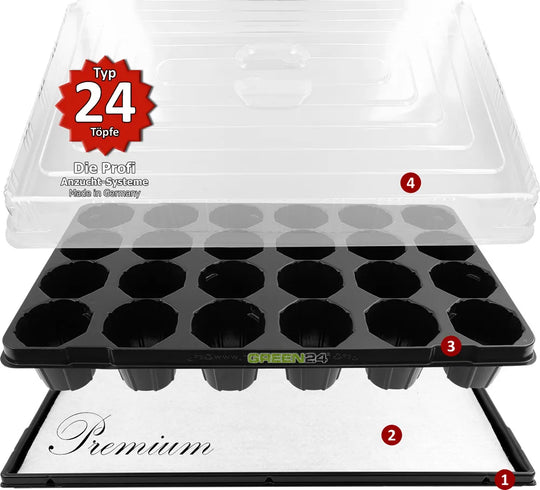
PRO24 Propagator – G24
Propagator with lid: keeps warmth and humidity even for raising seedlings indoors.
View product: PRO24 Propagator – G24 →Regular price 23.95 €Regular price€Sale price 23.95 € -
Suitable substrate
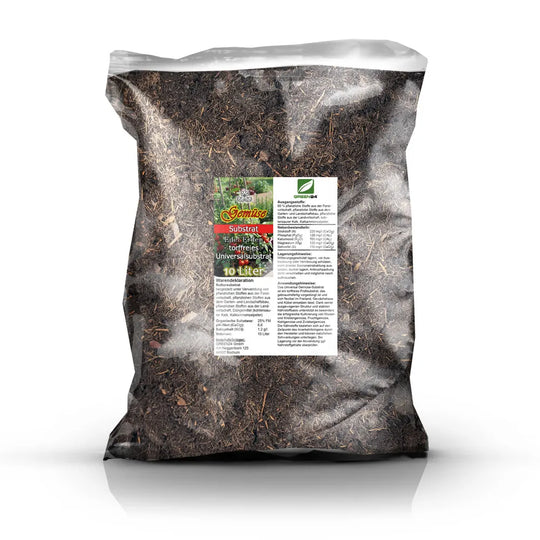
Peat-free Vegetable Compost
Peat-free vegetable compost for beds, containers and raised beds.
View product: Peat-free Vegetable Compost →Regular price 8.95 €Regular priceUnit price ( 0.90 €/ l)€Sale price 8.95 € -
Accessory
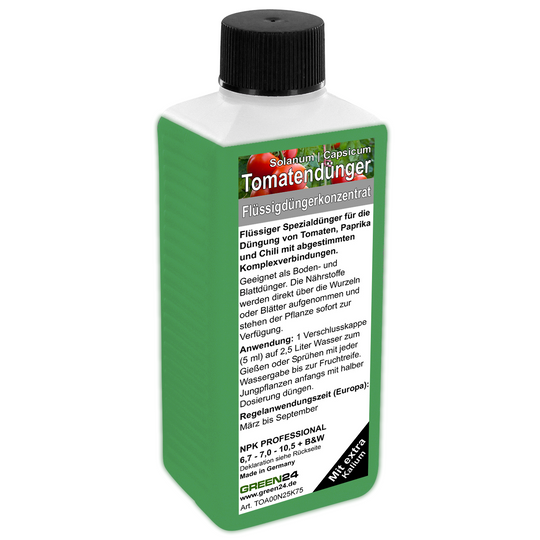
Tomato Fertiliser
Tomato fertiliser for vigorous plants and a rich harvest.
View product: Tomato Fertiliser →Regular price From 9.85 €Regular priceUnit price ( 39.40 €/ l)€Sale price From 9.85 €
