
Poinsettia in November: Repotting can wait
Just bought a poinsettia: Does it need repotting? For a healthy plant, start with the right position and checks of compost moisture.
 AI-generated
With its colourful bracts, a poinsettia brings a festive feel indoors as early as November. A healthy, newly bought plant can stay in its existing nursery pot for now. Moving it into a larger container is not an essential first care step.
For a later repot
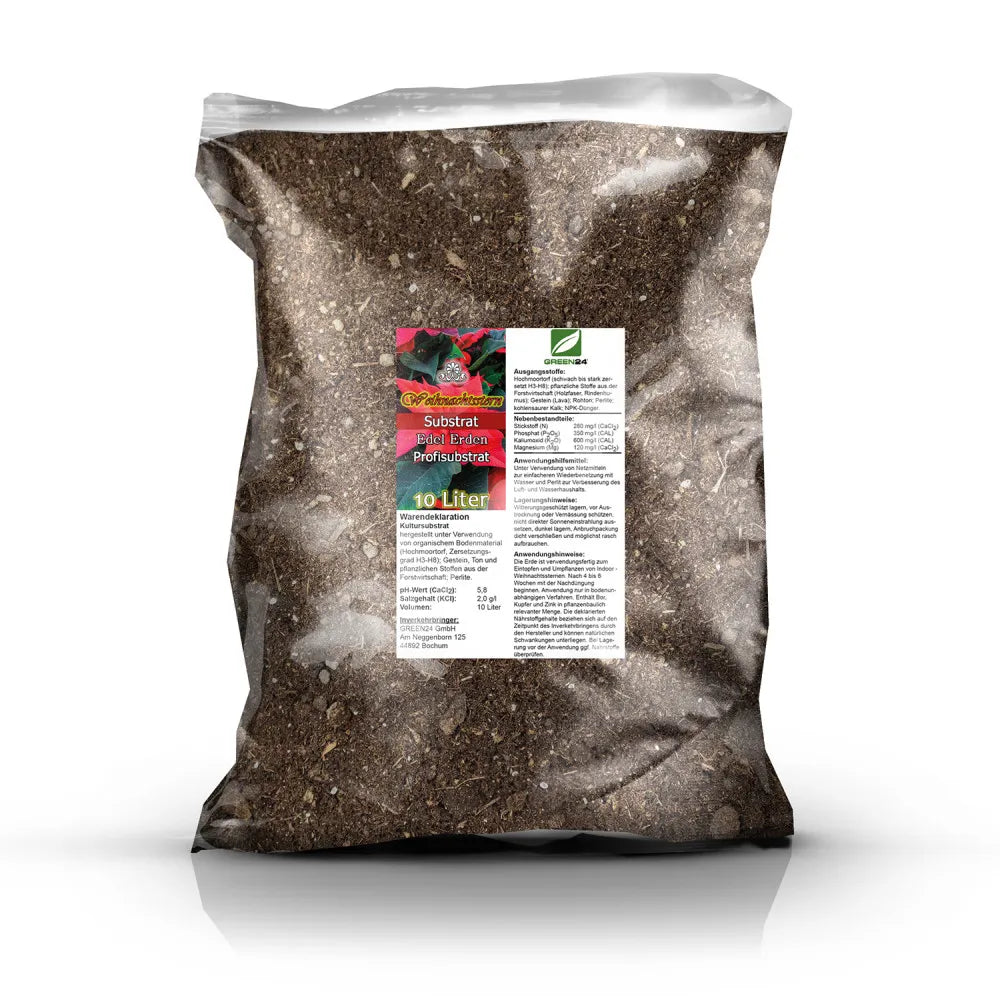
GREEN24 Poinsettia Compost
The ready-to-use 10-litre mix is intended for potting and repotting indoor poinsettias. It already contains nutrients. Choose it when a new pot is actually needed; buying a poinsettia does not mean you need to repot it straight away.
View compost and product information →Help it settle in first
Have the plant wrapped against the cold for the journey home and bring it indoors promptly. Choose a bright position away from cold draughts and direct heat from radiators. Check conditions by the window at night, too: The space between the glass and closed curtains can become much colder than the room.
Check moisture rather than watering by the calendar
Feel the compost surface before watering. As it begins to dry, assess whether the plant needs water. Let excess water drain completely and empty the decorative outer pot or saucer. A waterproof decorative sleeve must not block drainage. Routine extra feeding is not needed during the colourful festive display.
Make a note to review repotting in spring
If you want to keep growing your poinsettia, check its root space in spring. If needed, choose a container just a little larger, with clear drainage holes. Keep the top of the root ball at its previous level, fill around the sides with fresh compost and firm only lightly. Take the mix's existing nutrient supply into account during subsequent care.
Investigate problems now
“Repotting can wait” applies to a healthy plant. Persistent wetness, wilting or leaf drop calls for a timely check of the position, drainage and root-ball condition. A larger container does not remedy cold damage or persistently wet roots. If the cause is unclear, expert assessment is more useful than a hasty change of compost.
Until it is needed, store the compost bag sheltered from the weather and in the dark. Protect it from drying out, excessive wetness and direct sunlight; seal opened bags tightly and use promptly.
