
Blue greenhouse traps: What the catch tells you
Plant inspections still matter in November. Combine blue sticky traps for thrips monitoring with careful checks of leaves and flowers.

A frost-free greenhouse still needs plant inspections in November. Some thrips species can remain active under protected conditions throughout the year. A blue sticky trap helps you monitor flying insects, but you still need to inspect the leaves.
Monitor catches, inspect plants
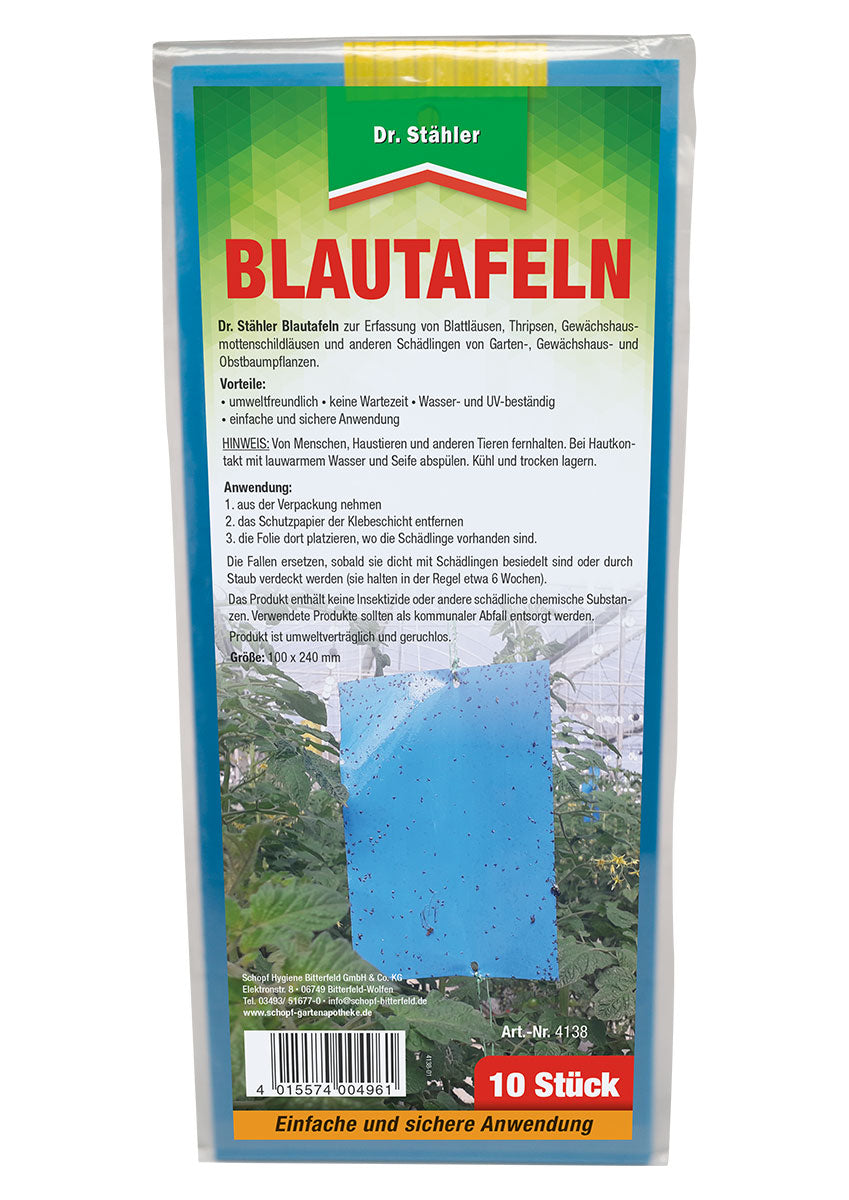
Dr. Stähler blue sticky traps
The pack contains ten insecticide-free sticky traps, each measuring 100 × 240 mm. The manufacturer specifies them for monitoring pests including thrips on garden, greenhouse and fruit-tree plants, with year-round use.
View the product and instructions →A catch provides a clue
Blue traps can catch flying adult thrips. They do not reliably capture the wingless immature stages living on plants. Nor does a trapped insect automatically tell you which plant is affected. Do not decide on treatment from a catch count alone.
Combine traps with plant inspections
- Position with care: Read the label and product information first. Peel off the protective paper and place the trap where pests occur. The manufacturer specifies no fixed number per plant or square metre.
- Keep observations comparable: Note the location and date, then compare new catches with the previous record when you check again. Earlier catches remain on the trap; do not count them as new insects each time.
- Inspect the plant: Check leaf undersides, young shoots and flowers. Silvery patches and tiny dark droppings can be consistent with thrips, but are not enough for a definite identification. Seek expert identification for uncertain findings.
An empty trap does not prove that the plants are free of thrips. Equally, a trap with insects on it does not eliminate an entire infestation. Further monitoring and any appropriate action depend on the pest actually identified and the affected crop.
Replacement and handling
Replace traps when densely covered with insects or obscured by dust. The manufacturer's estimate of about six weeks is a guide, rather than a fixed replacement date. Dispose of used traps as municipal waste, as the manufacturer instructs.
Follow the warning on the original pack: Keep away from people, pets and other animals. In case of skin contact, rinse with lukewarm water and soap. Store in a cool, dry place. Insecticide-free also does not mean that only pests get caught. If you use biological controls, discuss sticky traps with the supplier.


