White crust on a flowerpot: limescale, fertiliser salts or mould?
White residue on a pot or the compost is a finding, not a diagnosis. Check its location, texture and care history to distinguish mineral or fertiliser salts, perlite and fungal growth before taking action.

In October, the compost of many houseplants dries more slowly as the days shorten, rooms become cooler and growth often eases. This is when a white rim on a terracotta pot or the compost surface can suddenly become noticeable. Colour alone, however, is not a diagnosis. The residue may come from minerals in the water, fertiliser salts, harmless components of the growing medium or fungal growth.
The most useful first step is therefore not watering, feeding or repotting, but taking a closer look. Its location, texture and care history provide a much more reliable picture.
The five-step check
-
Look at the location and texture
A dry, hard or crystalline crust on the outside of a porous clay pot, around the drainage hole or at the edge of the compost points more towards mineral or salt deposits. A soft, fluffy or thread-like coating on damp organic material is more consistent with fungal growth. Individual lightweight, irregular white particles may simply be perlite in the compost; a green film is more likely to be algae.
-
Trace the care history
Regular watering with hard tap water and clear evaporation marks support the mineral-deposit explanation. Frequent or excessive feeding makes fertiliser salts more likely. A surface that stays damp for a long time, dead plant material and little air movement favour fungal growth instead. Limescale and fertiliser salts often cannot be separated reliably by appearance alone.
-
Check water hardness and moisture separately
Your local water supplier will usually publish the water hardness; alternatively, use a suitable test. Also check whether the compost is actually still damp, whether water can leave through the drainage hole and whether water is left standing in the outer pot. A white rim proves neither overwatering nor plant disease.
-
Assess the whole plant
Healthy leaves and firm roots argue against hurried action. Wilting despite a wet root ball, a rotting stem base or dark, mushy roots call for closer inspection. Even surface fungal growth should not automatically be dismissed as harmless; the condition of the whole plant matters.
-
Correct the likely cause
Loose mineral crusts can be removed carefully. If fertiliser salts are suspected, pause feeding and review the dosage you have been using. If the coating is fluffy, remove dead material and adjust moisture, light and air movement to suit the plant. Repotting or thoroughly flushing the compost can be useful where salt levels are high, but neither is an automatic first response for every plant.
Three white findings compared
- Mineral or fertiliser salts: dry, hard, chalky or crystalline; often around the pot rim, drainage hole or compost surface. Check water hardness and feeding.
- Fungal growth: soft, fluffy, thread-like or web-like; often on damp organic material in the compost. Check moisture, plant debris and roots.
- Perlite: firm, lightweight, irregular particles distributed through the compost. Check the composition of the growing medium.
If hard water has been confirmed
According to the current product information, use 10 ml of GREEN24 Kalk-Frei per litre of water, or 25 ml for 2.5 litres. After 5 to 6 hours of settling, carefully decant only the clear water without disturbing the sediment. Do not pour the concentrate directly onto the compost or the crust.
Wear protective gloves when handling the product. In case of skin contact, rinse immediately with plenty of lukewarm water. Store it in a dry, dark place at 6 to 30 °C and out of reach of children and animals. The label and current product information always take precedence.
The October takeaway
A white crust is a clue, not a diagnosis. Check its texture, location and care history first, then make targeted changes to the water you use, feeding or moisture management. That turns an eye-catching rim into a calm care decision rather than treatment by guesswork.
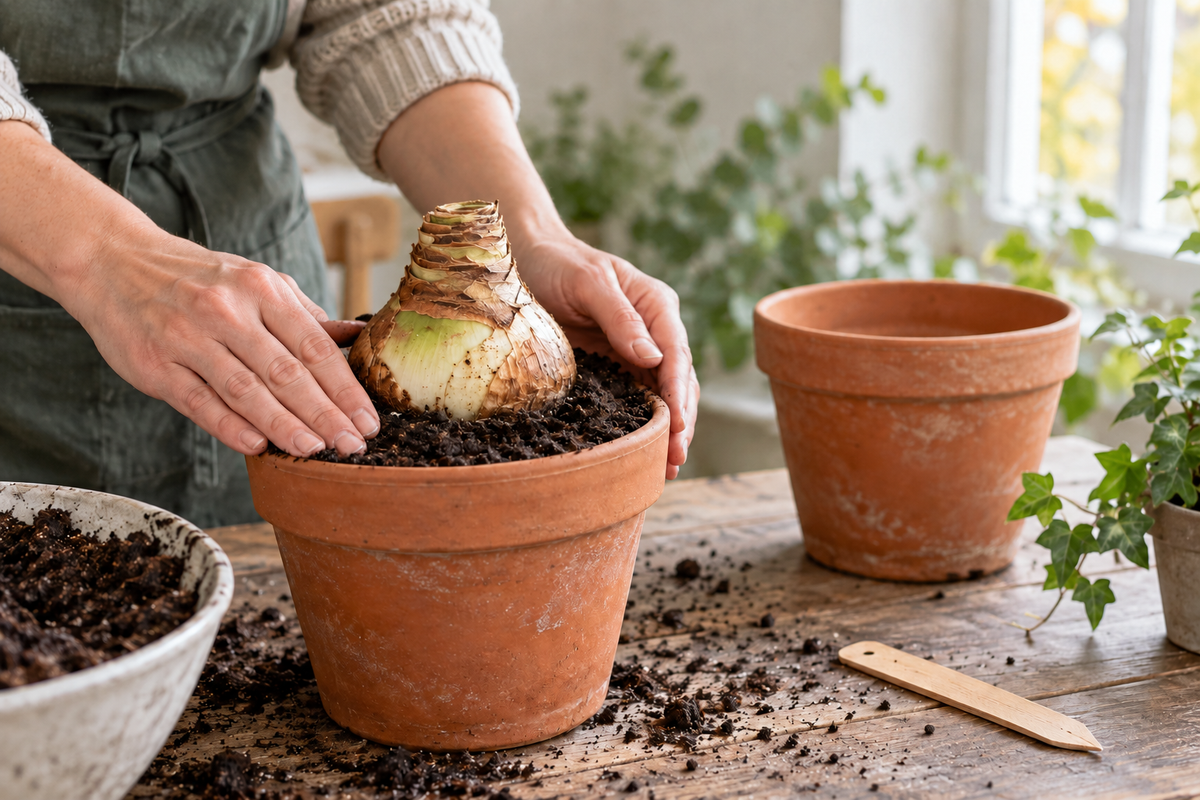
The product image shows the actual original container. The title image is an editorial illustrative image; the residue shown does not prove any particular cause.