Planting garlic in October: five choices that matter
October is a good time to plant garlic in many regions. Five practical choices cover planting stock, soil, crop rotation, planting depth and moisture.

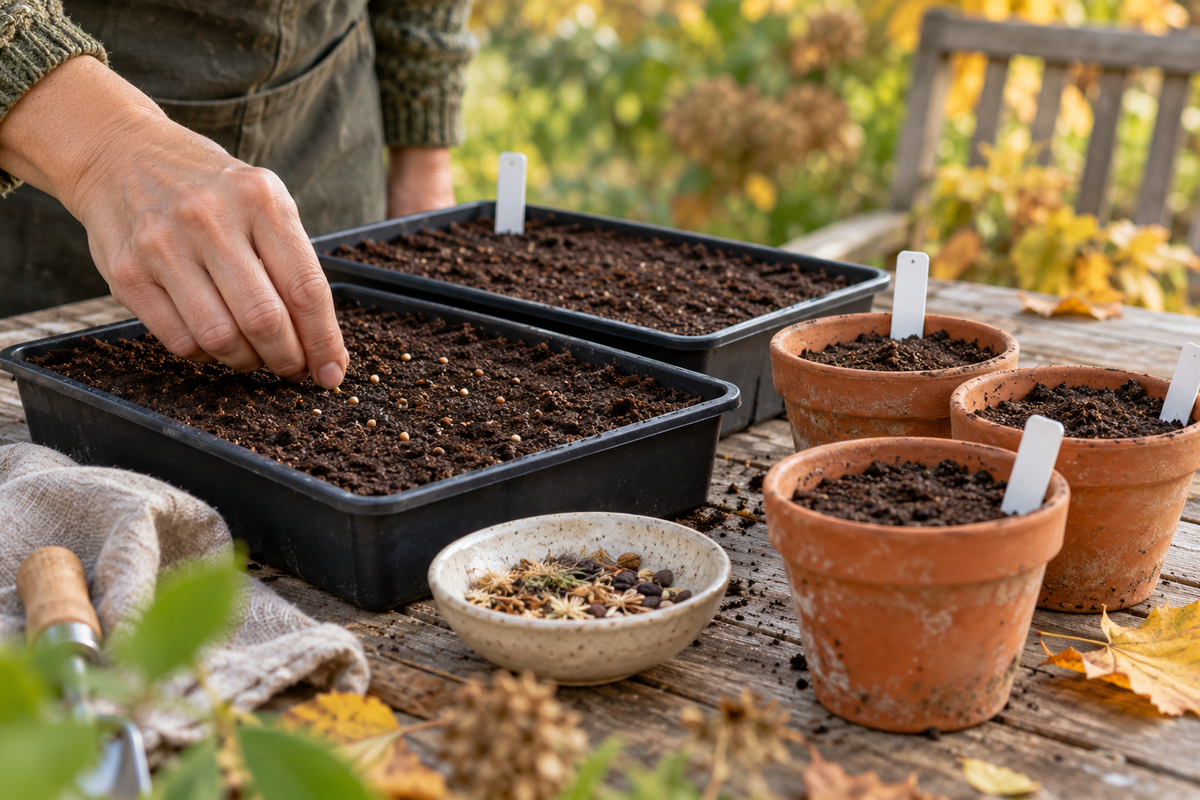
AI-generated illustrative image.
October is a useful planting window for garlic in many regions. It is not a nationwide deadline, though: suitable planting stock, workable soil and good drainage matter more than a single date on the calendar.
Five choices to make before planting
Choose seed garlic, not just any bulb
Use garlic that is specifically sold for autumn planting. Split the bulb shortly before planting and select firm, undamaged cloves with no sign of mould. Garlic sold for cooking may sprout, but its varietal suitability, origin and plant-health status are often unknown.
Check the site and crop rotation together
Garlic needs a sunny, well-drained position. Allow at least four years between garlic and other alliums such as onions, shallots, leeks or chives on the same ground. If a soil-borne disease is known to be present, this normal rotation interval is not sufficient.
Let the soil decide, not just the calendar
Plant when the soil is workable, crumbly and not waterlogged. Heavy, wet soil increases the risk of rotting. Adding a pocket of sand to each planting hole will not solve a wider drainage problem; using a raised bed or improving the bed as a whole is a better approach.
Pointed end up, basal plate down
Set each clove with the flat basal plate facing down. As a guide, cover it with about 2–4 cm of soil and leave roughly 10–15 cm between cloves. The variety, clove size and soil may call for adjustments.
Watch moisture instead of watering by default
Firm the soil gently. If it is already evenly moist, additional watering is usually unnecessary. A loose layer of leaves or straw can buffer temperature swings in exposed sites, but it must not keep the soil persistently wet.
Your quick bed check
- healthy cloves intended for autumn planting
- a sunny site without waterlogging
- at least four years since other alliums grew on the same ground
- pointed end up and the flat basal plate down
- 2–4 cm of soil above the clove and about 10–15 cm spacing as practical guides
Plant now, then keep watching in spring
Mark the row and avoid a dense covering that stays wet through winter. Water according to actual soil moisture in spring; there is no reason to apply a heavy dose of nitrogen just in case. This gives autumn-planted garlic a sound start without promising a particular bulb size or harvest.
The product image shows the tool actually offered. Remove soil after use and store the trowel in a dry place.