Where should autumn leaves go? A 20-minute plan for paths, lawns and beds
Clear paths, grass with room to breathe and protected soil: use three simple zones to decide in 20 minutes where autumn leaves need to be moved – and where leaving them in place can help.

Cover image: AI-generated image
Damp leaves on the path, a yellow layer across the lawn and a rustle beneath the shrubs: clearing every leaf would take time – and it would not help every part of the garden. Divide the space into three zones today. A daunting autumn clear-up becomes a manageable Saturday round.
Minutes 0 to 5: set your three zones
Walk through the garden once without any tools. Look at paths and steps first, then the lawn, and finally the ground beneath hedges, shrubs and sturdy perennials. The same layer of leaves can have a very different effect in each place.
- Paths and steps: Damp leaves can become slippery, so move them away.
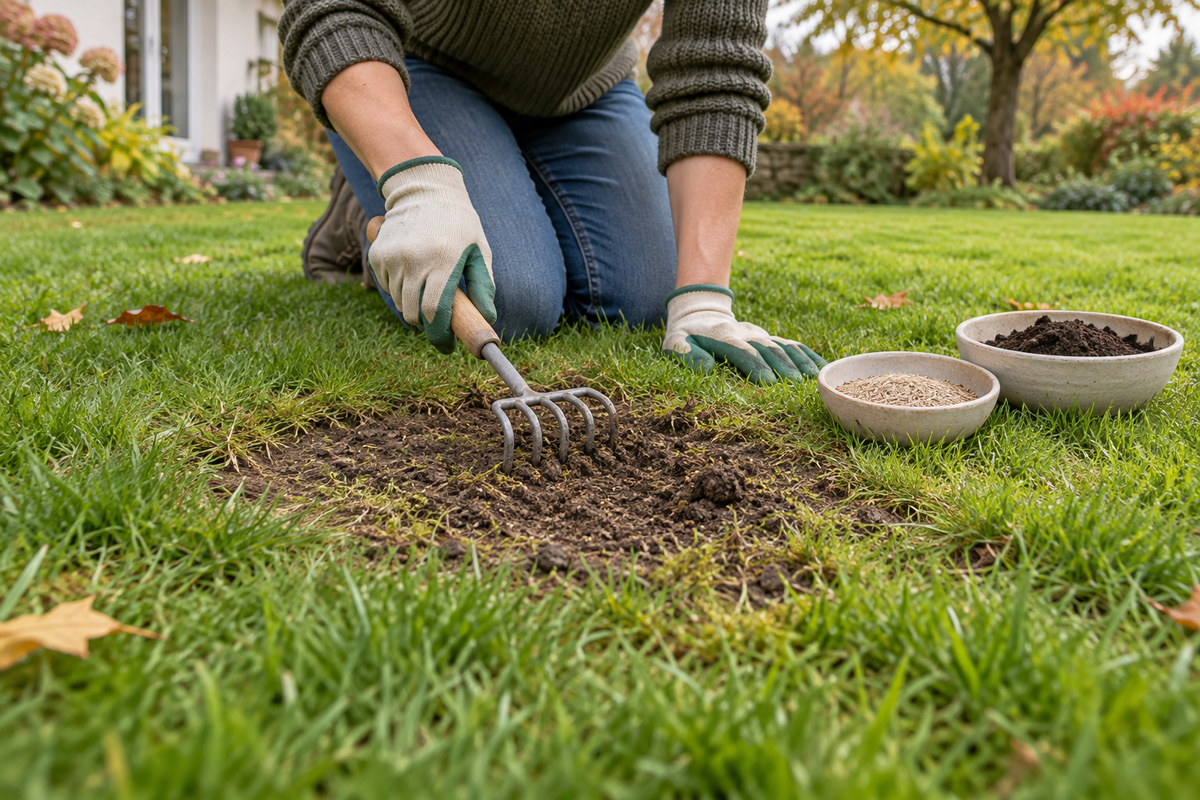
- Lawn: A continuous leaf layer blocks light and air from the grass. Collect it regularly.
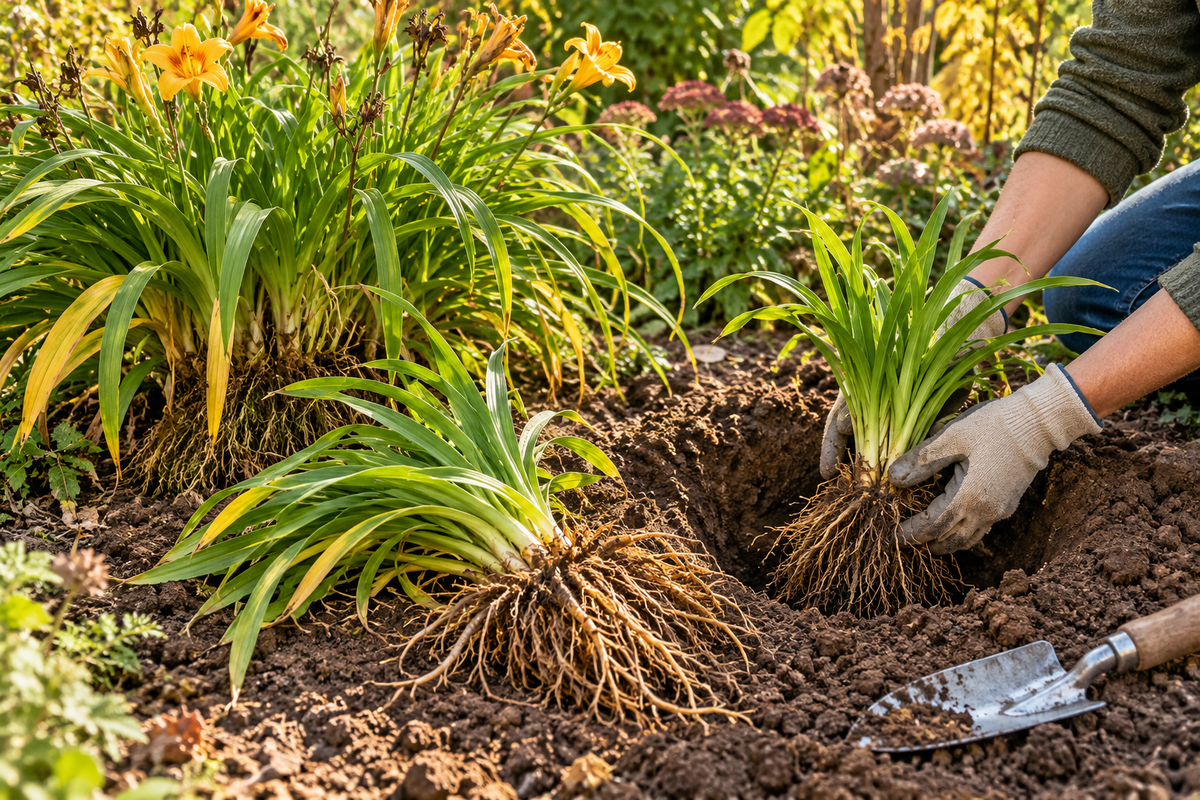
- Beds and shrub borders: Healthy leaves can stay in a loose, light layer. They cover the soil and provide shelter for small garden creatures.
Minutes 5 to 15: collect only where it matters
Start at the door or along the path you use most. Work in short sections and keep steps and drains clear. Move on to the lawn next. There is no need to reach every corner today: clearing a safe route and part of the lawn is a worthwhile first step.
Do not automatically pull every leaf out of the beds. A light layer can remain beneath hedges and between sturdy perennials. Loosen or reduce thick, matted layers so that the material underneath does not rot. If you make a wildlife leaf pile, choose a quiet, sheltered spot and avoid repeatedly disturbing it.
Minutes 15 to 20: sort the material and use the bag sensibly
Healthy, light leaves can be spread thinly over beds, composted with other suitable garden material or taken away in line with local collection rules. Do not add diseased or pest-infested material to a home compost heap; follow your local council’s disposal guidance instead. Never dump garden waste in woodland or burn it in the open.
Two hundred and fifty litres describes capacity, not a load rating. Wet leaves become heavy quickly. Fill the bag only as far as you can move it with control, and empty it in several smaller loads if needed. Four handles help with moving and tipping, but always lift from a stable position and avoid sudden movements.
Finished does not mean leaf-free
After 20 minutes, paths can be safer, the lawn more open and the beds still alive with autumn. That is the point: treat leaves according to their location rather than automatically as waste. The 250-litre garden bag is ready for your next round – the garden and the weather decide how much needs collecting today.