What to snip—and what to leave standing this September
Deadhead dahlias selectively and keep attractive seed heads: turn a short walk around your September border into thoughtful plant care, with the right tool to hand.
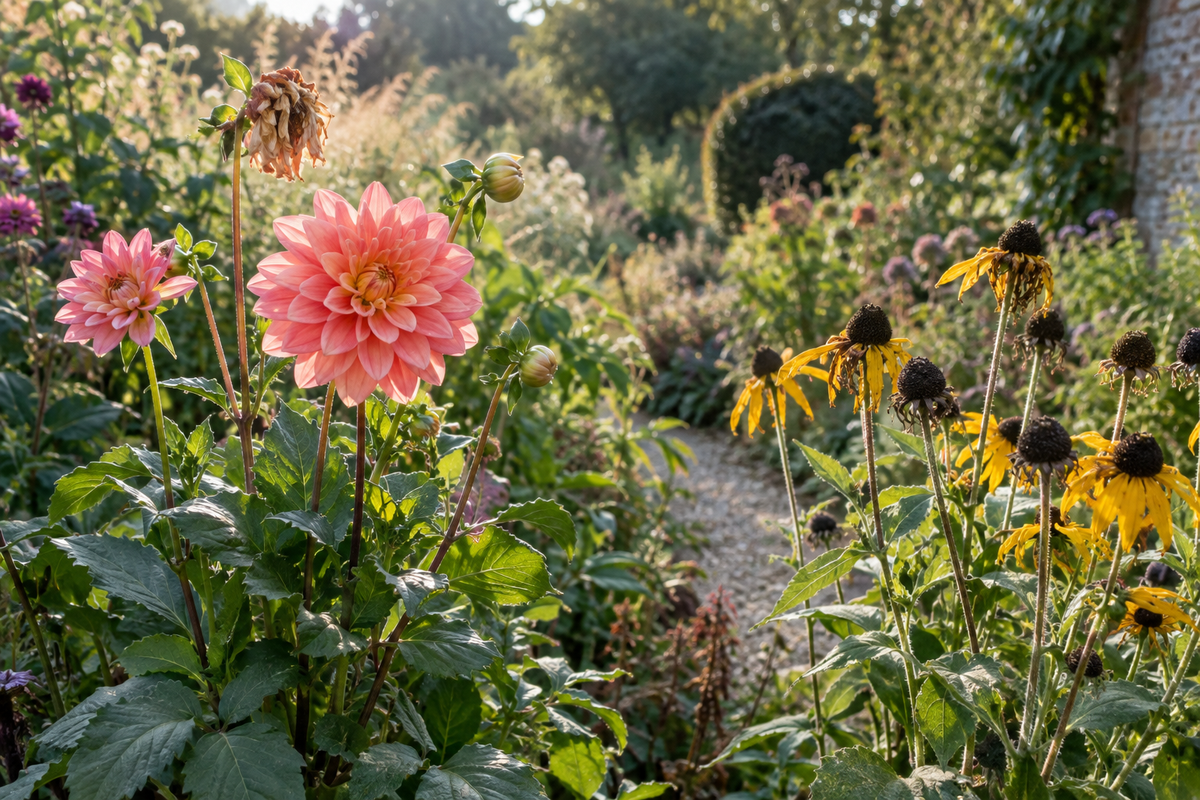
Cover image: AI-generated image
A dahlia is opening a fresh flower. A few steps away, a dark rudbeckia head stands out against the green. In September, the same border can hold new beginnings, full bloom and a slow farewell. That is why it pays to take a look before reaching for the secateurs.
Choose a manageable section to explore. The aim is not a border stripped bare, but a considered decision at each plant: more flowers here, an attractive silhouette there.
Dahlias: Encourage flowers, protect buds
Regular deadheading can encourage further flowers. Check the head first: unopened buds are usually rounded, while spent heads without petals tend to be pointed. If unsure, leave it for now.
Follow the clearly spent flower stem down to a leaf joint and cut just above it. Keep healthy buds, side shoots and leaves. This is selective deadheading, not cutting back the whole dahlia. How long flowering continues also depends on the site and frost.
Rudbeckia: Leave some dark heads standing
Healthy, sturdy seed heads give a border structure even without flower colour. Rudbeckia, globe thistles and teasels are good candidates. Their seeds can feed birds, while retained plant structures can shelter small invertebrates. Not every seed head serves the same purpose.
Take a look from your usual seat: which outlines catch your eye? Keep some deliberately where space, stability and potential self-seeding suit your garden. There is no need to choose between tidying everything and leaving everything untouched.
Three questions before your next cut
What am I looking at?
A fresh flower, a bud, a faded head or a seed head? Look first, then decide. Brown colouring alone does not tell you whether something is diseased.
What do I want to keep?
A flower still to come, a striking shape or a possible feeding spot? Your aim determines where the secateurs are needed today.
What needs a closer check?
Do not leave rotting material or plant parts showing signs of disease as decorative winter structure. Identify the cause of unclear damage first; collect suspect material separately and follow local disposal guidance.
Finish with clean secateurs and a living border
Keep your free hand and other people clear of the cutting area. After use, remove sap and dirt and dry the secateurs; follow the manufacturer's instructions for further care. Do not test sharp edges with your fingers. Close the safety catch for transport and storage, and keep the tool out of children's reach.
Step back when you finish. You may have removed only a few flower stems, yet noticed more than during a major tidy-up. Let the September border show its different stages. Find tool details and care guidance on the FELCO 2 page; the most important decision happens beside the plant itself.