

Water-soluble & available
NPK 3.5 + 3.4 + 5.1 Declared nutrient forms are listed under nutrient composition. Dilute the concentrate before use.


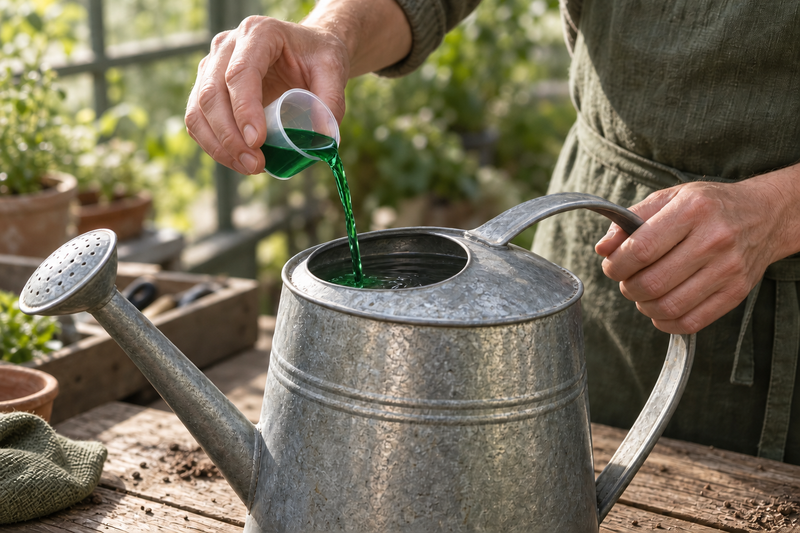
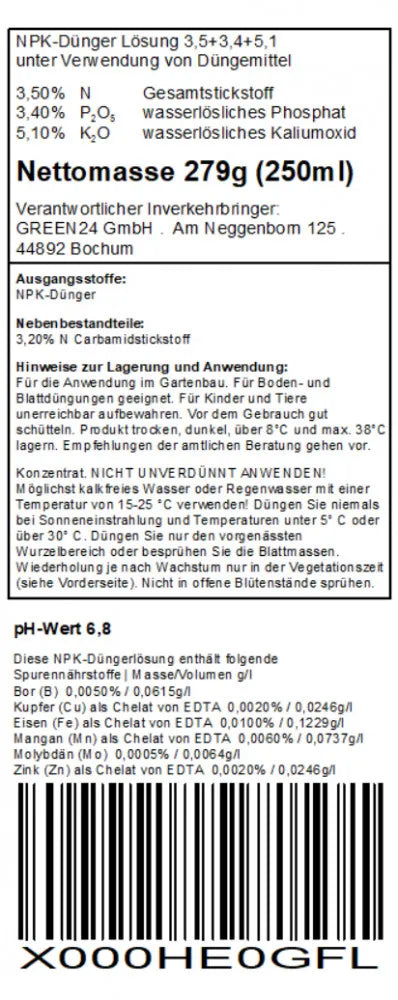

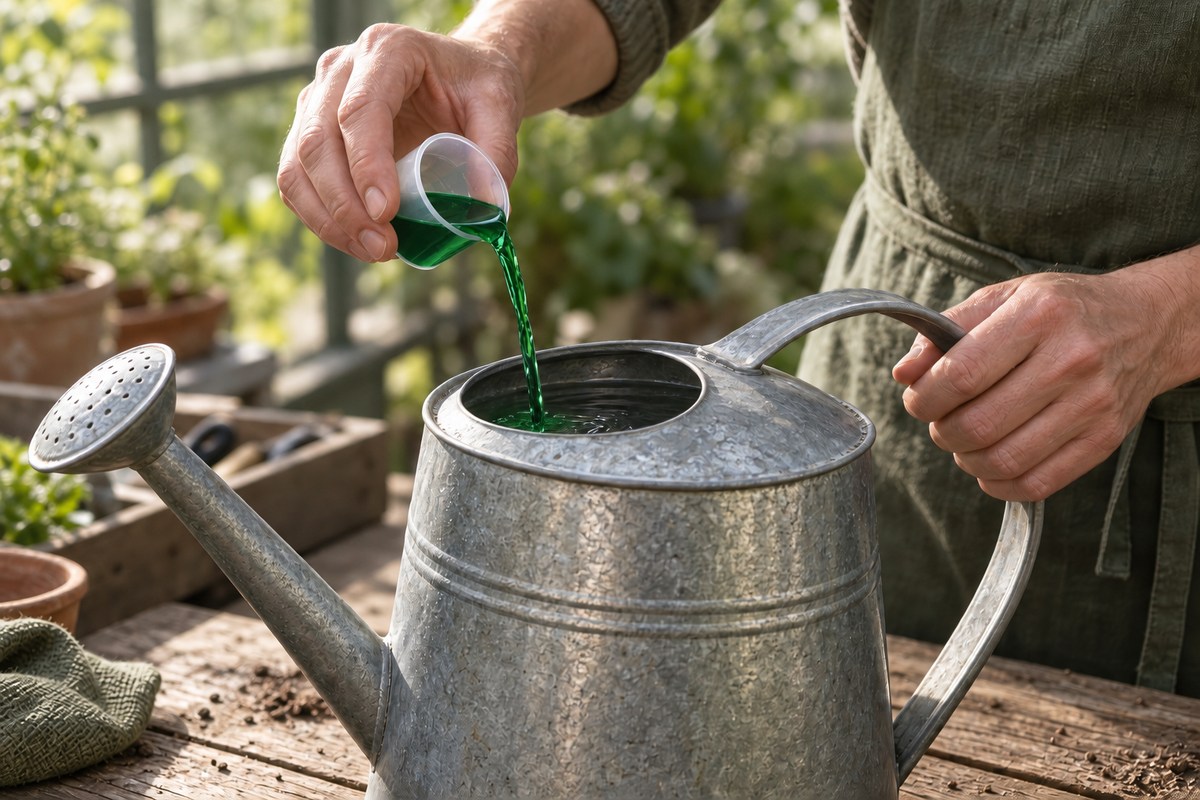
The concentrate is labelled for watering and spraying Hoya species. Intervals apply during active growth. Leaf thickness, light and temperature influence how quickly the plant uses water and nutrients.
Application in one place
For watering and foliar spraying: 5 ml per 1.5 litres of water. Enter the amount of water required.
1 capful = 5 ml. Use a suitable measuring aid for smaller partial amounts.
Enter a water amount from 0.1 to 1,000 litres.
Vine length and plant height do not determine a reliable watering volume. Use the actual water volume required.
Use a clean watering can or sprayer; preferably low-lime water or rainwater at 15–25 °C.
Enter the actual water volume. The calculator uses the confirmed label dilution.
Start by filling the container with part of the chosen water volume.
Shake the bottle. 1 capful = 5 ml; use a measuring aid for smaller partial amounts.
Add the calculated amount of concentrate to the water.
Top up to the chosen water volume and mix well. Watering or spraying: see below.
When to feed? For watering and foliar spraying, apply every 2–3 weeks during active growth.
For soil or similar growing media, moisten the root ball first, apply the diluted solution and let excess water drain.
Lightly wet the leaves in the morning, evening or overcast conditions, avoiding open flowers. Root and foliar feeding count towards the same feeding schedule, not two parallel programmes.
Net mass: 279 g for 250 ml; 1115 g for 1 litre.
The dilution is the same for both pack sizes.
| Pack size | Price | Yield at label dilution |
|---|---|---|
| 250 ml | 9.85 € Unit price ( 39.40 €/ l) | 75.0 l |
| 500 ml – twin pack (2 × 250 ml) | 18.95 € Unit price ( 37.90 €/ l) | 150.0 l |
| 1 litre | 29.95 € Unit price ( 29.95 €/ l) | 300.0 l |
250 ml makes 75 litres, the twin pack 150 litres and 1 litre concentrate 300 litres of prepared feed solution.
Hoya includes climbing and trailing species. Carnosa, bella and linearis do not have identical watering needs. Identify your plant and inspect its root zone.
For watering and foliar spraying, every 2–3 weeks during active growth.
Grow in bright light with protection from fierce summer sun. Let the medium approach dryness according to species and remove excess water. Keep plants in bud in their accustomed position where possible.
Beyond NPK · understand the formulation
The concentrate combines declared major and trace nutrients. Its dilution applies to root and foliar use.
NPK 3.5 + 3.4 + 5.1 Declared nutrient forms are listed under nutrient composition. Dilute the concentrate before use.
Copper, iron, manganese and zinc are declared as EDTA chelates. Details are listed under nutrient composition.
Consider dilution and growth rhythm together. Fertiliser cannot replace healthy roots or suitable light.
Hoya includes climbing and trailing species. Carnosa, bella and linearis do not have identical watering needs. Identify your plant and inspect its root zone.
Product pH 6.8 according to the declaration. Preferably use low-lime water or rainwater.
Use clean, suitable watering or spraying equipment. Measure the water and calculated concentrate quantity carefully.
Only when both products’ directions allow that exact combination. A product recommendation does not approve tank mixing.
Only when both products’ directions allow that exact combination. A product recommendation does not approve tank mixing.
Declared nutrient percentages. Product pH: 6.8.
Product pH describes the concentrate, not the pH of soil or diluted feed solution.
Hoya · wax plants
Three views of the plant and its care.

Glossy leaves, long vines and delicate flower clusters: Hoya carnosa combines distinctive foliage with unusual flowers.

Keep living flower spurs on Hoya carnosa: new flower clusters may appear at the same points.

Hoya carnosa develops substantial leaves and long searching shoots. A suitable support gives its vines something to climb.
GREEN24
11.95 €
( 1.20 €/ l)
Hoya compost for substrate cultivation. Follow the medium’s directions and account for existing nutrients.
10 litres
GREEN24
From 6.95 €
( 1.39 €/ l)
Clay granules for suitable container and hydroculture systems. Moisten thoroughly before use and match grain size and pot to the roots.
10 litres · 5 litres
GREEN24
0.95 €
( 0.95 €/ l)
To aerate your own potting mixes. Choose the proportion to suit the whole mix; ready-to-use Hoya compost does not need extra perlite.
1 litre
GREEN24
17.95 €
A repotting alternative with 10 l Hoya compost and 250 ml Hoya fertiliser. The fertiliser is already included.
10 l compost + 250 ml fertiliser


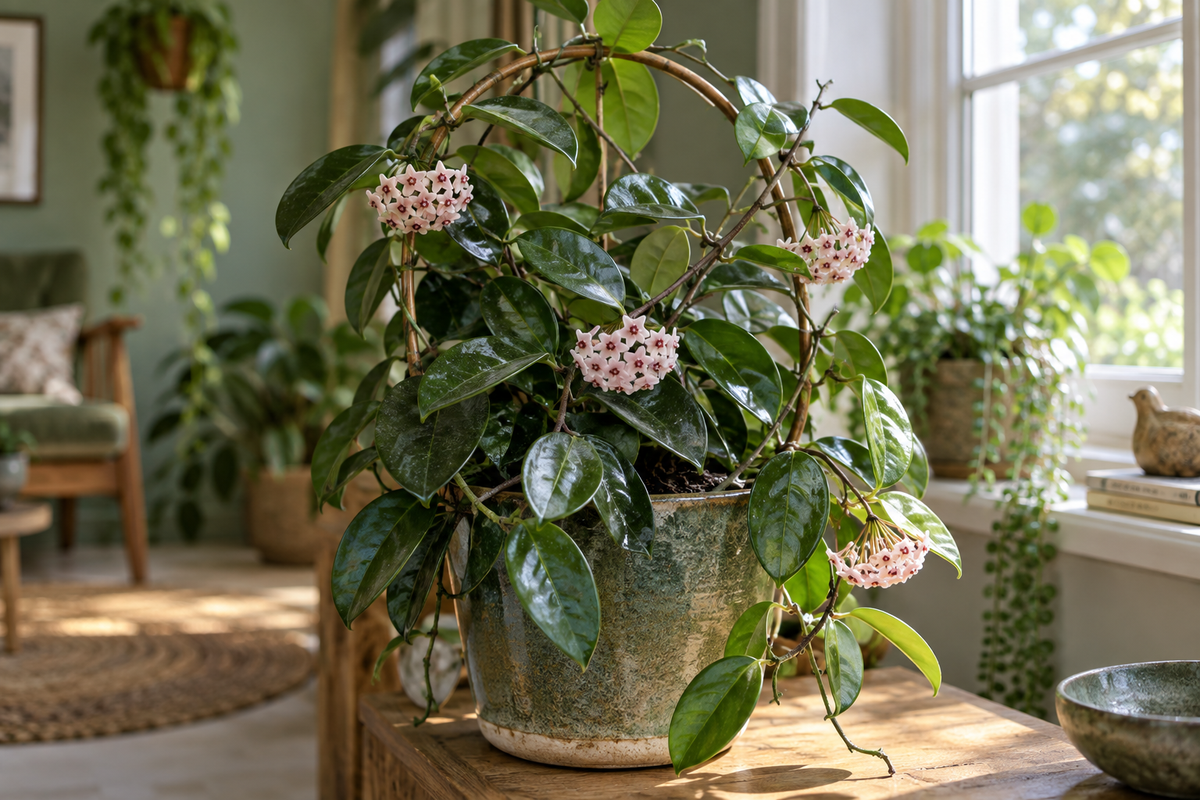
Adapt care to the growing conditions and stage of growth. If you notice changes, check light, water and roots first — then take targeted action.
Provide bright light without harsh midday sun. Check root-zone moisture and avoid waterlogging. Keep plants in bud in their accustomed position where possible. Leave living flower spurs on Hoya carnosa; they may flower again.
Pause feeding and reduce watering when light is low and growth stops. In a warm, well-lit position with continued growth, supply water and nutrients as needed. Do not feed for at least two weeks after repotting; resume when roots are healthy and new growth appears.
Hoya carnosa: Strong vines and fleshy leaves; tolerates cooler winter conditions than bella. Keep living flower spurs. • Hoya bella: Small and trailing; keep warmer in winter, avoiding both waterlogging and complete drying. • Hoya linearis: Fine trailing growth; keep slightly moist and airy even in winter. • Hoya pubicalyx: Vigorous vines, often with silver markings; new growth may increase water use.
Hoya kerrii: Slow-growing heart-shaped leaves; a single leaf without a stem node will not form a vine. • Hoya australis: Vigorous climber; provide support early and keep slightly moist in winter. • Hoya obovata: Thick round leaves; sufficient light supports flowering. • Hoya lacunosa: Compact vines and small, strongly scented flowers; provide moderate moisture and good root aeration.
Hoya curtisii: Tiny silver-marked leaves; warm conditions with bright filtered light. • Hoya multiflora: More shrubby growth with shooting-star flowers; keep roots moist and airy. • Hoya imperialis: Large flowers and strong climbing stems; allow room and sturdy support. • Hoya caudata: Hairy flowers, aerial roots and a preference for humid air; flowers may last only one or two days.
Base mixture: 5 ml Hoya Fertiliser in 1.5 l of water. For topping up, mix two parts clear water with one part base mixture, for example 1 l water plus 0.5 l base mixture. Use during active growth when water is needed again. At MIN, check root moisture; wait if still wet. Initially refill to the middle mark when needed. Use clear water only in low light without growth. Pause for at least two weeks after repotting. Flush the root zone occasionally and let runoff drain away. Never add concentrate directly to the reservoir. The PDF includes dosing graphics and twelve species profiles.
Download the guide & 12 Hoya species (German PDF)These details help assess growing conditions, root problems or a possible infestation:
Discoloured leaves do not confirm nutrient deficiency. Identify pests and select treatment suitable for the plant and location.

Hoya includes climbing and trailing species. Carnosa, bella and linearis do not have identical watering needs. Identify your plant and inspect its root zone.
View the plant profile
From carnosa to caudata: positioning, watering needs and distinctive features in our PDF guide.
Download the PDF guide (German)Hoya includes climbing and trailing species. Carnosa, bella and linearis do not have identical watering needs. Identify your plant and inspect its root zone.
Dilution: 5 ml per 1.5 l of water.
Measure out the concentrate and mix it with the stated amount of water. Never apply undiluted.
Calculated at the stated standard dilution; the amount needed per application depends on the plant and growing conditions.
Do not apply in sunlight, below 5 °C or above 30 °C. Never apply the concentrate undiluted.
SDS – Safety data sheet available on request.
Official advisory recommendations take precedence.
Wash your face and hands thoroughly. Use diluted fertiliser promptly and keep it out of water bodies and wastewater.
The original leaflet explains safe mixing and use. Follow the hoya product’s own dilution and application limits.
Store in a dry, dark place above 8 °C and at no more than 38 °C. Keep out of reach of children and animals.
Keep tightly closed in the original container, separate from food and animal feed.
Store in a dry, dark place above 8 °C and at no more than 38 °C. Keep out of reach of children and animals.
Follow disposal instructions on the product and in the original leaflet.
Measure concentrate accurately and apply only after dilution. More fertiliser does not compensate for insufficient light, drought or damaged roots.


