One more round of green: September sowing in a small pot
An empty pot, suitable seeds and a bright position: plan a small September sowing of loose-leaf lettuce, without a fixed harvest deadline.
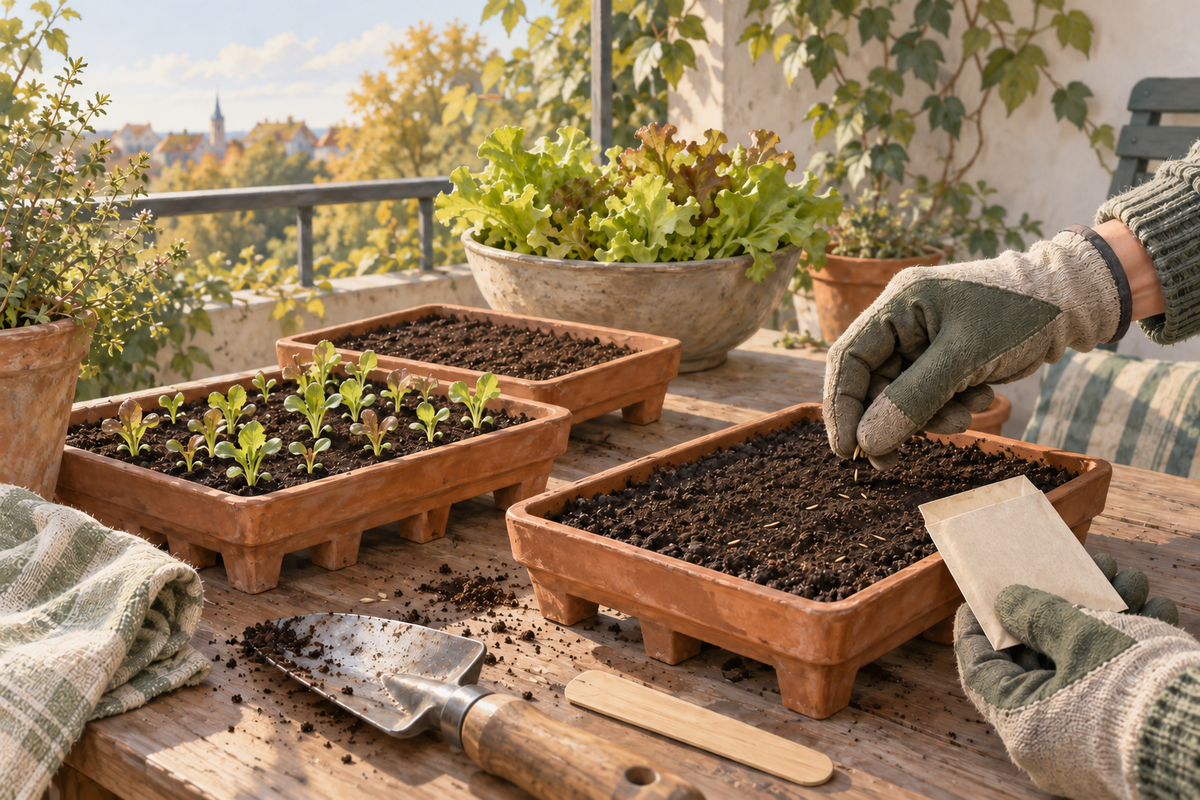
A pot becomes available and the main summer harvest is over. That does not necessarily mean the balcony growing season has finished. A small sowing of loose-leaf lettuce might be your next project: manageable, close to the balcony door and with no full garden bed to prepare. At this time of year, though, enthusiasm is only part of the picture. The seed variety, position and remaining growing conditions need to work together.
Read the packet before filling the pot
Choose a variety whose sowing calendar still includes September in your location. “Loose-leaf lettuce” does not describe a single germination temperature, or guarantee that every variety performs equally well in autumn. Check the seed packet for container-growing advice, spacing, sowing depth and light requirements too. If it does not clearly support a late sowing, choosing another sowing date is the better decision. September sowing particularly calls for suitable winter varieties and appropriate protected conditions, such as a greenhouse or cover in a mild location. An exposed balcony tray is not automatically suitable, and a winter crop may be intended for harvesting in spring.
A bright, accessible position makes the little crop easier to look after. Shorter days and cooler nights change its pace of growth. That is why this project comes without a fixed harvest deadline. The plants set the pace, with the weather having its say.
Four steps to get started
Prepare a suitable container
Use a clean pot or seed tray with drainage holes. A small tray can provide a starting point, but the developing plants will need adequate space. Add the growing medium and prepare a level surface.
Let the variety guide you
Sow according to the packet. In particular, do not borrow a sowing depth from a different vegetable and assume it will suit lettuce. The appropriate temperature range and light conditions also depend on your chosen seeds.
Keep moisture steady
Water gently so the seeds are not washed away. Check the surface regularly: the sowing should not dry out, but it should not remain saturated either. Allow excess water to drain away.
Watch and make room
Label the container with the variety and date. If seedlings become crowded, follow the variety guidance for thinning or transplanting. A dense initial sowing should not become permanent competition for space and light.
A small morning check
You do not need an elaborate gardening routine. Start with a look at the moisture, position and young leaves. Has rain left water standing in an outer pot? Is a larger plant now shading the tray? You are more likely to notice these small changes when the container sits somewhere you naturally pass each day.
When temperatures fall noticeably, revisit the recommendations for your variety and growing position. A sheltered spot may help, but it does not replace suitable temperatures or enough light. A bright summer balcony is not automatically an appropriate autumn growing space.
Review nutrients rather than adding them automatically
The seed-sowing compost already contains declared nutrients. After around four to six weeks, review the crop’s nutrient needs in light of its growth and the product information, and feed appropriately if needed. This is not a compulsory feeding date for every sowing. Any earlier transplanting, and the growing medium used then, should also inform that decision.
The spare pot may produce a small harvest, or simply useful observations for next autumn. Either way, it starts with the same sensible choices: an appropriate variety, a suitable place and a sowing that matches the conditions you actually have.