
Cold nights in the vegetable patch: using fleece wisely
Choose the fleece weight, allow extra material and check your cover: a practical guide for the autumn vegetable patch.

AUTUMN PRACTICE · VEGETABLE GARDEN
The days are getting shorter, but there is still greenery in the vegetable patch. Before a cold night, take a closer look: what crop is growing, how frost-tolerant is the variety, and what does the forecast say? Fleece can help during individual frosty nights. It cannot replace choosing suitable crops or guarantee protection during prolonged frost.
1. Assess what your crops need
Frost tolerance also depends on the plants’ stage of development and health. Assess autumn lettuce and hardy winter vegetables separately. If prolonged cold is forecast, plan harvesting or further protection appropriate to each crop in good time.
2. Allow room for leaves and edges
Measure the bed and allow extra material for plant height, a loose fit and securing the edges. An order quantity of 1 means one linear metre at the selected width: 2.4 m² for M170 and M300, or 2.2 m² for M850. This material area is not automatically the area of bed it will cover.
3. Fit loosely and keep checking
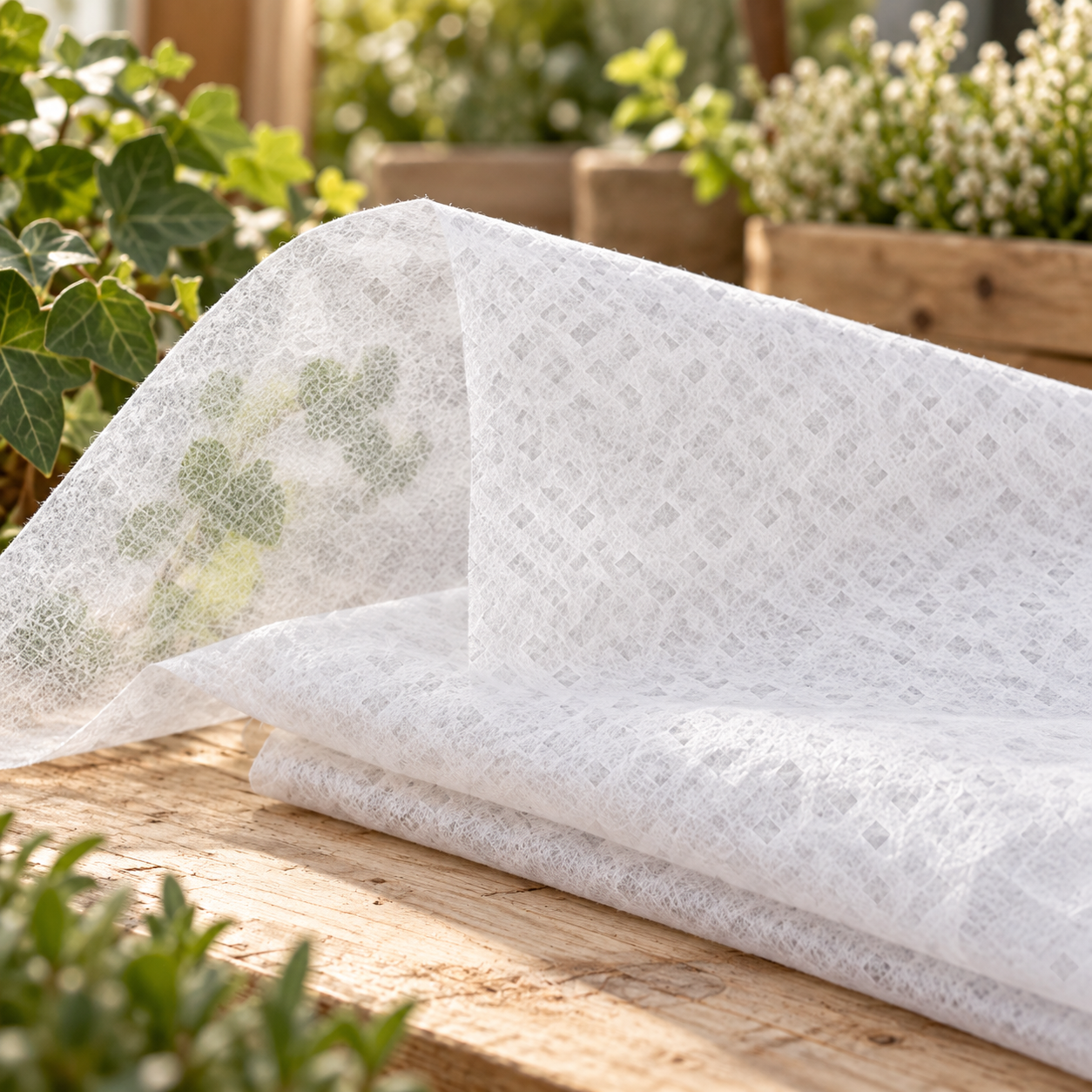
Do not squash the plants. Secure the edges at ground level, for example with suitable weights placed away from the plants. Check the fit after windy weather and leave room for further growth. The cover image shows fleece on low hoops, opened for inspection.
Look beneath the fleece regularly. Remove it if temperatures rise sharply; after an extended period under cover, preferably choose a cloudy day. Let the crop and the weather guide you rather than following a rigid daily routine.
Prepare today: identify the crop, check the forecast, measure the bed with extra allowance and inspect any fleece you already own for damage.


