
Young trees in November: check their ties
A tree tie should support the trunk without constricting it. Check rope, contact points and stakes now, and replace only what needs attention.

November in the garden · Young trees
As the canopy thins, the trunk and support stake become easier to inspect. It is a good moment to check the tree tie: does it still provide support without rubbing or constricting the trunk? A short inspection is worthwhile after strong winds, too.
Coir rope for ties that need replacing
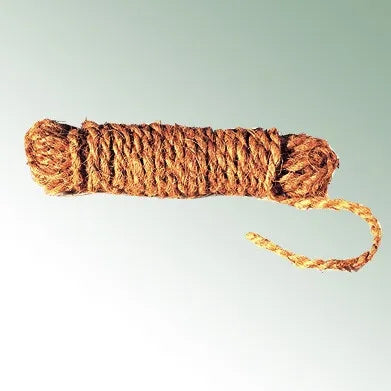
GREEN24 coir rope is intended for securing plants and trees to suitable supports. The 200 g bundle contains approximately 10 m; the thick version comes in a 2 kg bundle with no fixed length specified. Choose the version to suit the plant and its support.
An intact, well-fitting tie does not need replacing as a precaution. Natural materials need regular checks, too.
1. Inspect the contact points
Check the trunk around the tie for pressure marks and abrasion. The rope must not become embedded in the bark, and the trunk should not rub against the stake. Look for ties that have slipped, worn through or come loose.
2. Allow room while providing support
Where support is needed, a tie holds the young tree to its stake while allowing some natural movement and room for the trunk to thicken. Do not simply pull a loose rope as tight as possible. Adjust or replace tight or worn ties correctly, keeping the trunk separated from the stake.
3. Check the stake as well
A new tie cannot fix a rotten or poorly anchored stake. Inspect both together. If the root ball has become very loose, the trunk is damaged or you are unsure about the support, seek expert advice instead of lashing the tree down with more rope.
4. Is the support still needed?
Remove it only once the tree has rooted sufficiently and stands securely on its own. A fixed deadline does not suit every tree: fruit trees on dwarfing rootstocks may need support for longer. November is a time to inspect, not a universal deadline for removing stakes.


