Frangipani-Dünger – 250ml Spezialkonzentrat für Plumeria | Tempelbaum düngen mit phosphatbetonter NPK Blüten-Formel
Art.Nr.: PLPT90KT10
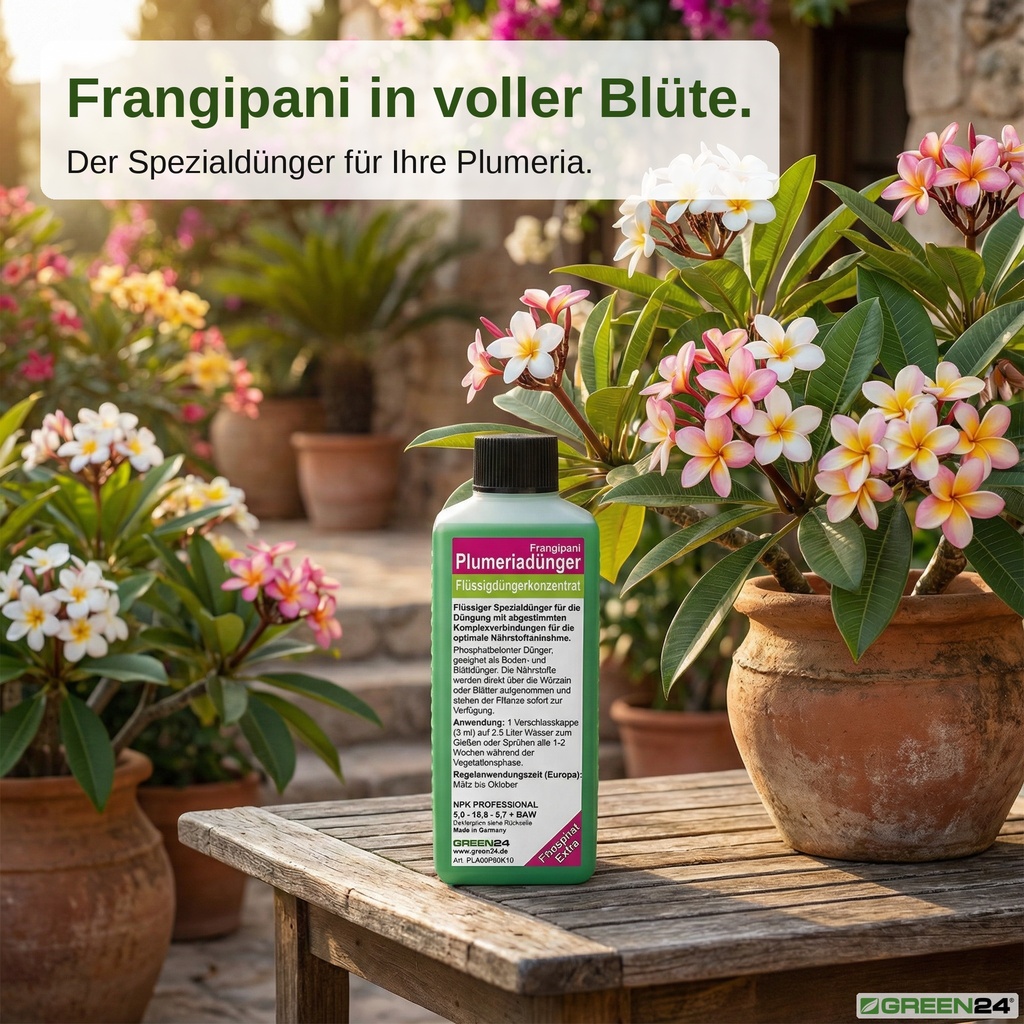
Tropische Blütenpracht: GREEN24 Spezialdünger für authentische Frangipani
Der erfolgreiche Anbau von Frangipani erfordert spezielles Wissen über die besonderen Bedürfnisse tropischer Blütenpflanzen. Plumerien als duftende Blütenwunder haben spezielle Nährstoffanforderungen und benötigen eine phosphatbetonte NPK-Versorgung mit wichtigen Spurenelementen für spektakuläre Blütenbildung, intensiven Duft und gesundes Wachstum in Kübel-Kultur für maximalen Erfolg. Unser Frangipani-Dünger ist speziell auf die Bedürfnisse von Plumeria-Arten abgestimmt und bietet professionelle Tropenpflanzen-Technologie für maximalen Blüten-Erfolg.
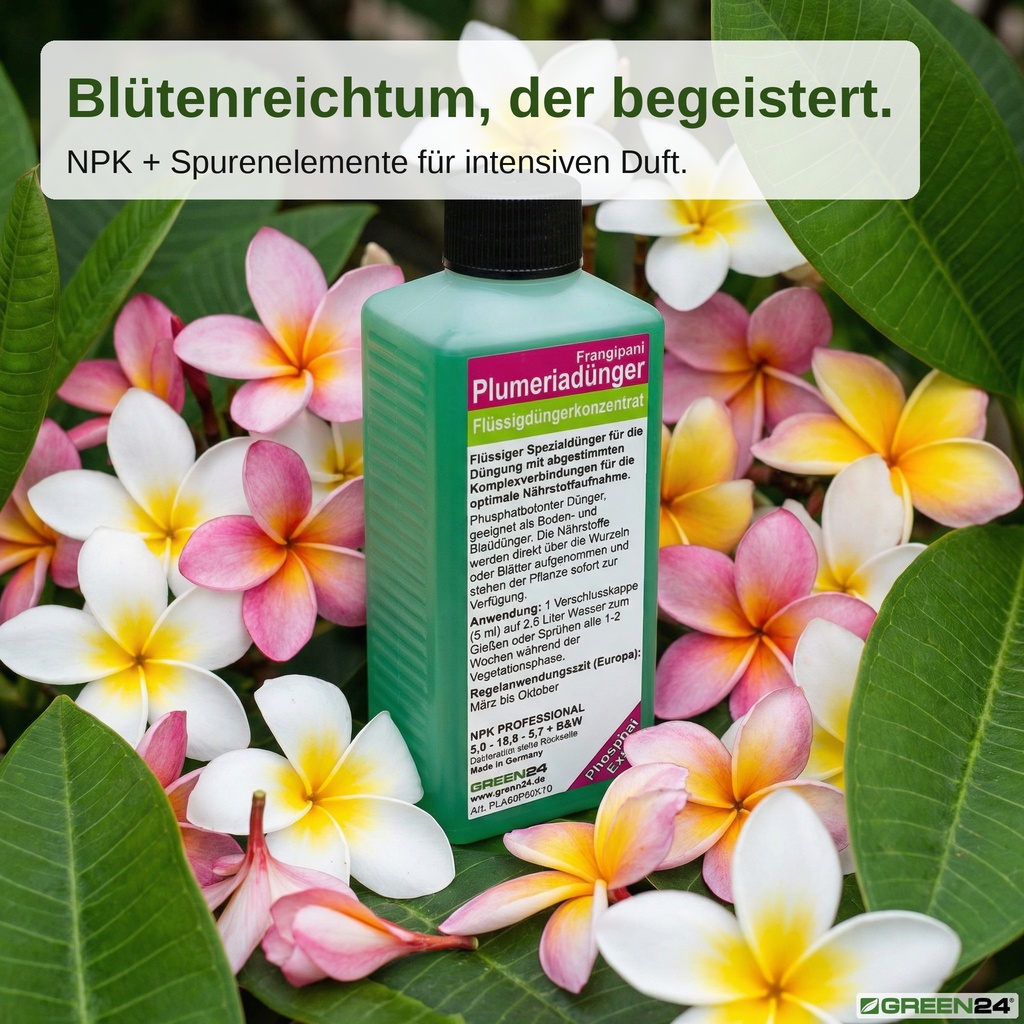
Pflanzensteckbrief: Frangipani (Plumeria)
- Frangipani/Plumeria:
- Familie: Apocynaceae (Hundsgiftgewächse)
- Herkunft: Mittelamerika, Karibik, tropisches Amerika
- Wuchsform: Sukkulenter Strauch oder kleiner Baum
- Besonderheiten: Tempelbaum, intensiv duftende Blüten
- Botanische Eigenschaften:
- Wissenschaftlicher Name: Plumeria spp.
- Synonyme: Tempelbaum, Frangipani, Plumie
- Wuchshöhe: 1-3m (in Kultur), bis 8m (Heimat)
- Wuchsbreite: 1-2m (in Kultur)
- Wuchsgeschwindigkeit: Mittelschnell bis schnell
- Lebenserwartung: Über 50 Jahre möglich
- Blatt-Eigenschaften:
- Blattform: Lanzettlich bis elliptisch
- Blattgröße: 15-30 cm lang, 5-10 cm breit
- Blattfarbe: Grün bis dunkelgrün
- Blattrand: Ganzrandig
- Blattstellung: Wechselständig, rosettig
- Besonderheit: Laubabwerfend in Trockenzeit
- Blüten-Eigenschaften:
- Blütezeit: Mai-Oktober (in Kultur)
- Blütenfarbe: Weiß, gelb, rosa, rot, mehrfarbig
- Blütengröße: 5-8 cm Durchmesser
- Blütenform: 5-blättrig, wachsartig
- Duft: Intensiv süßlich, besonders abends
- Besonderheit: Spektakuläre Blütendolden
- Frucht-Eigenschaften:
- Fruchtform: Längliche Balgfrüchte
- Fruchtgröße: 15-25 cm lang
- Samen: Geflügelte Samen
- Reifezeit: Herbst bis Winter
- Verwendung: Vermehrung durch Aussaat
- Beliebte Plumeria-Arten:
- Plumeria rubra:
- Rote bis rosa Blüten
- Intensiver Duft
- Klassische Frangipani
- Sehr blühfreudig
- Plumeria obtusa:
- Weiße Blüten
- Kompakter Wuchs
- Immergrün
- Weniger duftend
- Plumeria alba:
- Weiße Blüten mit gelbem Zentrum
- Sehr intensiver Duft
- Große Blüten
- Klassischer Tempelbaum
- Beliebte Hybriden:
- 'Celadine': Gelbe Blüten mit weißem Rand
- 'Singapore': Weiß-gelb-rosa Blüten
- 'Rainbow': Mehrfarbige Blüten
- 'Dwarf Singapore Pink': Kompakte rosa Sorte
- Plumeria rubra:
- Standort-Eigenschaften:
- Licht: Vollsonne bis heller Halbschatten
- Boden: Durchlässig, nährstoffreich
- pH-Wert: 6,0-7,5 (neutral bis leicht alkalisch)
- Feuchtigkeit: Mäßig feucht, Trockenperioden vertragend
- Temperatur: 18-30°C optimal
- Luftfeuchtigkeit: Mittel bis hoch (50-70%)
- Winterhärte:
- Frostempfindlich: Nur frostfrei kultivieren
- Mindesttemperatur: 10-15°C
- Überwinterung: Hell und kühl
- Winterruhe: Laubabwurf normal
- Kultur-Eigenschaften:
- Vollsonnige bis halbschattige Standorte
- Durchlässiges, nährstoffreiches Substrat
- Mäßige Bewässerung, Staunässe vermeiden
- Regelmäßige Düngung: Wöchentlich während Wachstumszeit
- Warme Überwinterung bei 10-15°C
- Gute Drainage wichtig
- Blüten-Besonderheiten:
- Duft-Intensität: Besonders abends und nachts
- Blüten-Aufbau: 5 wachsartige Blütenblätter
- Farb-Vielfalt: Weiß, gelb, rosa, rot, mehrfarbig
- Blüten-Dauer: Einzelblüten 3-5 Tage, kontinuierliche Nachblüte
- Kritische Faktoren: Staunässe, Frost, zu wenig Licht, Überdüngung mit Stickstoff
- Häufige Probleme: Keine Blüten, Blattfall, Fäulnis, Schädlinge, schwaches Wachstum
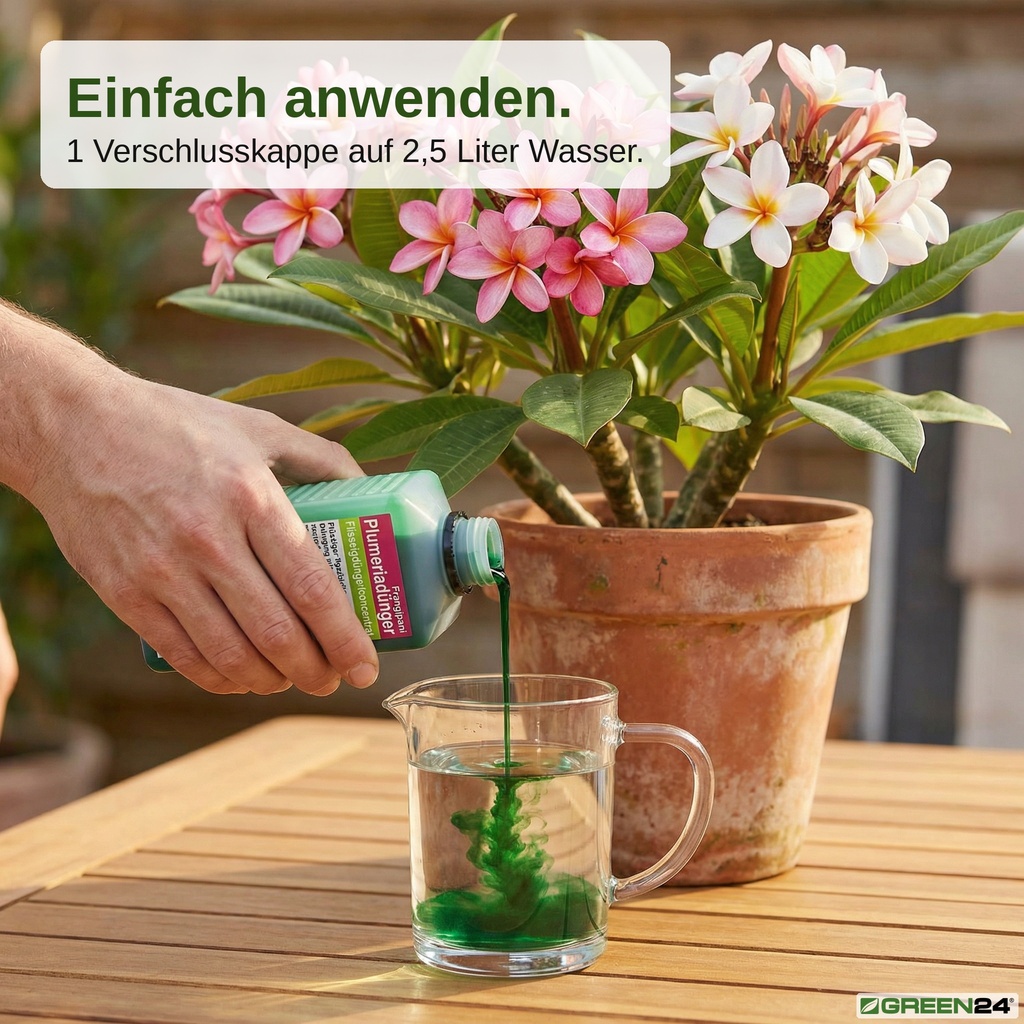
Die Wissenschaft der Frangipani-Ernährung
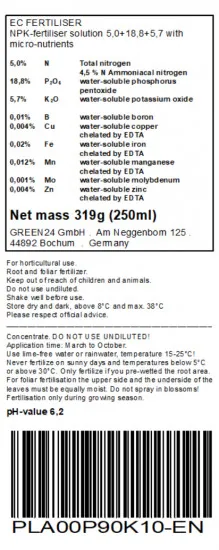
Die Plumeria-Formel "Phosphatbetonte Blüten-Kraft"
Frangipani als tropische Blütenpflanzen haben spezielle Nährstoffbedürfnisse für optimale Blütenbildung und Duftentwicklung:
- Phosphor (P) für Blütenbildung: Essentiell für die Blütenentwicklung und Energieübertragung. Phosphor ist der Schlüssel für reiche Blütenbildung und intensive Duftentwicklung.
- Stickstoff (N) für Wachstum: Fördert das Blattwachstum und die Bildung neuer Triebe. Ausgewogene Stickstoffversorgung ohne Überversorgung.
- Kalium (K) für Blütenqualität: Stärkt die Blütenqualität und verbessert die Duftintensität. Kalium ist wichtig für widerstandsfähige Pflanzen.
- Eisen (Fe) für Chlorophyll: Wichtig für die Chlorophyll-Bildung und verhindert Eisenchlorose (gelbe Blätter mit grünen Adern).
- Mangan (Mn) für Enzymaktivität: Aktiviert wichtige Enzyme im Pflanzenstoffwechsel und unterstützt die Photosynthese.
- Spurenelemente für Vitalität: Kupfer, Zink, Bor und Molybdän sind essentiell für den gesamten Pflanzenstoffwechsel und die Blütenqualität.
- Komplexverbindungen: Speziell entwickelte Verbindungen für maximale Nährstoffverfügbarkeit und schnelle Aufnahme.
- Tropenpflanzen-Anpassung: Speziell für die Bedürfnisse tropischer Blütenpflanzen entwickelt.
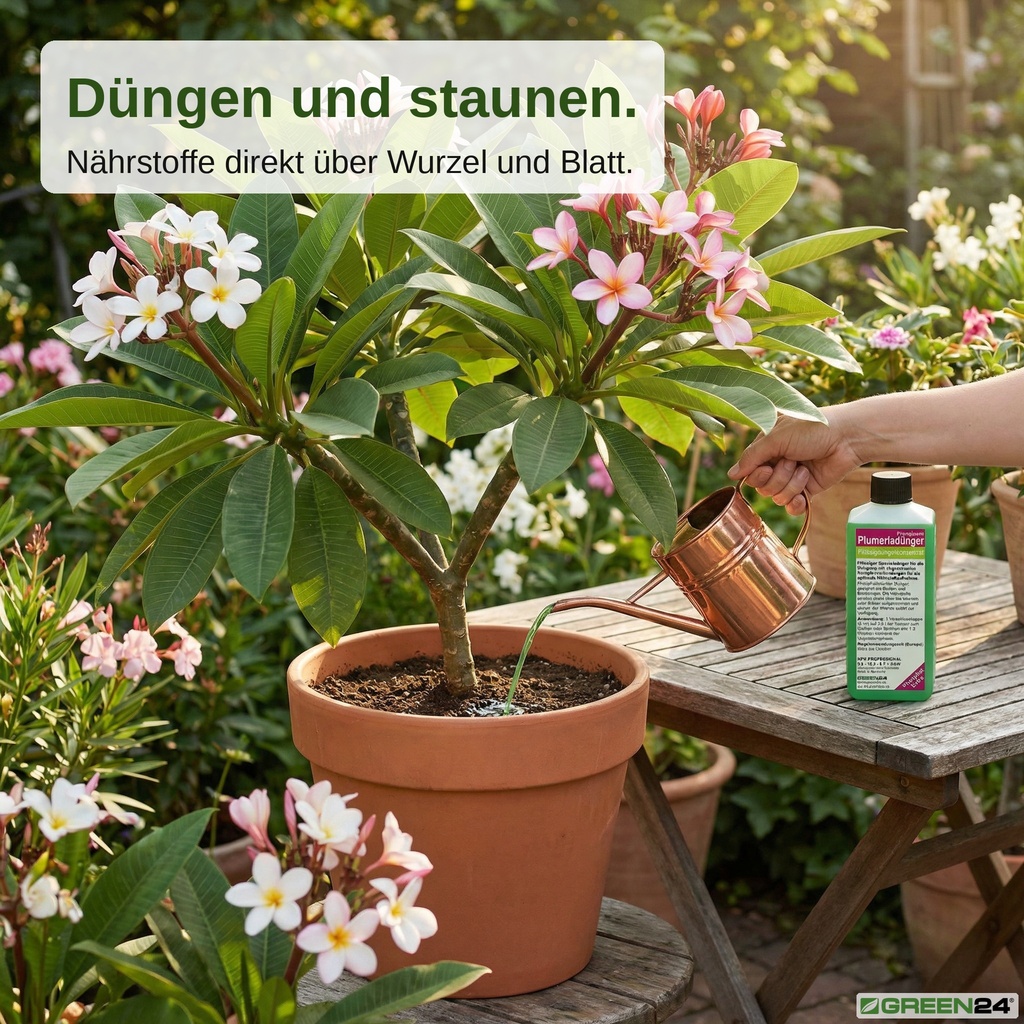
Anwendung: Professionelle Frangipani-Pflege
Standard-Düngung (Hauptanwendung)
Für spektakuläre Blütenbildung und intensiven Duft
- Timing: Wöchentlich während Wachstumsperiode (April-Oktober)
- Häufigkeit: Regelmäßig während Vegetationszeit
- Dosierung: 1 Verschlusskappe (5ml) auf 2-2,5 Liter Wasser
- Anwendung: Als Gießlösung direkt an die Wurzeln
- Vorteil: Optimale Nährstoffversorgung für Blütenbildung
- Besonderheit: Phosphatbetonte Formel für maximale Blütenpracht
Blüten-Intensiv-Düngung (Spezialanwendung)
Für maximale Blütenbildung und Duftintensität
- Timing: Vor und während der Blütezeit (Mai-September)
- Häufigkeit: 2x wöchentlich während Hauptblütezeit
- Dosierung: Normale Konzentration mit Fokus auf Phosphor
- Anwendung: Regelmäßige Gießdüngung
- Besonders wichtig: Kontinuierliche Anwendung für Dauerblüte
- Zusatznutzen: Intensiviert Duft und Blütenfarben
Wachstums-Förderungs-Düngung (Frühjahr)
Für kräftigen Austrieb nach Winterruhe
- Timing: Frühjahr beim Austrieb (März-April)
- Dosierung: Normale Konzentration für Wachstumsstart
- Anwendung: Regelmäßige Düngung alle 7-10 Tage
- Besonders wichtig: Unterstützung nach Winterruhe
- Zusatznutzen: Fördert kräftigen Neuaustrieb
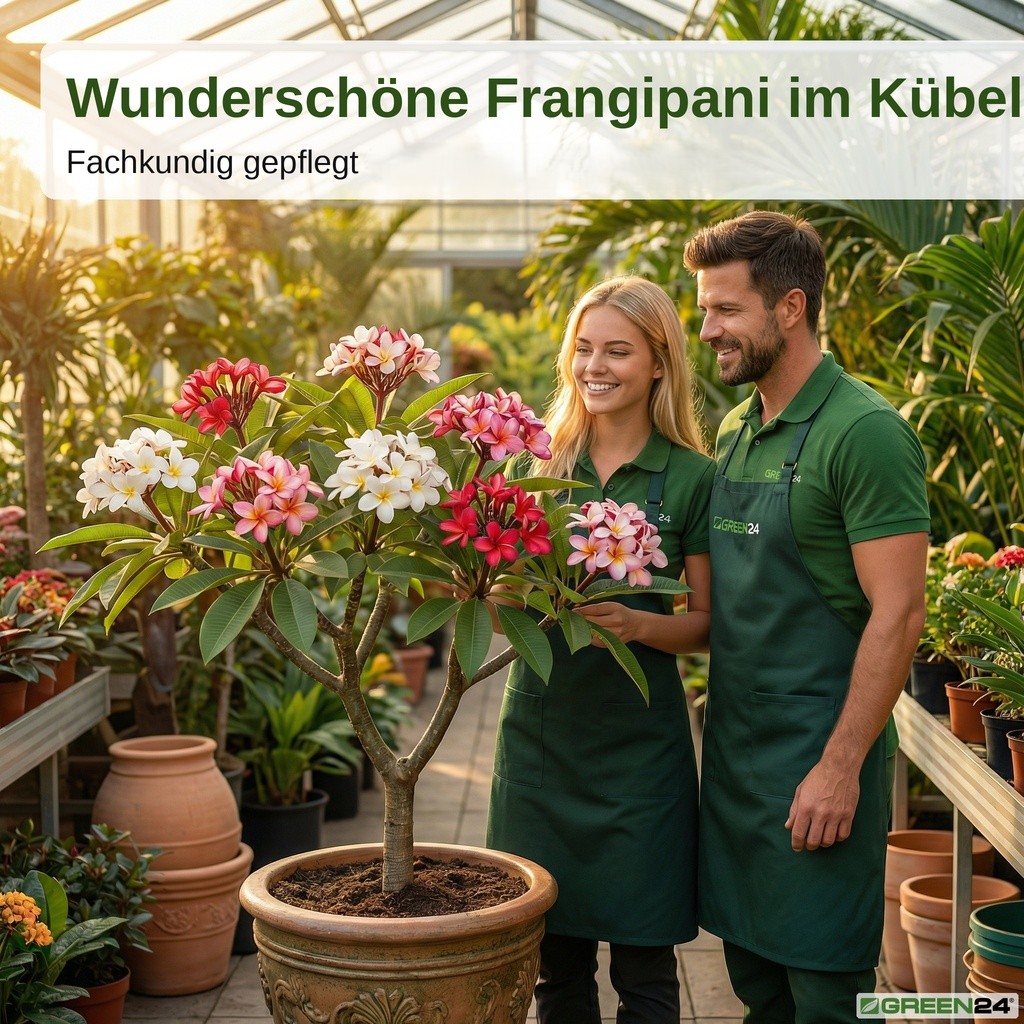
Pflegeanleitung für erfolgreiche Frangipani-Kultur
Optimale Bedingungen für Frangipani
- Licht: Vollsonne bis heller Halbschatten, mindestens 6 Stunden Sonne
- Temperatur: 18-30°C optimal, mindestens 10°C im Winter
- Luftfeuchtigkeit: Mittel bis hoch (50-70%), gute Belüftung
- Bewässerung: Mäßig feucht, zwischen Wassergaben antrocknen lassen
- Substrat: Durchlässig, nährstoffreich, pH 6,0-7,5
- Drainage: Sehr wichtig gegen Staunässe und Wurzelfäule
Frangipani-spezifische Pflege
- Überwinterung: Hell und kühl bei 10-15°C
- Laubabwurf: Normal während Winterruhe
- Umtopfen: Alle 2-3 Jahre in durchlässiges Substrat
- Rückschnitt: Nur bei Bedarf, Milchsaft beachten
- Vermehrung: Stecklinge oder Samen
.jpg)
Besonderheiten der Frangipani-Kultur
Arten-spezifische Anwendung
Verschiedene Plumeria-Arten optimal versorgen
- Plumeria rubra: Intensive Düngung für reiche Blüte
- Plumeria obtusa: Gleichmäßige Düngung, immergrün
- Plumeria alba: Phosphatbetonte Düngung für Duft
- Jungpflanzen: Schwächere Düngung, mehr Wachstumsfokus
- Kübelpflanzen: Intensivere Düngung wegen begrenztem Wurzelraum
Blüten-optimierte Düngung
- Vor der Blüte: Phosphor-betonte Düngung für Knospenbildung
- Während der Blüte: Kontinuierliche Düngung für Dauerblüte
- Nach der Blüte: Ausgewogene Düngung für Regeneration
- Winter: Düngungspause während Winterruhe
Saisonale Frangipani-Pflege
- Frühjahr: Intensive Düngung für Wachstumsstart
- Sommer: Regelmäßige Düngung und Blütenpflege
- Herbst: Auslaufende Düngung, Wintervorbereitung
- Winter: Düngungspause, warme Überwinterung
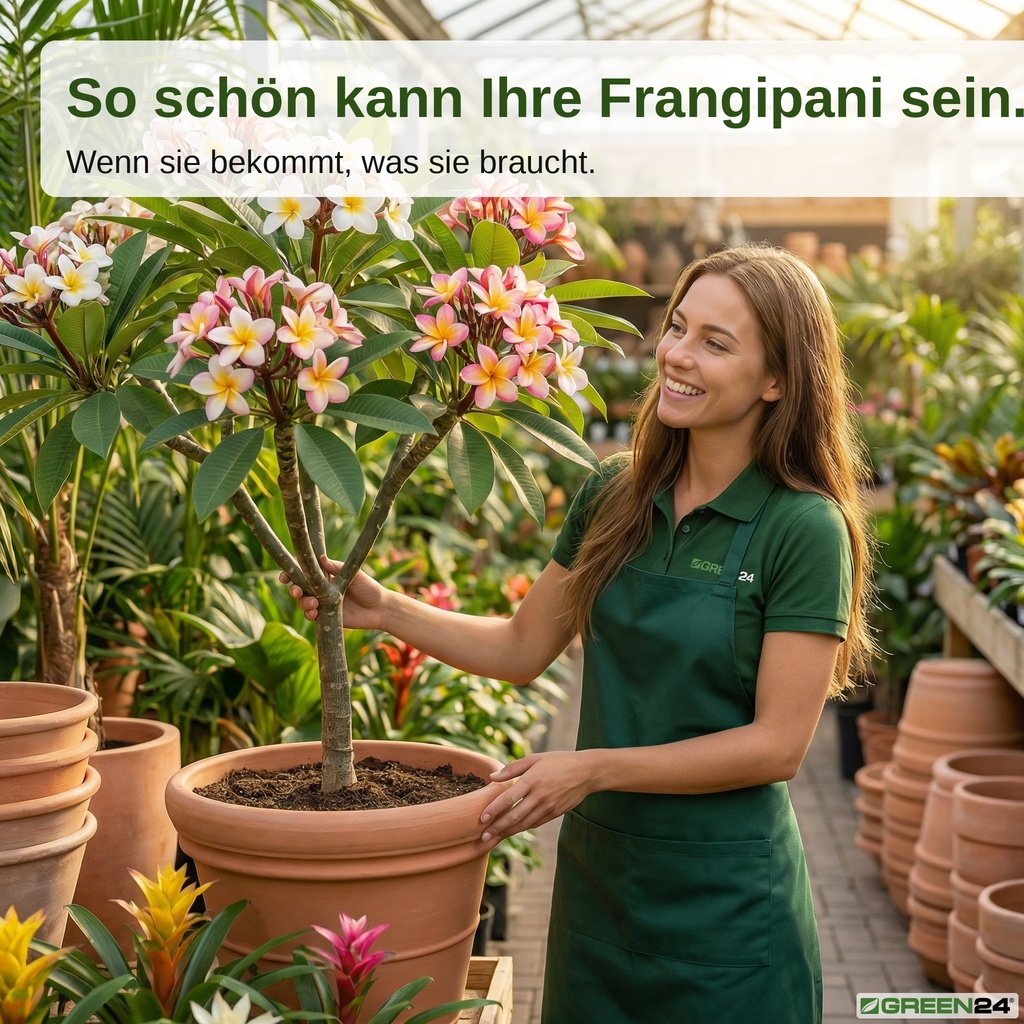
Problemlösung durch gezielte Nährstoffversorgung
Häufige Frangipani-Probleme und deren Lösung
- Keine Blüten: Phosphormangel oder zu wenig Licht → Phosphor-betonte Düngung + mehr Licht
- Schwacher Duft: Nährstoffmangel oder Stress → Vollständige Düngung + optimale Bedingungen
- Gelbe Blätter: Überwässerung oder Nährstoffmangel → Gießverhalten anpassen + Düngung
- Blattfall: Normal im Winter oder Stress → Winterruhe respektieren + Pflege optimieren
- Schwaches Wachstum: Nährstoffmangel oder ungünstiger Standort → Düngung + Standort verbessern
- Fäulnis: Staunässe oder zu kalt → Drainage verbessern + Temperatur erhöhen
Auswirkungen optimaler Düngung
- Spektakuläre Blüten: Reiche, farbintensive Blütenbildung
- Intensiver Duft: Maximale Duftentwicklung besonders abends
- Gesundes Wachstum: Vitale, widerstandsfähige Pflanzen
- Lange Blütezeit: Kontinuierliche Blütenbildung über Monate
- Hohe Widerstandsfähigkeit: Resistenz gegen Krankheiten und Schädlinge
- Tropische Ausstrahlung: Authentische Frangipani-Atmosphäre
Moderne Frangipani-Technologie
Kübel-Kultur (Hauptanwendung)
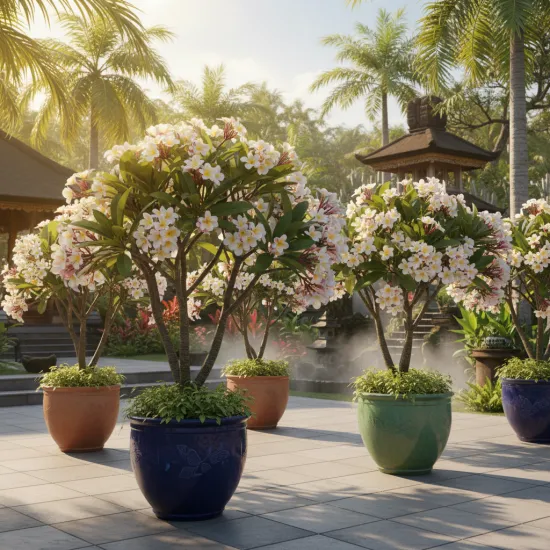
- Terrassen-Kultur: Mobile Frangipani für Balkon und Terrasse
- Wintergarten: Ganzjährige Kultur in geschützten Räumen
- Gewächshaus: Kontrollierte Bedingungen für optimales Wachstum
- Überwinterung: Warme Lagerung in Innenräumen
Sammler-Kultur
- Sorten-Sammlung: Verschiedene Plumeria-Arten und Hybriden
- Duft-Garten: Kombination verschiedener Duft-Intensitäten
- Farb-Sammlung: Alle Blütenfarben von weiß bis rot
- Kompakt-Sorten: Zwerg-Frangipani für kleine Räume
Professionelle Anwendung
- Botanische Gärten: Tropenhäuser und Sammlungen
- Hotels: Tropische Atmosphäre in Lobbys
- Wellness: Duftpflanzen für Entspannung
- Hobby-Züchtung: Eigene Hybridisierung
Stoffwechsel-Optimierung für Frangipani
Duft-Entwicklung
- Ätherische Öle: Komplexe Duftmoleküle in Blüten
- Duft-Rhythmus: Intensivierung am Abend
- Temperatur-Abhängigkeit: Wärme verstärkt Duftabgabe
Blüten-Physiologie
- Phosphor-Bedarf: Hoher Energiebedarf für Blütenbildung
- Wachsartige Blüten: Spezielle Oberflächenstruktur
- Farb-Entwicklung: Anthocyane und andere Pigmente
Stress-Resistenz
- Trockenheits-Toleranz: Sukkulente Eigenschaften
- Hitze-Resistenz: Anpassung an tropische Bedingungen
- Regenerations-Fähigkeit: Schnelle Erholung nach Stress
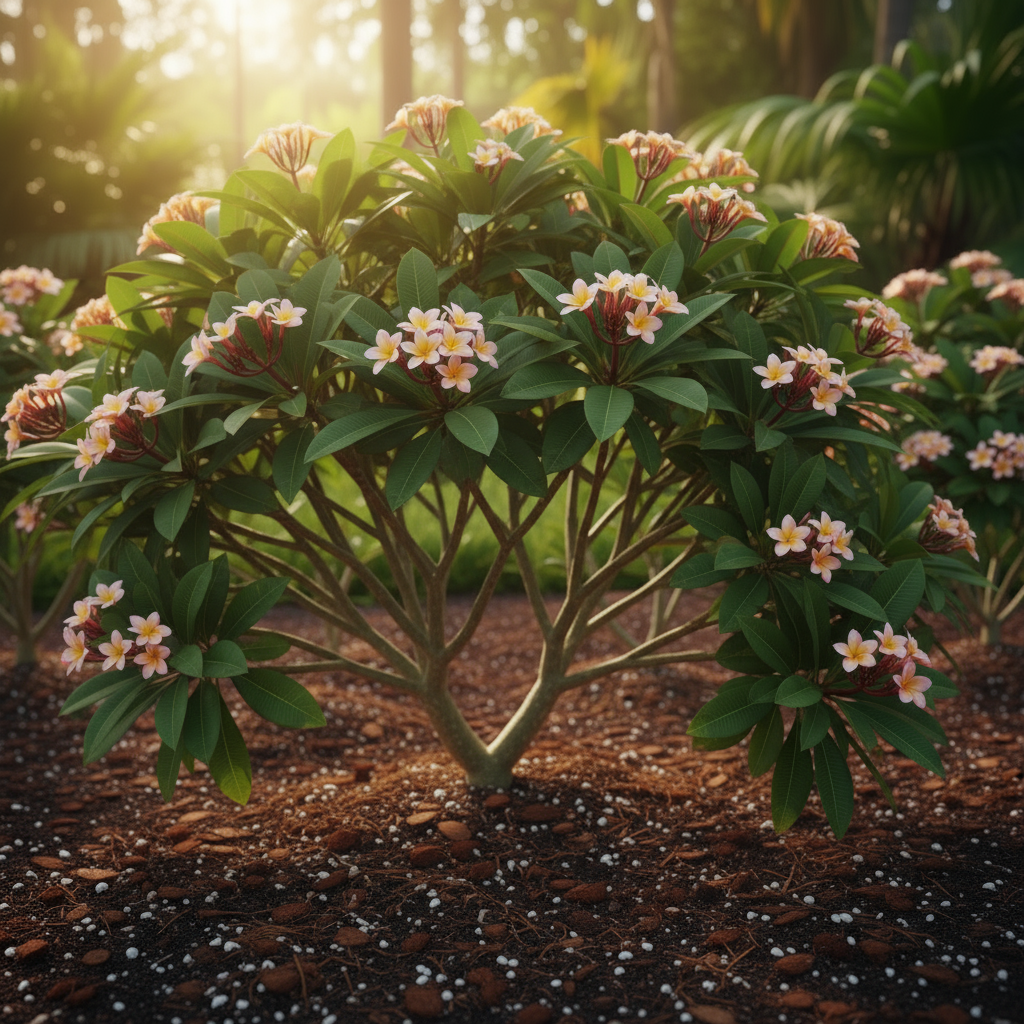
Häufig gestellte Fragen (FAQ)
Wie oft sollte ich meine Frangipani düngen?
Wöchentlich während der Wachstumszeit (April-Oktober) düngen. Im Winter Düngungspause einlegen für natürliche Winterruhe.
Warum blüht meine Frangipani nicht?
Häufige Ursachen sind Phosphormangel, zu wenig Licht oder zu junge Pflanzen. Phosphatbetonte Düngung und vollsonniger Standort fördern die Blüte.
Ist der Laubabwurf im Winter normal?
Ja, die meisten Frangipani-Arten werfen im Winter ihre Blätter ab. Das ist eine natürliche Winterruhe und völlig normal.
Kann ich den Dünger auch für andere tropische Pflanzen verwenden?
Der Dünger ist speziell für Plumerien optimiert, kann aber auch für andere blühende tropische Pflanzen verwendet werden.
Wie überwintere ich meine Frangipani richtig?
Hell und warm bei 10-15°C überwintern. Wenig gießen und nicht düngen. Laubabwurf ist normal.
Wann kann ich meine Frangipani wieder ins Freie stellen?
Nach den letzten Frösten ab Mitte Mai. Langsam an die Sonne gewöhnen und mit der Düngung beginnen.
Verbindliche Anwendungshinweise
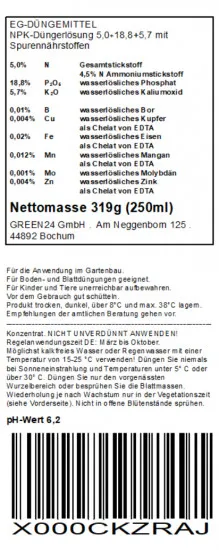
- Merkblatt 130405 unbedingt beachten! Dieses finden Sie unter der URL https://www.green24.de/NPK.pdf
- Stets das Etikett beachten!
- Nicht unverdünnt anwenden.
- Vor Gebrauch gut schütteln.
- Nur während der Vegetationszeit anwenden.
Sicherheitshinweise
- Kontakt mit den Augen, Haut und Kleidung vermeiden.
- Den Spritz- und Sprühnebel nicht einatmen.
- Von Nahrungs- und Genussmitteln fernhalten.
- Nach der Verwendung Gesicht und Hände gründlich waschen.
- Empfehlungen der amtlichen Beratung gehen vor.
- Düngemittel können auf Oberflächen Flecken hinterlassen, die sich evtl. nicht entfernen lassen.
Lagerung
- Trocken, dunkel bei +8 °C bis +40 °C lagern.
- Für Kinder und Tiere unzugänglich aufbewahren.
- Dünger darf nicht in Gewässer eingebracht werden oder ins Abwasser gelangen.
- Bei sachgemäßer Lagerung mehrere Jahre ohne Qualitätsverlust haltbar.
- Verdünnten Dünger zeitnah aufbrauchen.